- Home
- Middle East
- Trump Threatens to Restart War if Iran Fails to Honor Ceasefire Terms
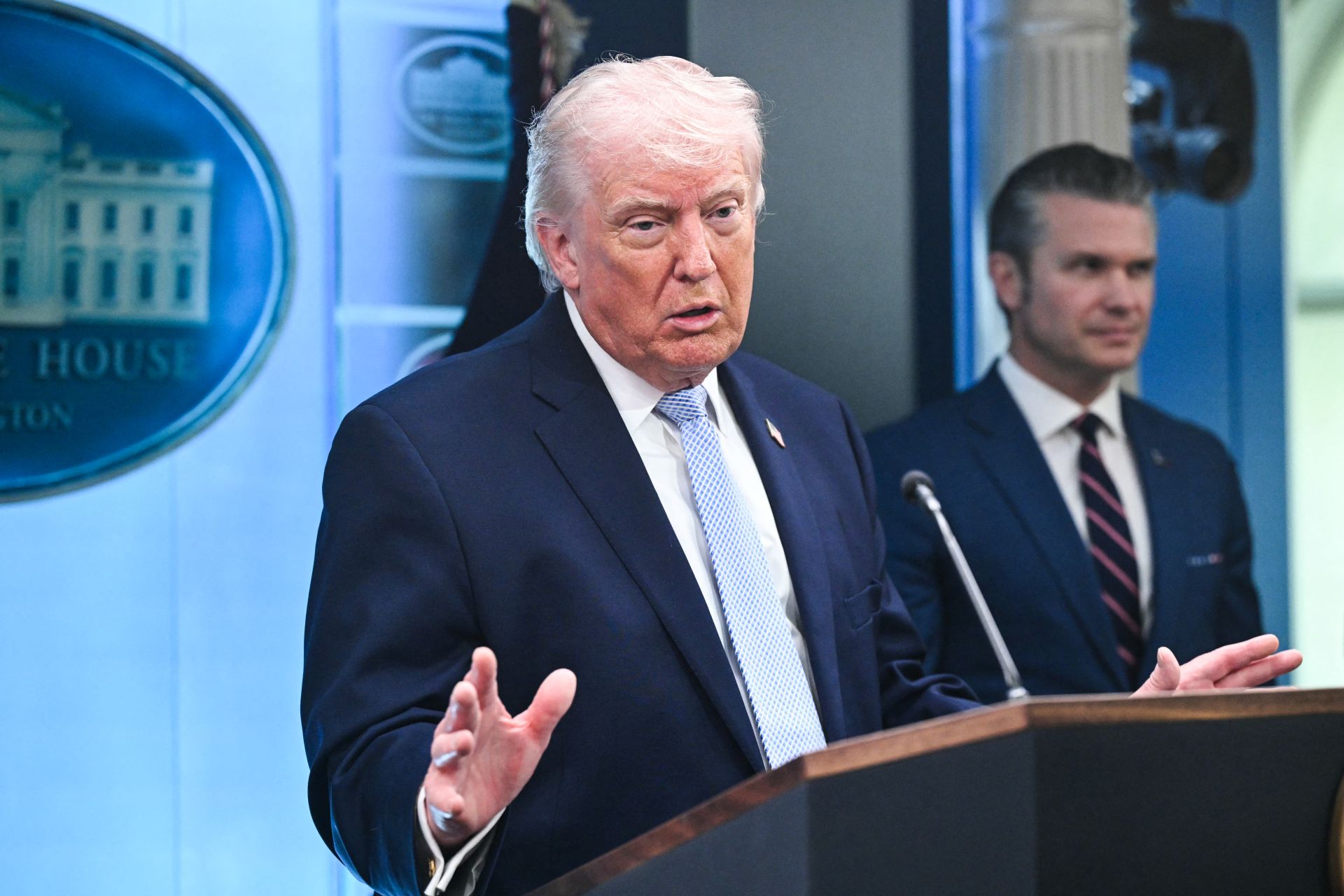
US President Donald Trump speaks about the conflict in Iran in the James S. Brady Press Briefing Room of the White House on April 6, 2026 in Washington, DC. ©SAUL LOEB / AFP
Donald Trump warned that the United States is prepared to resume full-scale military operations against Iran if Tehran fails to comply with what he described as a “real agreement,” casting new doubt on the durability of the recently announced ceasefire.
In a late-night statement, Trump said all U.S. military assets, including ships, aircraft, and personnel, would remain deployed in and around Iran, fully equipped for renewed combat.
“If for any reason the agreement is not complied with… the shooting starts bigger and better, and stronger than anyone has ever seen before,” he said.
The remarks signal that Washington views the current two-week truce not as a resolution but as a conditional pause, one that could collapse rapidly.
A Ceasefire Already Under Strain
The ceasefire, announced less than 48 hours earlier between the United States, Israel, and Iran, was tied to key conditions, most notably the reopening of the Strait of Hormuz and guarantees over Iran’s nuclear program. But those conditions remain unresolved.
Iran has reportedly refused to fully reopen the strategic waterway while Israeli operations continue against Hezbollah in Lebanon, exposing a central contradiction in the agreement.
At the same time, conflicting interpretations of the deal have emerged. While U.S. and Israeli officials insist Lebanon was not part of the ceasefire framework, Pakistan, which is hosting upcoming talks, has maintained that the truce should apply “everywhere,” including the Lebanese front.
U.S. Vice President JD Vance acknowledged what he described as a “legitimate misunderstanding” over the scope of the agreement.
Lebanon and Hormuz: Two Fault Lines
Two unresolved issues are now threatening to unravel the ceasefire before negotiations even begin.
The first is Lebanon, where Israeli strikes have continued at scale, including some of the most intense bombardments since the start of the war. At the same time, Iran has signaled that it will not remain passive if Israeli operations persist, a message widely interpreted as political backing for Hezbollah.
Yet this posture appears largely declarative. While Hezbollah entered the confrontation early in support of Tehran without hesitation, Iran’s response so far suggests a calculated distance projecting support rhetorically while avoiding direct escalation on the ground. This contrast underscores a growing imbalance within the alliance.
The more consequential issue, however, lies elsewhere. Tehran’s primary strategic leverage is not the Lebanese front but the Strait of Hormuz a critical artery for global energy flows that Iran has effectively turned into its central bargaining chip.
Despite U.S. assertions that maritime traffic is gradually resuming, there is little concrete evidence that the waterway has fully reopened. Iranian forces continue to exert control over passage conditions, maintaining the capacity to disrupt shipping and, by extension, global energy markets, reinforcing Hormuz as the decisive pressure point in the conflict.
Talks in Pakistan Overshadowed by Escalation
The crisis comes just days before planned negotiations in Islamabad, to which the White House announced it would send Vice President JD Vance, Jared Kushner, and Steve Witkoff to meet with Iranian officials in an attempt to turn the ceasefire into a broader settlement.
But the diplomatic track is already under pressure.
Iranian officials have warned that continued Israeli strikes, particularly in Lebanon, could render negotiations “unreasonable,” while European leaders, including Emmanuel Macron, have called for any ceasefire to explicitly include Lebanon.
According to Reuters, Iran told mediators it would only take part in the Islamabad talks if a ceasefire was enforced in Lebanon, citing Pakistani sources.
Pakistan, acting as mediator, has also criticized ongoing military operations, warning they risk undermining efforts to stabilize the region.
A Pause, Not a Peace
Trump’s latest statements make clear that the United States is preparing for both outcomes: negotiation or renewed conflict.
While Washington pushes for a deal that would dismantle Iran’s nuclear ambitions and secure maritime routes, Tehran appears determined to negotiate from a position of retained leverage, particularly over Hormuz.
The result is a ceasefire that exists on paper but remains highly unstable in practice.
Read more

Comments