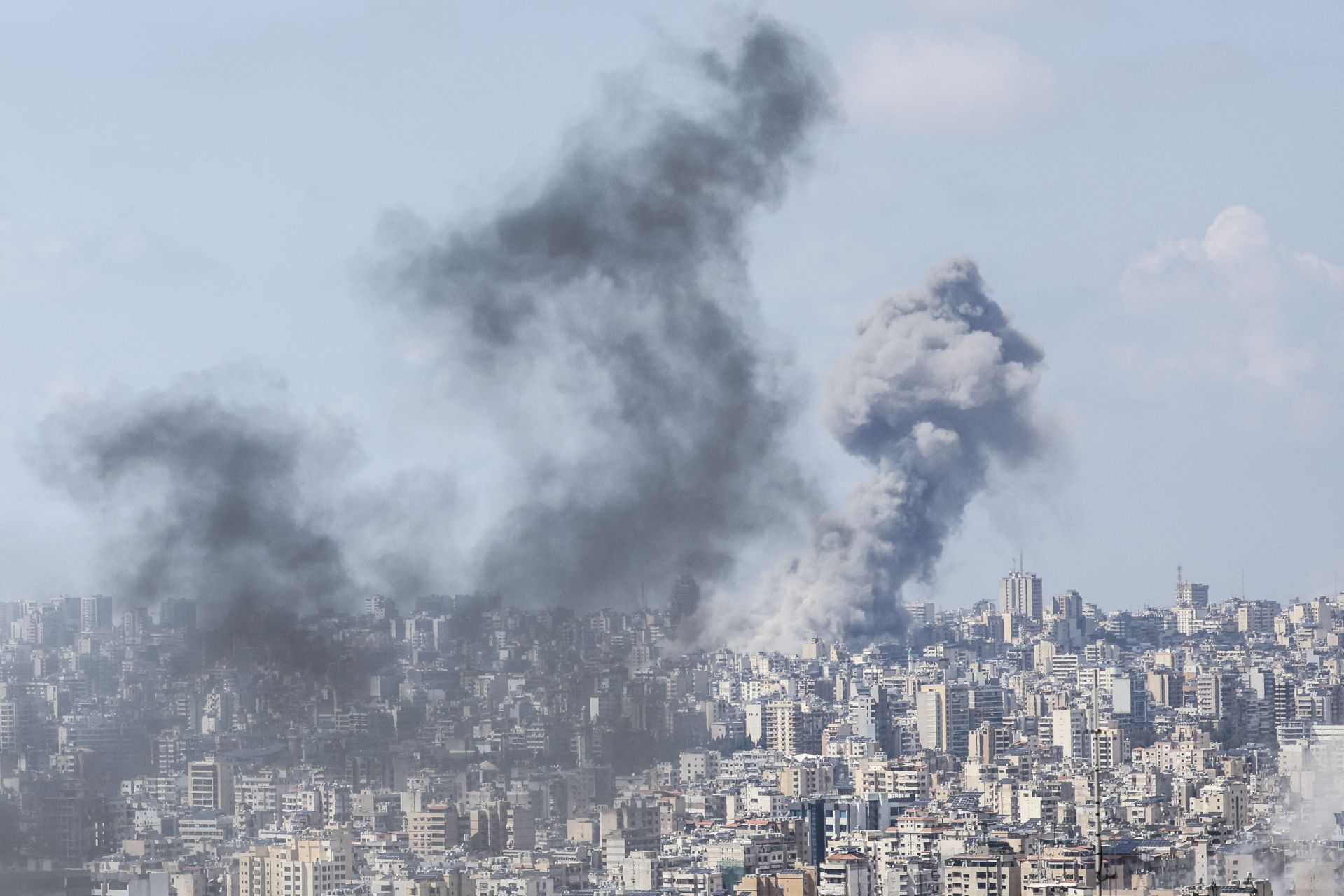
Israel launched its most intense and coordinated wave of airstrikes on Lebanon since the start of the war on Wednesday, hitting more than 100 targets across the country, including densely populated areas of Beirut, just hours after a U.S.-Iran ceasefire was announced.
The strikes, carried out over 10 minutes, mark a major escalation and highlight a growing disconnect between diplomatic efforts to de-escalate the regional conflict and the reality on the Lebanese front.
Coordinated Strikes Across the Capital and Beyond
Multiple explosions rocked Beirut and its southern suburbs, with thick plumes of smoke rising over the city as panic spread among residents.
According to Israeli Defense Forces Captain Ella Waweya, the Israeli military targeted approximately 100 Hezbollah-linked sites within a ten-minute window, describing the operation as the largest of its kind since the beginning of the war.
The strikes hit what Israel said were command centers, intelligence facilities, and weapons infrastructure belonging to Hezbollah across Beirut, the Bekaa Valley, and southern Lebanon. Israeli officials said the campaign was based on weeks of intelligence gathering and aimed at degrading Hezbollah’s operational capabilities.
The strikes spanned an unusually wide geographic area, underscoring the scale and coordination of the operation. In Beirut and its southern suburbs, targets included Bir Hassan, Rahab, Hay al-Sellom, Manara, Ain el-Mreisseh, Corniche al-Mazraa, Msaytbeh, Basta and Ain el-Tineh, in addition to the southeastern suburbs of Choueifat, Aramoun (al-Biyader), Kayfoun, and Bashamoun.
The bombardment extended deep into southern Lebanon, hitting areas including Bint Jbeil, Kfarsir, Kfour, Harouf, Jbaa, Ain Qana, Zibdine, Sharqieh, Doueir, Kfarjouz, Kfarraman, Jibshit, Habboush, Qsaybeh, Sir al-Gharbiyeh, Haret Saida, Sarafand, Deir al-Zahrani, Tyre, Kherbet Selm, Arabsalim, Ansar, Zefta, Sidon, Houmine al-Tahta, Jouaiya, Bissariyeh, and Deir Qanoun al-Nahr.
In the Bekaa and Baalbek regions, strikes were reported in Douris, Shmistar, Hermel, Kark, and the Taria plain, marking a simultaneous escalation across multiple civilian areas.
AFP journalists reported widespread panic in the streets of Beirut, while live footage showed multiple smoke columns rising simultaneously across the city and its suburbs.
There was no immediate report of casualties, but Health Minister Rakan Nasreddine indicated that hundreds of people have been killed and injured across Lebanon as a result of Israeli strikes.
Lebanese Red Cross chief Georges Kettaneh told MTV: “We are evacuating patients from Beirut hospitals to hospitals outside the capital to make room for the wounded from the airstrikes, and all our personnel are operating on the ground.”
No Ceasefire for Lebanon
The escalation comes despite the announcement of a two-week ceasefire between the United States and Iran.
Israeli Prime Minister Benjamin Netanyahu had already made clear that the truce does not apply to Lebanon, a position evidenced by continued military operations.
Lebanese officials had expressed hope that the ceasefire could extend to the Lebanese front. Joseph Aoun called for ensuring that any regional settlement includes Lebanon, while Prime Minister Nawaf Salam stressed that decisions of war and peace must remain exclusively in the hands of the Lebanese state.
However, officials later confirmed that Beirut had not been formally informed that Lebanon was included in the ceasefire framework.
For its part, Hezbollah has not claimed any attacks on Israel since the early hours of Wednesday, around the time the ceasefire took effect.
At the same time, the group declared it was nearing what it described as a “historic victory,” while warning displaced civilians not to return to southern Lebanon, the Bekaa Valley, or Beirut’s southern suburbs until further notice.
The pause in Hezbollah operations has not translated into a halt in Israeli strikes, creating a highly volatile and uneven situation on the ground.

Comments