- 08
- Apr.
- 2026

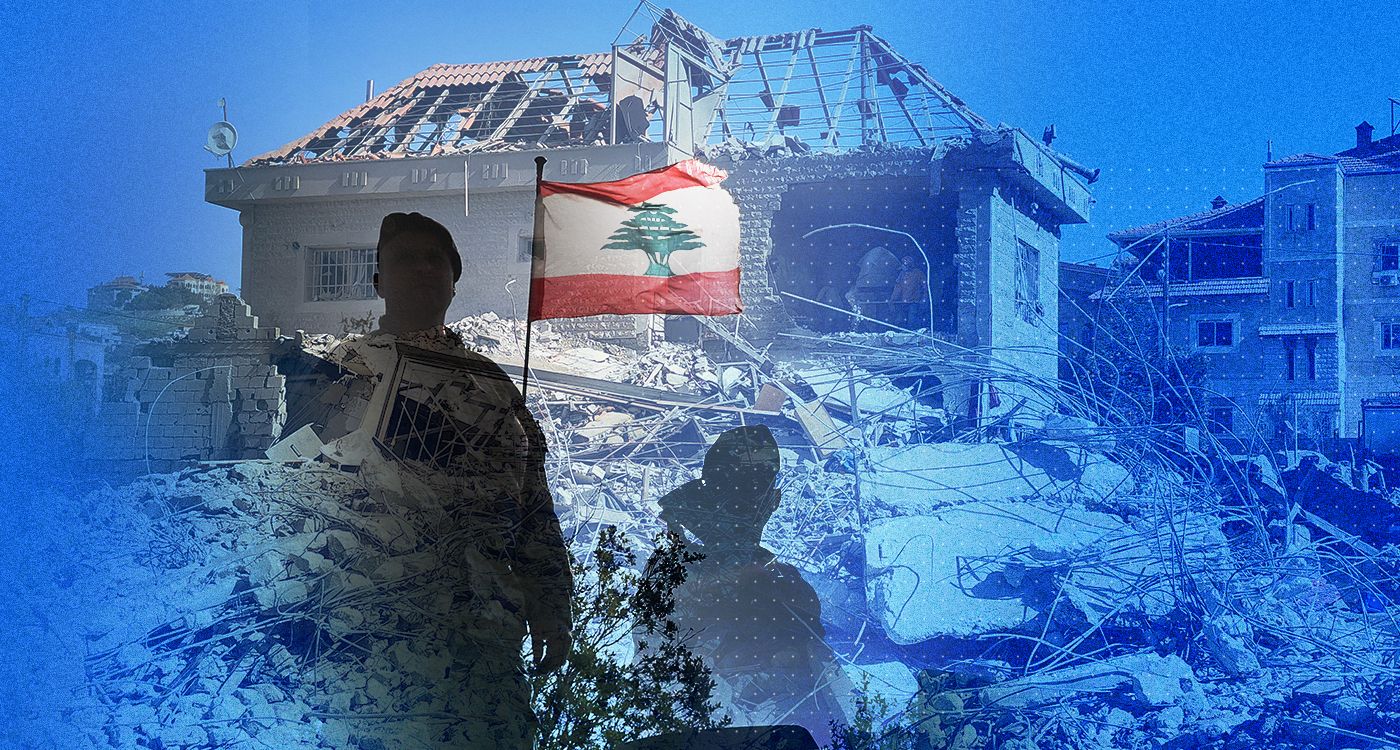
Hezbollah plunging Lebanon into yet another war with Israel came as no surprise. For years, Lebanese officials and international partners have warned that Hezbollah’s unchecked militarization in the south was an invitation to catastrophe.
Those warnings have become reality as Israel deepens its ground invasion to neutralize what it sees as an intolerable threat to its northern communities. Now, Lebanon is confronting decades of evasion, paralysis, and denial.
“The international community is waiting for us to disarm Hezbollah, but that hasn’t happened—missiles, fighters, and tunnels remain. We’ve lost credibility and the world’s trust,” Lebanese parliamentarian Waddah Sadek told This is Beirut.
“Lebanon’s sovereignty is in grave danger,” he warned.
Top Israeli security and military officials are now openly discussing establishing a buffer zone extending northward to the Litani River. They have also said they will prevent the return of displaced residents from Lebanon’s border region until Israeli officials are satisfied that Hezbollah is no longer a threat.
Credibility Gap
Israeli leaders argue that Hezbollah’s opening of a military front in support of Iran stripped away any remaining pretense that U.N. Security Council Resolution 1701—which calls for the group’s disarmament—was ever meaningfully enforced. That credibility gap is now testing Lebanon’s sovereignty.
“UN Security Resolution 1701 was supposed to be about Lebanese sovereignty,” Sadek noted. “But for 20 years, Hezbollah has controlled the south. Its military wing is entirely run by Iran. To resolve this, real decisions must come from Tehran, not Beirut.”
U.S. and Israeli strategists echo this assessment. A senior analyst specializing in Israel-Lebanon affairs told This Is Beirut that Hezbollah’s opening of a front against Iran exposed the failure of the November 27, 2024 ceasefire ending the last war and Lebanon’s commitment to disarm the south.
“The Lebanese Armed Forces (LAF) claimed the mission was accomplished, but weapons remain, and there’s a credibility crisis,” he added.
According to the analyst, Israeli strategy debates now range from expanded ground control in Lebanon to the destruction of villages used by Hezbollah for attacks, proposals that carry enormous humanitarian and political costs.
“Some officials speak of a new northern border and possibly prolonged occupation, though that would be a mistake,” he cautioned. “But the core issue is Lebanon’s failure to deliver. If Lebanon truly wants a monopoly on arms, Israel would support it. Empty promises are no longer acceptable.”
Washington says that Israel’s military campaign is not aimed against the Lebanese state. “Israel’s enemy is Hezbollah, not Lebanon’s government or the Lebanese people,” a U.S. State Department spokesperson told This is Beirut.
The spokesperson reiterated Washington’s support for “the Lebanese government’s stated intention to reassert the sovereignty of the Lebanese state over all of Lebanon.”
Obligation to Disarm
Intentions, however, are not enough to stop Israel’s military campaign. Former deputy prime minister and current MP Ghassan Hasbani said that the Lebanese state is obligated to disarm Hezbollah and assert control over all Lebanese territory.
“The international community gave us 15 months to meet our commitments, but we failed. With Iran’s intervention, things only worsened,” he told This is Beirut.
“No viable state can exist if arms remain in non-state hands. The political decision has been made: only the state may bear arms,” Hasbani added.
Lebanon’s president, for his part, has implicitly criticized Hezbollah’s repeated threats to plunge the country into civil strife if the state confronted it over its weapons. “Better a thousand enemies outside than one inside,” he warned in an April 5 televised address.
International actors are watching closely. The U.S. has reiterated its support for Israel's right to security and Lebanon's efforts to reclaim its sovereignty. At the United Nations, U.S. Ambassador Mike Waltz offered a blunt choice: a future defined by “security and normal life,” or one held hostage to rockets and militias.
The patience of Lebanon’s foreign partners is visibly thinning. Analysts such as Assaf Orion of the Washington Institute argue that Israel would support a genuine Lebanese monopoly on arms—but only if it is authentic. The continued militarization of Hezbollah, under Iranian guidance, is no longer seen as a Lebanese “domestic matter” but as a fundamental security issue.
Ticking Time Bomb
For Lebanon, the war is an inflection point. The country can either seize this moment—painful as it is—to rebuild state authority, or it can continue to outsource decisions of war and peace, absorbing ever-greater destruction in the process.
Sadek pointed out the social turmoil Lebanon faces from the war. “More than a million Lebanese are displaced, and we don’t know when they’ll be able to return home. Lebanon cannot absorb this scale of displacement,” the MP said.
“The situation is a ticking time bomb,” he warned.
As millions of Lebanese weigh whether they can return home at all, the question now is whether Lebanon can survive without finally confronting Hezbollah.

Comments