- Home
- Middle East
- How the Iran War Can Help Reorient Shia Identity
- 07
- Apr.
- 2026

As the U.S.-Israeli military campaign against Iran nears the limits of its original target bank, the contours of a new phase are beginning to emerge, one defined by the search for a political exit from the war. Discussions are no longer confined to closed-door deliberations but are now unfolding in public.
Fundamental questions are emerging about what comes next for Iran. The consequences of the conflict are expected to compel profound changes in central pillars of Tehran’s policies, including its ideological discourse, regional aims, and engagement with neighboring states.
Iran’s relations with the U.S. appear poised for a significant transformation, potentially bringing to a close forty-seven years of hostilities while ushering in more constructive ties based on mutual interests. The post-war phase will not resemble what preceded it, not only for Iran but for the broader regional balance of power.
Across the region, governments are watching developments with heightened caution, aware that the outcome of the conflict will redraw maps of influence. This war cannot be assessed solely in terms of its immediate military effects, but rather through the emerging political and strategic equilibria that will reverberate across the region.
At the same time, Iran’s regional proxies, particularly Hezbollah, are gripped by deep anxiety. For them, Tehran’s setbacks represent a direct blow to the core of its regional axis. This has fueled existential concerns about the future of their roles and influence, especially in light of a potential reconfiguration of support networks and alliances.
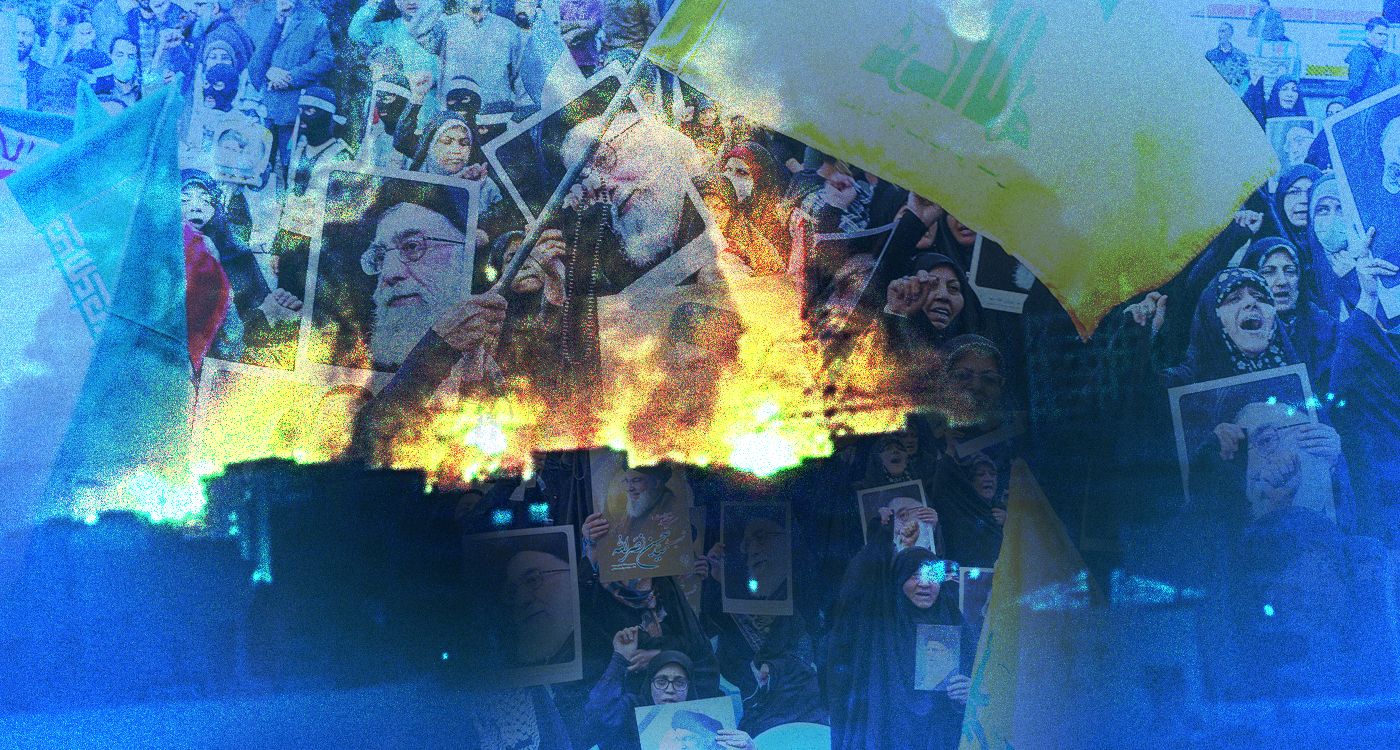
Shia communities across the region see themselves as among those most directly affected by the fate of the Iranian regime. This perception is rooted in Iran’s decades-long effort to cultivate a transnational network built around a distinctly sectarian Shia identity.
To a considerable extent, that project succeeded in linking Shia communities in several countries to Iran through multilayered networks of influence and patronage, fostering a sense of political and symbolic affiliation with Tehran. In many cases, this connection appeared to outweigh these communities' ties to their states, raising difficult questions about their loyalties and identity in the coming phase.
Beyond sectarian identity, hostility toward Israel and the commitment to confronting it have served as foundational pillars of Iran’s regional project. Tehran positioned itself as the spearhead of resistance, advancing a narrative centered on opposing and ultimately eliminating Israel, thereby mobilizing public sentiment and consolidating support.
Israel’s withdrawal from southern Lebanon in 2000 granted this narrative exceptional momentum. It was widely seen as a victory that reinforced the credibility of Iran's project among broad segments of Shia communities in the region. This pivotal moment became a key driver of deeper alignment with Iran’s project, often at the expense of national loyalty. It offered a tangible model in southern Lebanon for pursuing the “liberation of Palestine,” in contrast to decades of failure by Arab armies.
Against this backdrop, the potential opening of a new chapter in relations between Iran and regional states as well as the U.S. could usher in a historic transformation. Yet for all its importance, this change may prove insufficient unless accompanied by an equally significant effort: recalibrating the relationship between Shia communities and their nation-states.
The challenge, therefore, extends beyond modifying Iran’s foreign policy. It also requires rebuilding affiliations among Shia communities, placing national interests at the forefront, free from transnational sectarian entanglements. From this perspective, there is a need to dismantle the two principal pillars upon which Iran’s regional influence has been built.
The first is what is commonly referred to as “political Shiism,” which has served as the overarching framework for Tehran’s project. The second is the discourse of hostility toward Israel as a central mobilizing tool. In this regard, a shift in Tehran’s future stance toward Israel, whether through a break with entrenched hostility or the adoption of a more pragmatic approach, would likely trigger a profound transformation in the political discourse of Shia communities.
A comparable dynamic can be seen in the pragmatic stances of “political Sunnism” in Syria under Ahmad al-Sharaa, particularly regarding engagement with Israel. These approaches have helped soften negative attitudes within Sunni public opinion, notably in Lebanon.
A similar shift within “political Shiism,” as represented by Tehran, in its approach to Israel could have a far-reaching impact on public sentiment among Shia across the region, especially in Lebanon. Potentially, it could accelerate steps toward a peace agreement between Lebanon and Israel.
Such transformations, if realized, would deliver a profound shock to transnational Shia affiliations and prompt a strategic reorientation toward national frameworks. In doing so, they may restore the primacy of the state and enhance the integration of Shia communities into their respective political and social fabrics.
Read more


Comments