- Home
- Middle East
- Ceasefire Efforts Collapse as Iran Rejects Talks: Report
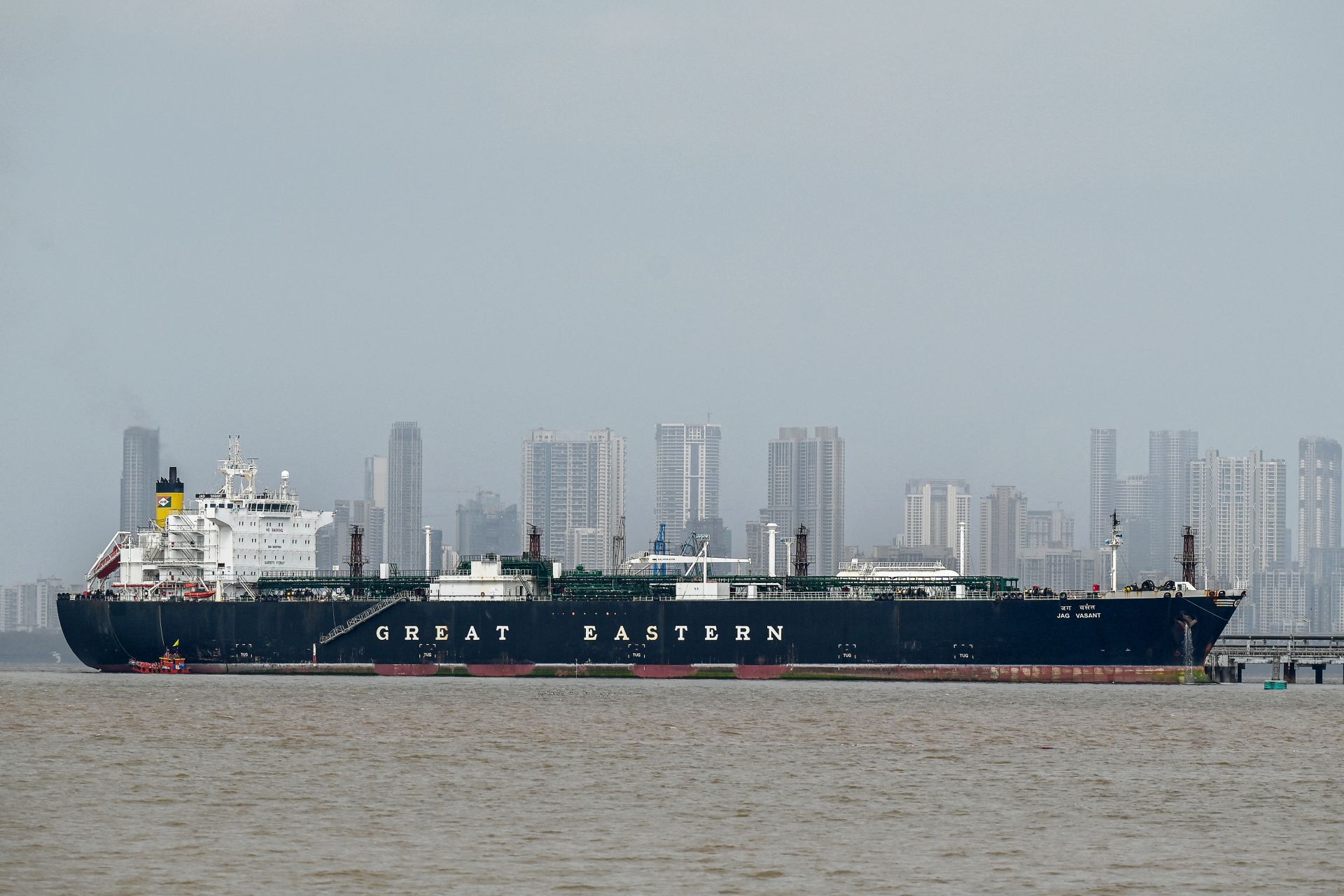
Jag Vasant, an Indian-flagged tanker carrying liquefied petroleum gas (LPG) that transited through the Strait of Hormuz amid the Middle East war, remains docked at an offloading terminal along the coast in Mumbai on April 1, 2026. ©PUNIT PARANJPE / AFP
Efforts to broker a ceasefire between the United States and Iran have collapsed, as Tehran rejected direct engagement with Washington and regional mediation initiatives stalled, signaling a deepening deadlock as the war enters its sixth week.
According to The Times of Israel, Iran has informed mediators it will not participate in proposed talks with U.S. officials, dismissing American demands as unacceptable and effectively closing the door on immediate diplomatic progress.
The breakdown comes despite attempts by multiple regional actors to revive negotiations, underscoring the growing difficulty of identifying a viable path toward de-escalation.
Mediation Channels Falter Across the Region
Diplomatic efforts led by countries including Pakistan, Turkey, and Egypt have struggled to gain traction, with officials exploring alternative venues such as Doha or Istanbul in an attempt to revive stalled talks.
However, Qatar, historically a key intermediary in regional conflicts, has resisted pressure to assume a central mediation role, further complicating efforts to restart negotiations.
The reluctance reflects both the sensitivity of the current conflict and the increasing risks for regional actors seeking to position themselves between Washington and Tehran.
Conflict Escalates as Timeline Extends
The diplomatic impasse is unfolding alongside continued military escalation.
For the first time since the war began, Iranian forces shot down a U.S. fighter jet inside Iranian territory, marking a significant development in the conflict. One crew member has been rescued, while search operations continue for another.
President Donald Trump dismissed the incident’s impact on negotiations, stating that it would not alter the course of the war.
At the same time, Israeli assessments suggest the conflict is likely to continue for at least two more weeks, extending beyond the initial timeline outlined by Washington and pointing to a prolonged phase of military operations.
Strait of Hormuz Emerges as Central Pressure Point
At the core of the diplomatic deadlock lies the Strait of Hormuz, which has become Iran’s most effective lever in the confrontation.
U.S. intelligence assessments cited in the reporting indicate that Tehran is unlikely to reopen the waterway in the near term, viewing its control as a strategic asset in negotiations with Washington.
The strait, through which roughly 20 percent of global oil supply typically passes, has been partially disrupted by Iranian actions, contributing to rising energy prices and increasing economic pressure on Western governments.
Analysts warn that Iran’s ability to influence global energy markets through the strait has effectively reshaped the strategic balance of the conflict.
Ali Vaez of the International Crisis Group described the situation as a reversal of expectations, arguing that efforts to weaken Iran may have instead strengthened its leverage by enabling it to disrupt global trade flows.
Read more
Comments