- Home
- Middle East
- Rubio Signals War Endgame as U.S. Pressure Mounts on Weakened Iran
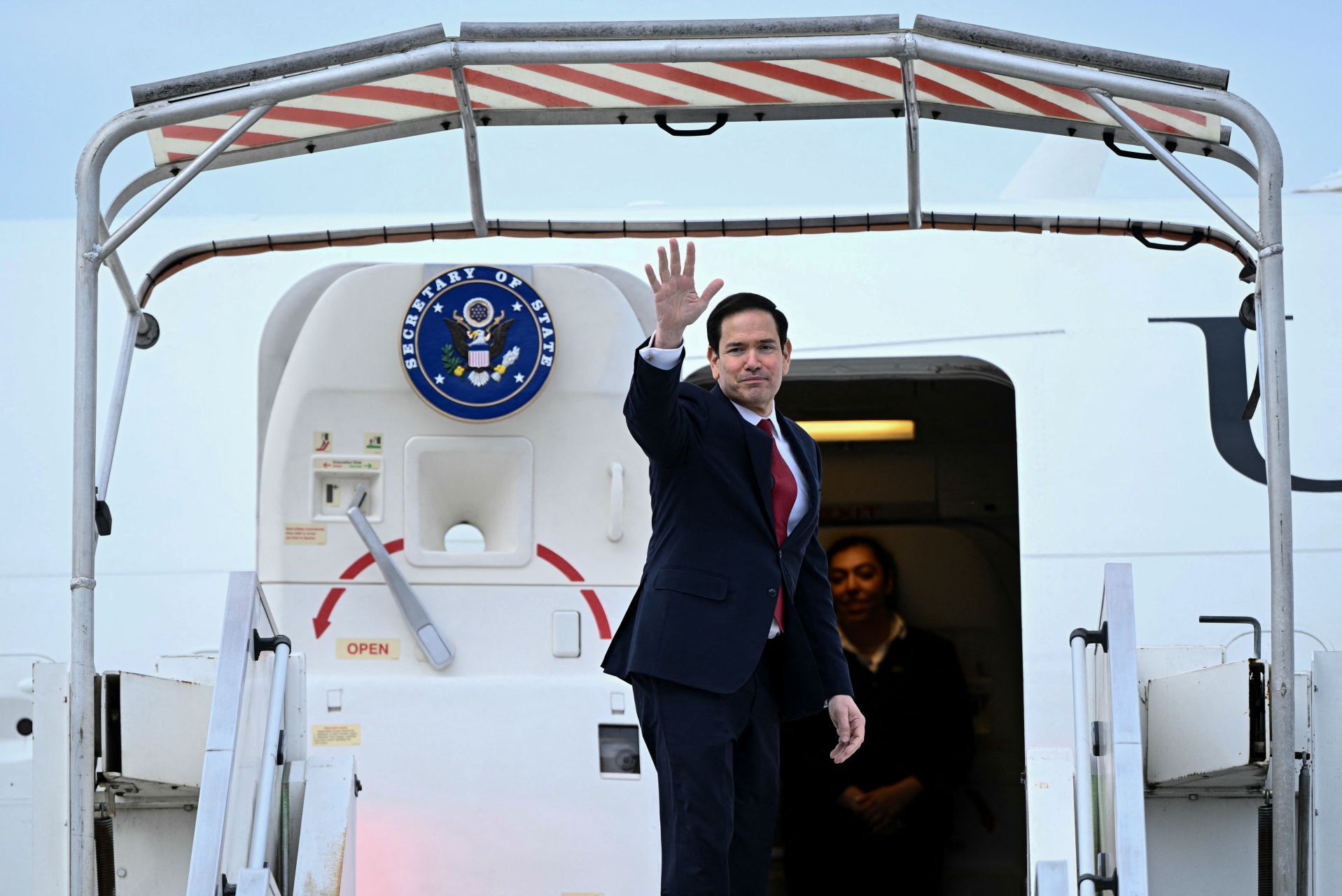
U.S. Secretary of State Marco Rubio waves as he boards a US government aircraft following a G7 Foreign Ministers' meeting with Partner Countries at the Bourget airport in Le Bourget, outside Paris, on March 27, 2026. ©BRENDAN SMIALOWSKI / POOL / AFP
The United States is increasingly signaling that the war with Iran is entering its final phase, even as military operations and diplomatic maneuvering continue in parallel.
U.S. Secretary of State Marco Rubio said Washington now sees “the finish line” in a conflict that has entered its fifth week, describing an Iranian state that is, in his words, “weaker than at any point in the last 47 years.”
The remarks reflect a growing shift in tone from U.S. officials, who are simultaneously projecting confidence in military gains while keeping open the possibility of direct negotiations with Tehran.
“Not Today, Not Tomorrow, But Soon”
Speaking to Fox News, Rubio stopped short of declaring an imminent end to the war but made clear that U.S. officials believe the trajectory is now set.
“The end is not today or tomorrow, but it will come,” he said.
The statement suggests that Washington views its campaign as nearing strategic completion, even as it continues to apply pressure on multiple fronts.
Rubio also confirmed that the United States is open to holding direct talks with Iran at some stage, a notable signal amid a conflict largely defined by indirect negotiations through regional intermediaries.
At the same time, he stressed that any diplomatic track would not come at the expense of U.S. objectives. Washington “remains ready for dialogue,” he said, “but will not show leniency.”
Nuclear Red Lines Remain Unchanged
Despite the evolving diplomatic tone, U.S. positions on Iran’s nuclear program remain uncompromising. Rubio revealed that Tehran has rejected proposals to hand over its stockpile of highly enriched uranium, a key sticking point in negotiations.
“There are no civilian uses for uranium enriched at 60%,” he said, reiterating Washington’s long-standing argument that such material is a short step away from weapons-grade capability.
The issue remains central to the conflict’s endgame, with U.S. officials insisting that any settlement must address Iran’s nuclear capacity alongside its broader military capabilities.
Strait of Hormuz and International Law
Rubio also accused Iran of violating international law through its actions in the Strait of Hormuz, where Tehran has imposed restrictions on global shipping in response to U.S.-Israeli strikes.
The waterway, through which roughly 20% of global oil and gas supplies pass under normal conditions, has become one of the conflict’s most critical pressure points, both militarily and economically.
By framing Iran’s actions as unlawful, U.S. officials appear to be reinforcing the legal justification for continued military operations and potential escalation if necessary.
Recalibrating Alliances After the War
In a less-noticed but significant remark, Rubio suggested that Washington may reassess its relationship with NATO after the war. The comment hints at broader strategic recalibrations that could follow the conflict, particularly as the United States evaluates the role of allies during the campaign.
He also warned that any external support for Iran would not alter the course of U.S. operations. “No assistance from any country to Iran will hinder the American mission in any way,” he said.
Read more


Comments