- Home
- Middle East
- From Baghdad to Beirut: Tehran’s Strategy to Set the Region Aflame
- 31
- Mar
- 2026

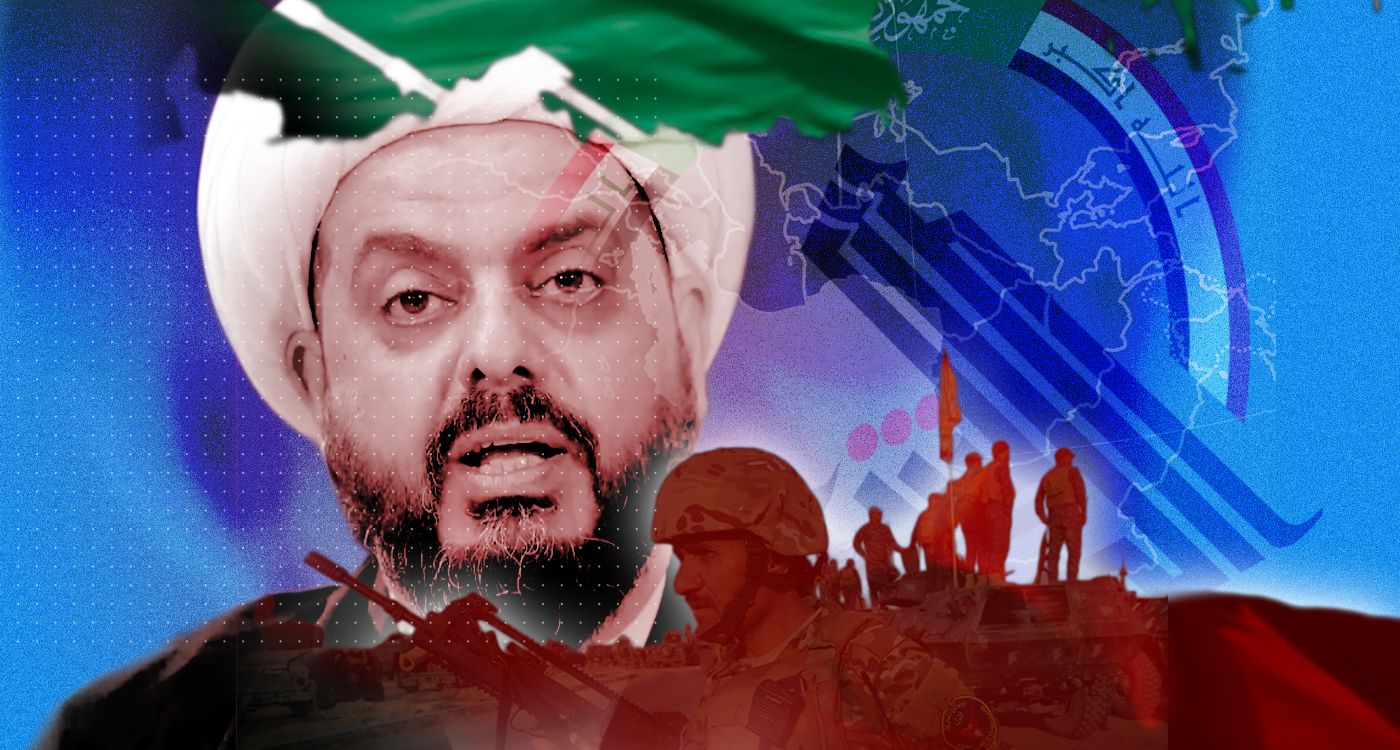
In December 2017, Hezbollah hosted Iraqi militia leader Qais al-Khazali on a tour of Lebanon’s border with Israel. At the time, Israel was careful not to provoke Hezbollah, and Khazali seemed confident that he could threaten the Jewish state from the frontier.
Nearly a decade later, Hezbollah and Iranian-backed militias in Iraq have become central to Tehran’s strategy of setting the region ablaze in retaliation to the joint U.S.-Israeli military campaign. Lebanon and Iraq have now been pulled into the regional war as Iran seeks to transform both into active fronts.
Khazali’s trip to Lebanon was not incidental. Iran’s regime was on the rise at the time, enjoying the fruits of the 2015 nuclear agreement. Flush with funds, Tehran was able to back militias in Iraq, collectively known as the Popular Mobilization Forces (PMF), which were fighting ISIS at the time. By 2018, the PMF became an official Iraqi government force and began receiving state funding. Many of these groups, including Khazali’s Asaib Ahl al-Haq, have been closely linked to Iran’s Islamic Revolutionary Guard Corps (IRGC) Quds Force. The U.S. designates a number of these militias, as well as Khazali himself, as terrorist organizations and individuals.
The Iraqi militias once operated in Syria alongside Hezbollah, backing the Bashar al-Assad regime under the aegis of the IRGC’s Quds Force, led by Qassem Soleimani. In January 2020, the United States assassinated Soleimani, along with Iraqi militia leader Abu Mahdi al-Muhandis, near Baghdad International Airport. These connections matter today because Iraq’s militias are trying to hold on to power in their country in much the same way that Hezbollah is seeking to preserve its status in Lebanon.
When the United States and Israel began their campaign against Iran on February 28, 2026, airstrikes targeted a well-known militia base in Jurf al-Sakhr, Iraq. The attack marked the beginning of a new low-intensity conflict in the country, pitting Iranian-backed militias against the United States and Israel. Since then, the violence has steadily grown deadlier.
Operating under the umbrella of the Islamic Resistance in Iraq, Iranian-backed militias have launched more than 450 drones and missiles at the Kurdistan Region of Iraq, striking Iranian Kurdish opposition groups, U.S. military and diplomatic sites, and critical infrastructure including Erbil International Airport. They have also been conducting attacks against the U.S. Embassy in Baghdad and U.S. facilities at Baghdad International Airport.
In response to the escalating attacks, the United States and Iraq announced on March 28 that they would work together to counter them. A senior judge in Iraq also warned that the militias were dragging the country into the wider regional conflict. The region is beginning to take notice of these developments, with GCC states and Jordan on March 26 condemning the Iraqi militias campaign in their country.
While countries are beginning to see the wider implications of the militia attacks in Iraq, it is important to highlight the linkage between Iraq and Lebanon. Both countries have, over the years, been targeted by Iran to be co-opted, hollowed out, and filled with proxy groups. In Lebanon, the model was to use Hezbollah, which had enjoyed official legitimacy as a political party and an armed organization. In Iraq, the Iranians empowered dozens of militias which gained official status as a state-sponsored fighting force.
As such, in Iraq and Lebanon, the IRGC was able to extend its octopus-like reach across the region. While the fall of the Assad regime cut off one arm of this nexus, the current regional war shows that Tehran can still readily operationalize groups in both countries. Today, Iraq and Lebanon are both suffering as theaters for Iran’s military ambitions.
Khazali’s trip to Lebanon in 2017 helped lift the curtain on how closely Hezbollah was becoming linked to the militias in Iraq. These intertwined relationships show that none of these groups enjoys true independence, but instead act as willing instruments of their masters in Tehran.
Read more

Comments