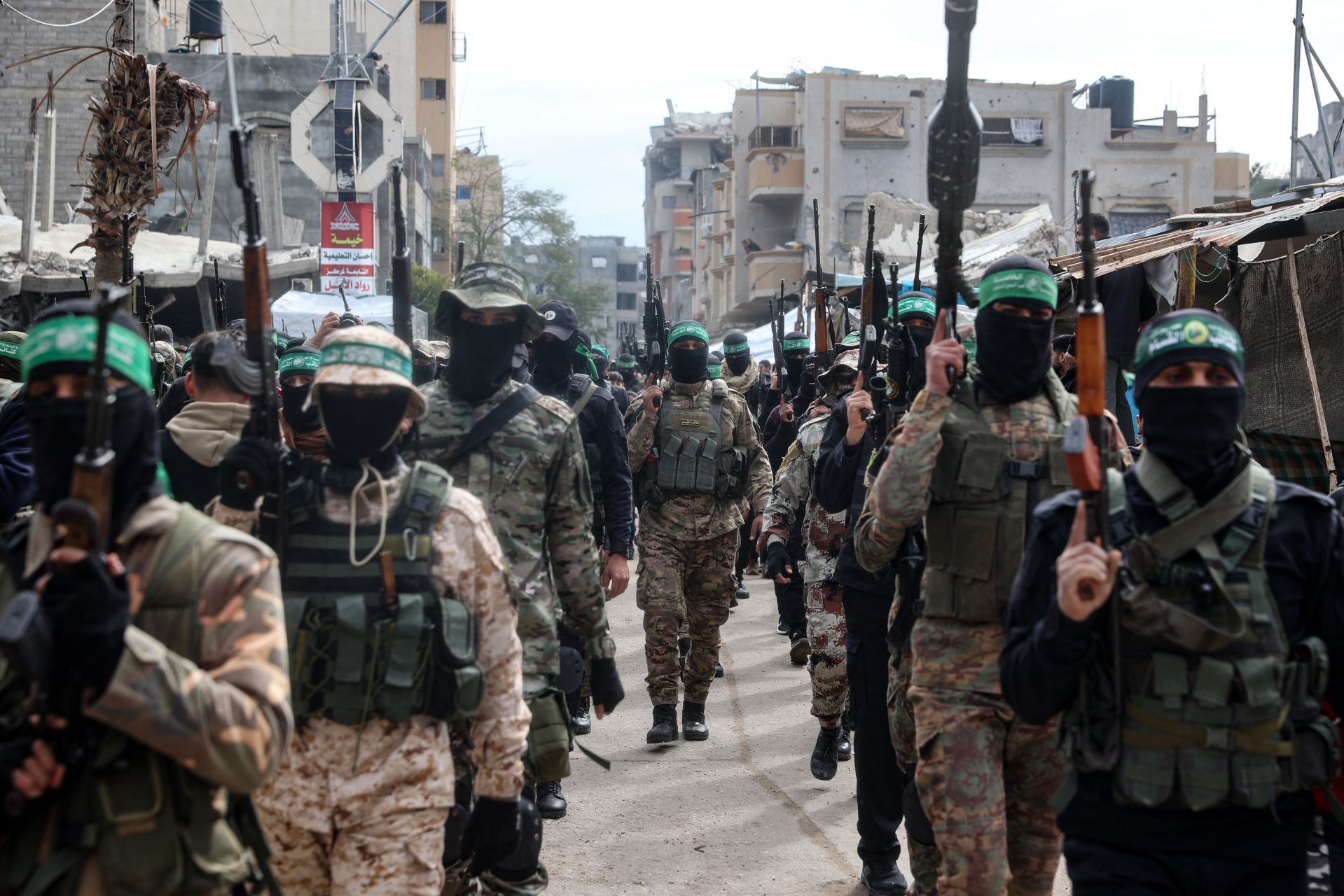
The IDF released a cache of Hamas internal documents found in the Gaza Strip, giving formal proof that Hamas operates under Hezbollah supervision in Lebanon.
The documents, dated to the period prior to Hamas’s October 7th terror attacks, show that Hezbollah agreed to assist the group with “equipment, training, and facilities" and that Hamas moved trained specialists and field operatives from Gaza to Lebanon.
Deep Ties
Following a period of strained ties over the Syrian Civil War, during which Hamas and Hezbollah backed opposing factions, in 2017, relations began to improve between the two designated terror groups.
According to the Carnegie Endowment for International Peace, rapprochement began first with Iran, following a series of internal Hamas elections, the movement of Hamas’s political bureau from Qatar to Gaza, and a significant reduction of Qatari financial assistance, all of which strengthened the influence of pro-Iranian factions.
By October 2017, Hezbollah Secretary General Hassan Nasrallah received the deputy head of Hamas’s political bureau, Saleh al-Arouri, in Beirut, kicking off a series of reconciliation efforts.
“In this period,” military analyst Dr. Riad Kahwaji told This Is Beirut, “we saw several occasions where a few Katyushas [rockets] fired from south Lebanon that landed in north Israel without causing casualties. These isolated incidents were always attributed to Palestinian factions.”
“These were Hamas operatives,” he explained, adding that Hezbollah used the group to threaten the Israelis without formally breaking the informal rules of engagement that existed between the two countries since their 2006 war.
Document Cache
Though long known in intelligence circles, the IDF-released documents add detail on how relations between Hezbollah and Hamas have deepened in the last decade.
One document dated March 13, 2022, details the dispatch of an “intermediate field command” of 5-6 commanders from the Gaza Strip to Lebanon along with a series of trained specialists in a number of fields, including weapons manufacturing, operations, and intelligence capabilities.
A later document from March 2023 details a meeting between Hamas and Hezbollah contacts on building out Hamas’s footprint in Lebanon under Hezbollah tutelage, assigning Lebanese fighters to work the group, helping store and transfer “equipment,” and providing training and facilities.
An undated document reveals that Hamas aimed to build an integrated branch capable of “supporting the resistance in Gaza in any future confrontation,” hoping to avoid “relying on allies to activate the fronts” against Israel. It also expresses the hope of “acquiring advanced weapons, systems, and manufacturing materials” from Lebanon to be transferred to the Gaza Strip.
Under Attack
Since this latest round of fighting began on March 2, the IDF has confirmed it assassinated three Hamas operatives in Lebanon, including Wasim Attallah Ali in Tripoli, whom it described as a Hamas commander responsible for training the group’s military wing in Lebanon.
IDF spokesmen said another two strikes killed senior officials involved in Hamas’s financial network in Lebanon, with a third claiming that Israel struck Hamas infrastructure sites in Tyre and Sidon on March 3.
However, the most high-profile of the Hamas killings in Lebanon was Salah Al-Arouri, who died in an Israeli airstrike on the southern suburbs of Beirut in 2024.
According to Khawaji, the strikes reflect a wide range of motivations, from retaliation for acts committed on October 7th to preemptive efforts to thwart Hamas operations in Lebanon and moves to eliminate broader financial and military capabilities that could impact operations inside the occupied territories.



Comments