- Home
- Middle East
- Washington and Tehran Disagree on the Status of Negotiations
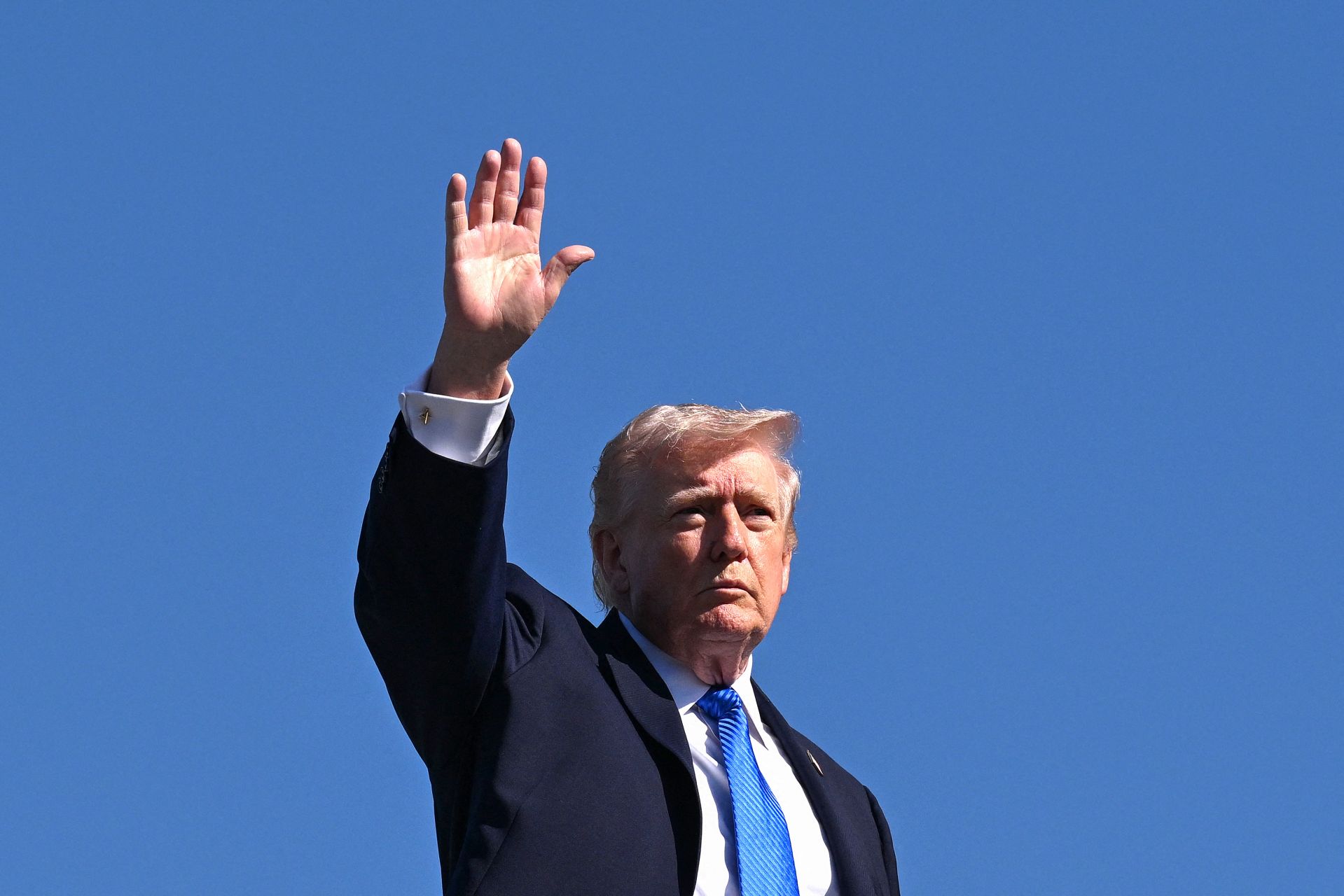
WEST PALM BEACH, FLORIDA - MARCH 23: U.S. President Donald Trump boards Air Force One at Palm Beach International Airport on March 23, 2026 in West Palm Beach, Florida. President Trump is traveling to Tennessee before returning to Washington. ©ROBERTO SCHMIDT / GETTY IMAGES NORTH AMERICA / GETTY IMAGES VIA AFP
U.S. President Donald Trump said on Monday that Washington and “representatives” from Tehran had held “very good and productive conversations” over the past two days, and he had subsequently instructed the Department of Defense to postpone military strikes on Iranian power plants for five days—emphasizing that current negotiations did not involve Supreme Leader Mojtaba Khamenei.
Following speculation that the unnamed intermediary could be Mohammad-Bagher Ghalibaf, Iran’s Speaker of Parliament, Ghalibaf took to X to say that “no negotiations with America have taken place.” He refered to Trump’s comments as “fake news intended to manipuate financial and oil markets and to escape the quagmire in which America and Israel are trapped.”
Claims of Progress and Imminent Contact
Trump indicated that talks would continue throughout the week and suggested a phone meeting with Iranian officials could take place as early as Monday, citing logistical challenges in arranging face-to-face negotiations.
“We’d like to make a deal, and the Iranians would too,” he said, adding that both sides were close to agreement on key issues, particularly on the complete dismantling of Iran’s nuclear capabilities.
He described recent exchanges, reportedly led by envoys Steve Witkoff and Jared Kushner, as “very strong” and “almost fully aligned,” raising the possibility of a broader settlement that could end the conflict.
At the same time, Trump coupled the diplomatic overture with a clear warning: if talks fail, the United States would resume strikes “with full force.”
Five-Day Window Amid Ongoing War
The announced five-day pause appears to mark a temporary shift in U.S. strategy, offering a narrow diplomatic window after weeks of sustained military operations targeting Iran’s infrastructure and strategic capabilities.
Trump framed the potential agreement as one that would prevent future wars and eliminate nuclear threats, describing it as a pathway to “long-term, guaranteed peace” for both Iran and the wider region. He also stressed that Iran had initiated the talks.
Tehran Rejects Narrative of Negotiations
Multiple Iranian sources swiftly contradicted Trump’s account.
Iranian state television, citing the Foreign Ministry, denied that any direct talks were taking place with the United States, describing Trump’s statements as an attempt to manage energy markets and buy time for ongoing military plans.
Mohammad-Bagher Ghalibaf, Iran’s Speaker of Parliament, reiterated the denial on X, saying they were nothing more than “fake news.”
Iran also reaffirmed its intention to respond to attacks, particularly those targeting its energy infrastructure, which it considers a legitimate basis for retaliation.
Contradictions and Strategic Messaging
The stark discrepancy between Washington and Tehran’s public messaging reflects continued uncertainty on diplomatic progress.
While regional actors have reportedly attempted to mediate and de-escalate tensions, there is no clear evidence of a structured negotiation framework or agenda between the two sides.
Analysts note that such conflicting narratives are not uncommon in high-stakes conflicts, where public messaging is often used to shape leverage, influence markets, and manage domestic and international expectations.
The announcement of a temporary pause in strikes introduces a potential opening for diplomacy, but the shape of public messaging underscores how fragile that window remains.
Read more
Comments