- Home
- Middle East
- Iraqi PM Says Accelerating Withdrawal of Anti-Jihadist Coalition Forces
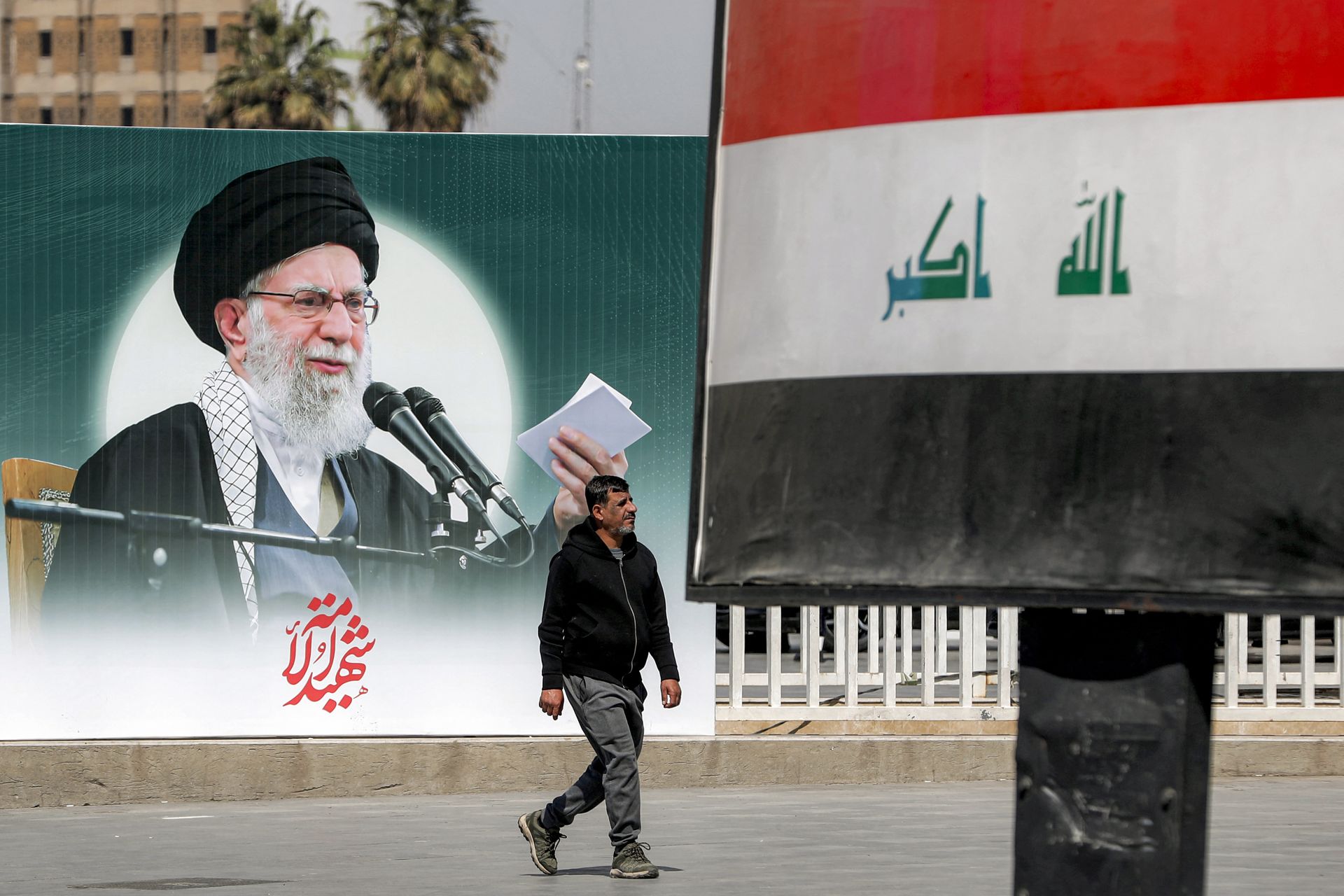
A man walks past a banner depicting Ayatollah Ali Khamenei, Iran's late supreme leader who was killed on February 28 in a US-Israeli strike in Tehran, displayed at Baghdad's central Tahrir Square on March 9, 2026. ©Photo by AHMAD AL-RUBAYE / AFP
Iraqi leader Mohammed Shia al-Sudani said he would accelerate the dismantling of a US-led international anti-jihadist coalition, in an interview with an Italian newspaper published Monday. The prime minister's comments come as the country finds itself unwillingly drawn into the conflict in the Middle East, which began with Israeli and US strikes on Iran on February 28.
Pro-Iran armed groups have claimed responsibility for near-daily attacks on US interests in Iraq and across the region, while strikes have also targeted these groups.The end of the international anti-jihadist coalition's mission was initially planned for September 2026 in Iraq, with the drawdown launching in 2024.
The end of the mission was intended to pave the way for bilateral security partnerships with member countries of the alliance, formed in 2014 to fight the extremist Islamic State group. "With our allies we have now decided to bring forward the end of the international coalition, which was supposed to continue until September 2026," Sudani told Italian newspaper Corriere Della Sera.
"Once there are no more foreign military contingents on Iraqi soil, it will be easier to break up the armed factions," he said, referring to pro-Iran groups in the country. The presence of foreign troops -- particularly American advisers -- is a long-running point of contention between the government and the pro-Iran armed factions.
Baghdad has demanded a monopoly on weapons and called for the dismantling of the groups' arsenals, which the factions justify by pointing to the presence of foreign soldiers. Both the government and the coalition insist the coalition deploys military advisers -- who provide expertise and support, aiming to prevent a resurgence of IS -- to Iraq at the invitation of the authorities.
These advisers are currently only deployed in northern Iraqi Kurdistan and were scheduled to remain there until September 2026.In January, the first phase of the coalition withdrawal agreement was completed, with personnel leaving the Iraqi military bases.
The coalition is also in the process of withdrawing from neighbouring Syria, where it also deployed, having recently handed over its bases to Syrian government forces.
AFP
Read more

Comments