- Home
- Middle East
- U.K. Defence Secretary: Britain Commits £115 Million, HMS Dragon and Typhoon Jets to Hormuz Security Mission

©Defence Images / Flickr
The United Kingdom has announced a significant military contribution to a planned multinational maritime mission aimed at securing freedom of navigation in the Strait of Hormuz, a critical global energy corridor frequently exposed to regional security tensions.
Speaking during a virtual multinational summit of defence ministers, UK Defence Secretary John Healey outlined a package of naval, air, and autonomous capabilities intended to strengthen maritime security and protect commercial shipping routes.
Central to Britain’s commitment is the deployment of autonomous mine-hunting systems designed to detect and neutralize naval mines in the strategically sensitive waterway. The package also includes Typhoon fighter jets and the Type 45 destroyer HMS Dragon, which will form part of a broader multinational defensive posture in the region.
The UK government said it is investing £115 million in new funding for advanced mine-hunting drones and counter-drone technologies, aimed at enhancing protection for both commercial vessels and regional maritime infrastructure.
According to officials, the British force package will integrate advanced autonomous systems capable of identifying and neutralising underwater threats. The Royal Navy will also deploy its modular “Beehive” system alongside high-speed autonomous Kraken drone boats, designed to sense, track, identify, and counter maritime threats in real time.
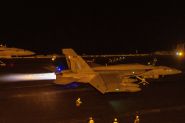
Air assets will also play a role in the operation. Typhoon jets, already deployed and operational in the region, are expected to conduct air patrols over the Strait of Hormuz as part of the multinational defensive mission.
In addition, the UK confirmed it will contribute specialist Royal Navy mine-clearance teams trained for maritime explosive ordnance disposal, should in-water intervention be required.
The Type 45 destroyer HMS Dragon, currently deployed in the Middle East, will operate with advanced counter-drone capabilities including the Sea Viper missile system. The vessel is also expected to integrate into the multinational task force supporting maritime security operations. Meanwhile, the Royal Fleet Auxiliary ship RFA Lyme Bay is being upgraded to function as a mothership for autonomous naval systems.
According to the Royal Navy, HMS Dragon left the UK in March and has since been operating in the Eastern Mediterranean, supporting security efforts around Cyprus. Its commanding officer, Commander Iain Giffin, highlighted the ship’s operational readiness and integration with allied forces.
“I am proud that Dragon is playing such a prominent role in the UK’s presence in the region as part of a multinational task force seeking to assure the freedom of navigation and restoring vital trade routes,” he said.
“Following our time defending Cyprus, Dragon has proven that she is ready and able to integrate with Tri-Service colleagues and international allies to conduct coordinated air defence and reassurance operations,” he added, noting that the crew has maintained “a persistent state of readiness inside the high threat zone.”
The announcement underscores growing international efforts to secure key maritime chokepoints amid heightened regional tensions, with the Strait of Hormuz remaining one of the world’s most strategically sensitive shipping lanes.
Read more


Comments