- Home
- Middle East
- UK Warns Iran as U.S. Expands War Effort and Tehran Rejects Ceasefire Terms
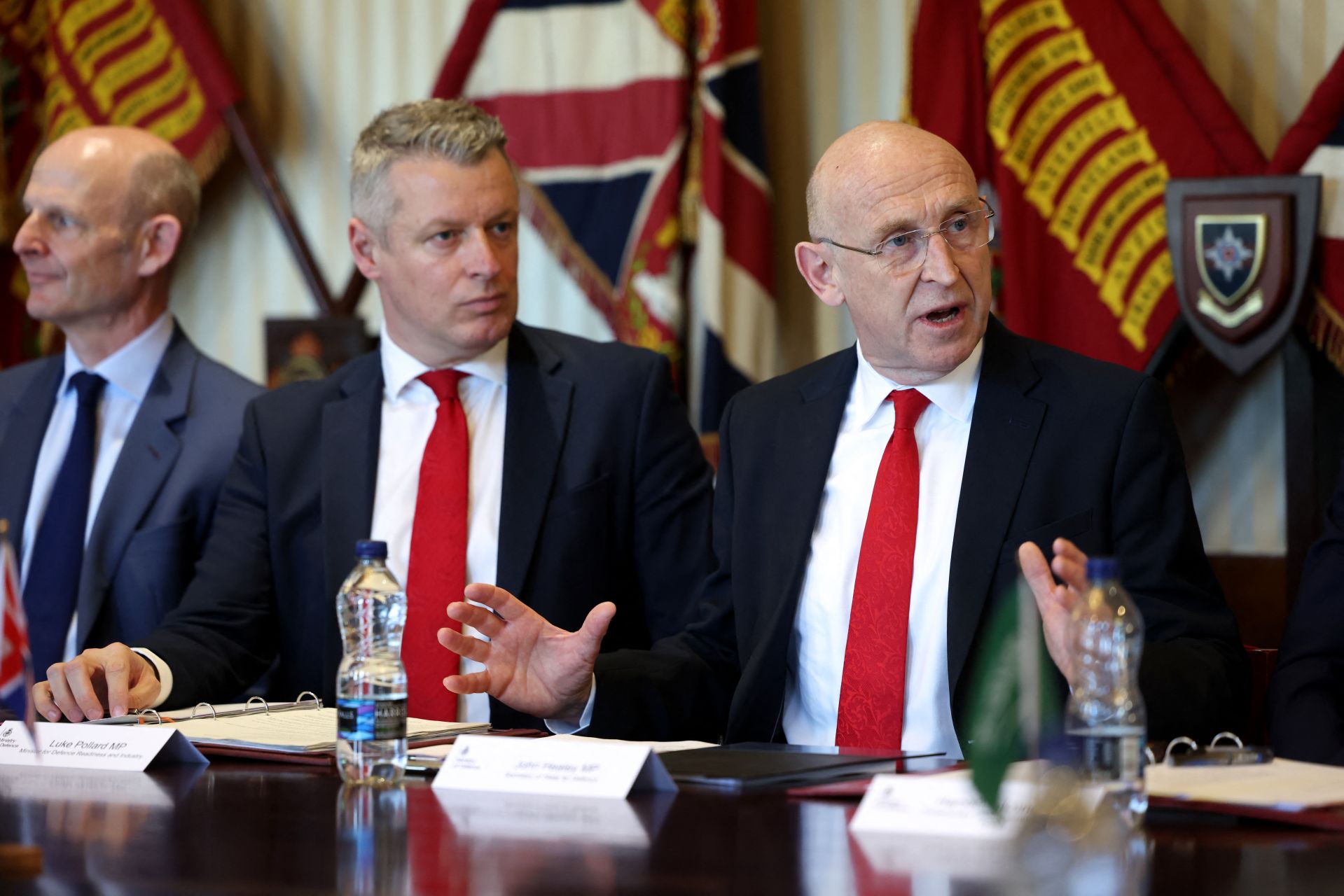
Britain's Defence Secretary John Healey, speaks beside Britain's Minister for Defence Readiness and Industry, Luke Pollard (2L) during a roundtable meeting with UK defence industry representatives and representatives from countries in the Gulf region, in the Officers' Mess in Wellington Barracks, London on March 18, 2026. ©TOBY SHEPHEARD / POOL / AFP
The war between Iran and the United States and Israel escalated further, as the British Ministry of Defense warned on Saturday that Iran’s “reckless attacks” and its control of the Strait of Hormuz pose a threat to British interests and those of its allies.
Previously on Friday, the UK warned Tehran against targeting its bases and authorized U.S. use of its facilities, while Iran ruled out a ceasefire under current conditions.
In a phone call with Iranian Foreign Minister Abbas Araghchi, British Home Secretary Yvette Cooper warned against any “direct attack” on UK bases, territory, or interests, according to an official statement.
The warning came after Tehran signaled that any use of British bases by U.S. forces would be considered direct participation in the war.
U.S. Operations Intensify as Timeline Remains Uncertain
The developments come as the United States continues its military campaign launched on February 28 alongside Israel, targeting Iran’s missile capabilities and strategic infrastructure.
The White House said earlier that President Donald Trump and the Pentagon initially estimated the war would last between four and six weeks as part of an effort to eliminate what Washington describes as Iran’s military threat.
U.S. officials also claimed that Iran’s capabilities are being progressively weakened, despite ongoing attacks across the region.
Iran Rejects Ceasefire and Signals Continued Military Response
Iran has firmly rejected any ceasefire proposal that does not meet its conditions.
Foreign Minister Abbas Araghchi said Tehran would not accept agreements that repeat previous scenarios, insisting on a comprehensive and lasting solution backed by international guarantees.
He added that Iran would continue to act in what it described as self-defense, accusing Washington of lacking genuine willingness to end the war.
At the same time, Iran’s Revolutionary Guards announced a new wave of attacks targeting U.S. bases across the region, including in Saudi Arabia, the UAE, Kuwait, and Iraq.
Strait of Hormuz Remains a Central Flashpoint
Tensions continue to center around the Strait of Hormuz, a critical route for global energy supplies.
Iran denied closing the strategic waterway but confirmed that restrictions are being imposed on countries involved in attacks against it, while allowing passage for others.
Tehran also signaled readiness to facilitate oil shipments for countries not participating in the conflict, in an apparent effort to manage international pressure amid rising global energy concerns.
Allies Step In as Conflict Broadens
Britain’s warning reflects a broader trend of increasing international involvement in the conflict.
London has authorized the United States to use British bases for operations targeting Iranian missile infrastructure linked to attacks on maritime routes, while maintaining that its role remains defensive.
However, divisions remain among Western allies, with several NATO countries reluctant to become directly involved due to fears of escalation.
With military operations intensifying, ceasefire positions hardening, and international actors becoming more directly involved, the conflict is entering a new phase, one defined not only by battlefield developments but also by expanding regional and global stakes.
Read more


Comments