- Home
- Middle East
- Oil Prices Climb as Fresh Strikes Target Infrastructure
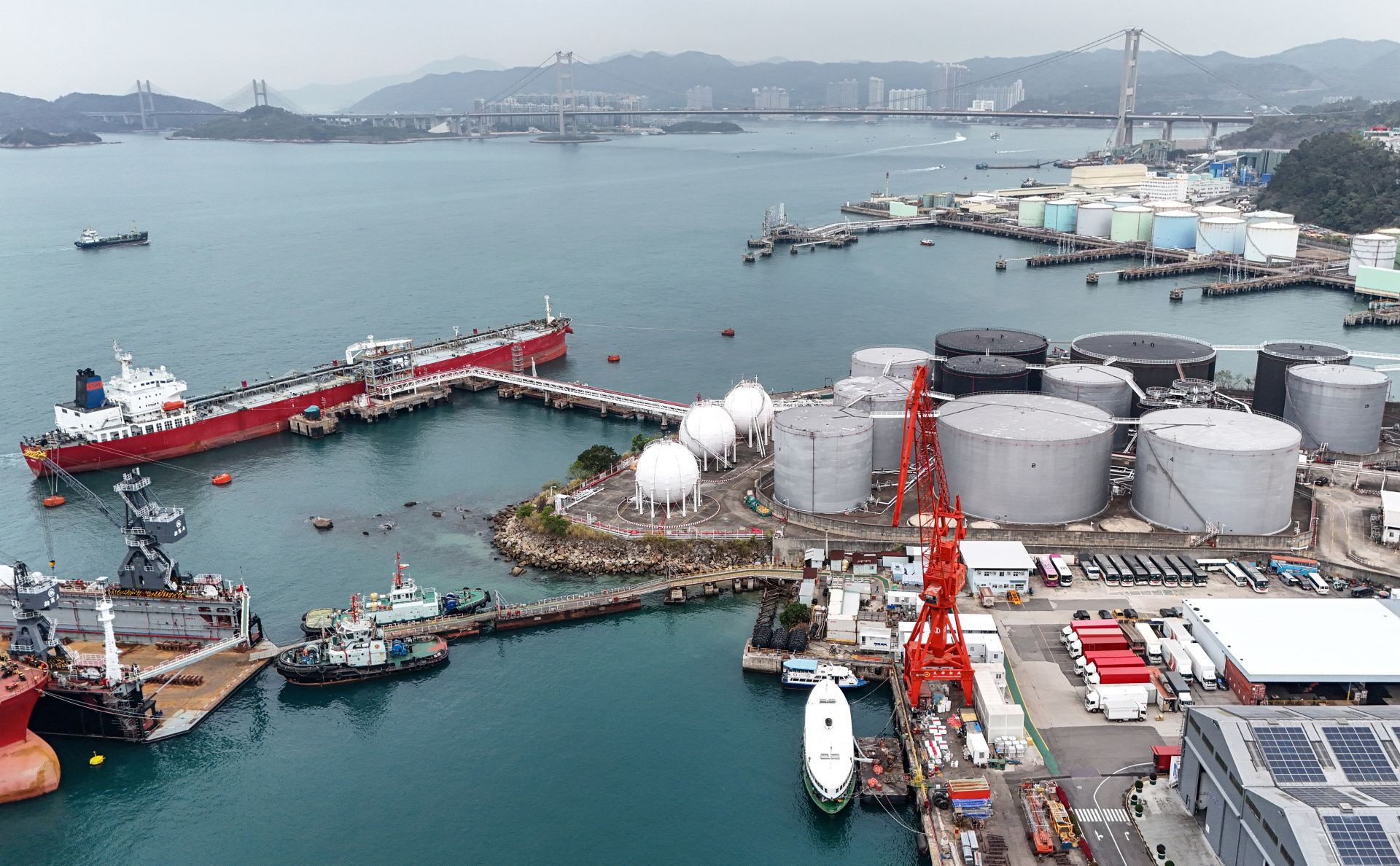
An aerial photo shows oil storage tanks at Tsing Yi port in Hong Kong on March 17, 2026. ©Photo by PETER PARKS / AFP
Oil prices surged Tuesday as Iran launched fresh attacks on crude-producing neighbors, while several countries pushed back against U.S. President Donald Trump's demand to help secure the crucial Strait of Hormuz.
Prices rebounded from the previous day's sharp losses, which came after the head of the International Energy Agency said more stockpiles could be tapped if needed.
Equity markets mostly gained as tech firms rallied after U.S. chip titan Nvidia said it expected to make at least $1 trillion in revenue through the end of 2027, taking some attention away from conflict in the Middle East.
Major European indices all advanced towards midday.
In Asia, Hong Kong, Seoul, and Taipei closed higher, though Tokyo and Shanghai dipped.
Investors are also awaiting a slew of central bank decisions this week, with expectations that interest rates will remain unchanged as elevated energy prices threaten to drive up inflation, even if the labor market appears to be softening in the United States.
The caution ahead of the key bank meetings left currency markets in a holding pattern, with the dollar little changed against most of its peers.
Australia's central bank hiked its key interest rate Tuesday, pointing to "sharply higher fuel prices."
The international benchmark Brent North Sea crude and the main U.S. oil contract, West Texas Intermediate, were both up around three percent.
"The longer the oil price stays above $100 per barrel, the louder the alarm bells for the market over inflation risks," said Dan Coatsworth, head of markets at AJ Bell.
A new drone strike on Tuesday hit the Fujairah oil complex, which sits on the Gulf of Oman and enables the UAE to bypass the Strait of Hormuz for some exports.
Two drones targeted a major southern Iraqi oil field, an oil ministry spokesperson told AFP, after the second attack in four days.
Meanwhile, Israel said it had killed Iran's national security chief as it launched a "wide-scale wave of strikes" in Tehran, alongside attacks on Hezbollah in Beirut.
"The next stage of the Iran-U.S. war has seen both sides step up attacks on energy infrastructure," said Kathleen Brooks, research director at trading group XTB.
She added that concerns are "shifting from a shipping crisis caused by the closure of the Strait of Hormuz to an oil supply crisis, where energy infrastructure across the Gulf is a target."
Trump has called for allies in Europe and elsewhere to help reopen the Strait of Hormuz, saying at the weekend that securing the waterway "should have always been a team effort, and now it will be."
However, the response has been lukewarm, with German Chancellor Friedrich Merz saying the war started by U.S.-Israeli strikes on Iran was "not a matter for NATO," while Britain, Spain, Poland, Greece, and Sweden all distanced themselves from the calls.
Australia and Japan also opted not to join.
AFP
Read more


Comments