Israeli officials are preparing for a potentially prolonged military campaign against Hezbollah in Lebanon that could continue even after the current war with Iran ends, according to officials and diplomatic sources familiar with internal discussions.
The planning reflects a growing view within Israel’s security establishment that the confrontation with the Iran-backed Lebanese group may become a separate and longer conflict, despite the ongoing U.S.-Israeli military campaign against Tehran.
According to officials briefed on the matter, Israel’s objective is to significantly weaken Hezbollah’s military capabilities and reduce what Israeli authorities describe as the persistent security threat facing communities in northern Israel.
“The aim is to inflict enough damage so that residents of the north no longer live under the constant fear of evacuation or rocket fire,” one source familiar with the discussions told the Financial Times.
A War That Could Outlast the Iran Campaign
Israeli officials have previously suggested that the broader war with Iran, launched jointly by the United States and Israel on February 28, could last several weeks as Washington and its allies seek to dismantle Tehran’s nuclear and ballistic missile infrastructure.
However, Israeli planners are increasingly preparing for the possibility that military operations against Hezbollah will extend beyond any eventual ceasefire with Iran.
An Arab diplomat briefed on the discussions said regional governments have already been warned that Israel expects the confrontation with Hezbollah to continue for an extended period.
“Israeli officials are preparing international actors for the possibility that the war with Hezbollah could last longer than the war with Iran,” the diplomat said.
Renewed Escalation on the Lebanese Front
The current escalation began after Hezbollah launched rockets and drones into northern Israel, describing the attacks as retaliation for the killing of Iran’s Supreme Leader Ayatollah Ali Khamenei during the opening phase of the U.S.-Israeli strikes on Iran.
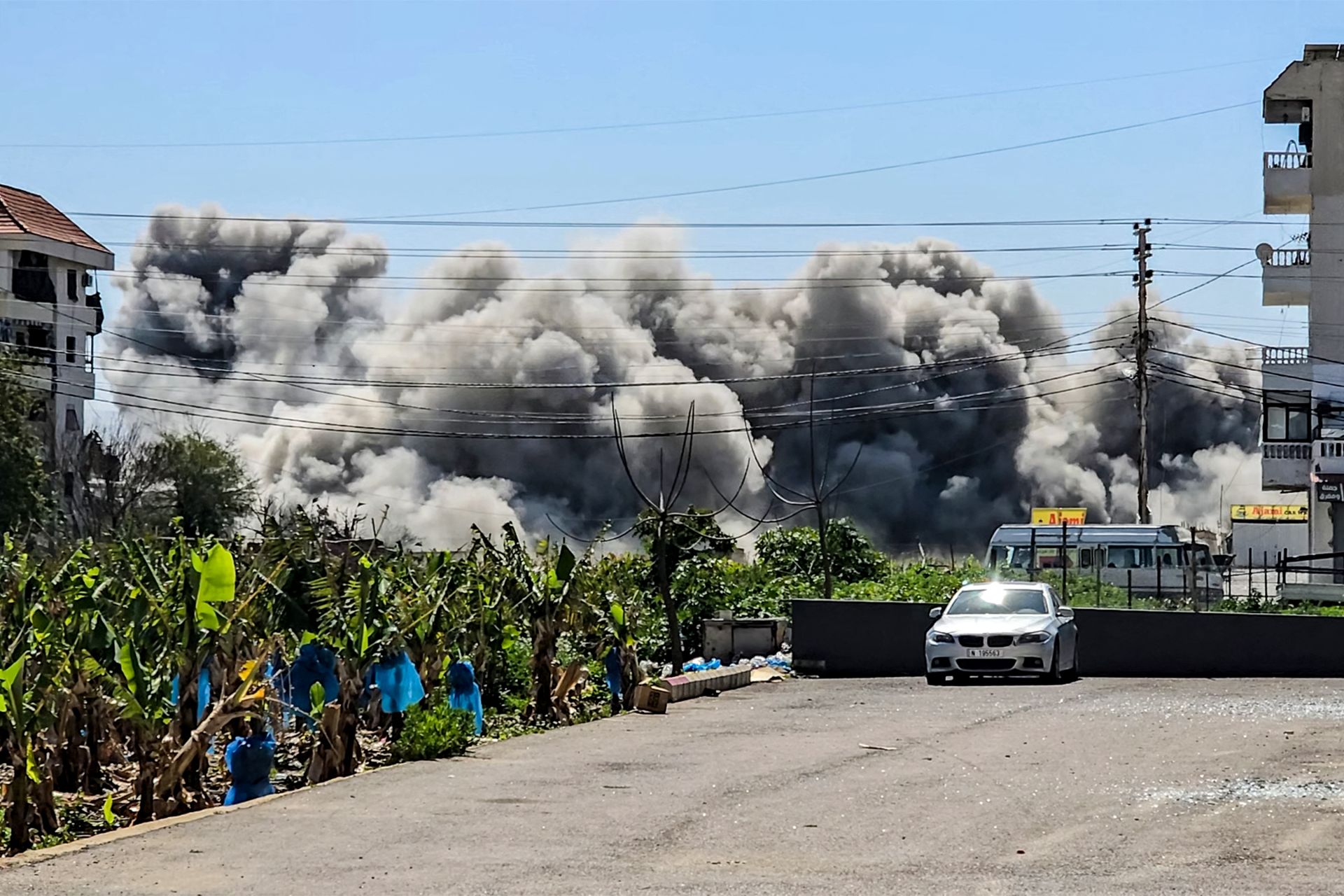
Israel responded with an expanded military campaign across Lebanon, targeting what it says are Hezbollah command centers, weapons depots and launch sites.
According to Israeli officials, more than 600 targets across Lebanon have been struck since the latest escalation began. The majority of the strikes have focused on southern Lebanon as well as Beirut’s southern suburbs, an area widely regarded as Hezbollah’s political and military stronghold.
The intensified campaign has triggered one of the largest waves of civilian displacement in Lebanon since the end of the 2024 Israel–Hezbollah war, with tens of thousands of residents fleeing affected areas.
Israeli Military Positions Expand Along the Border
Despite the ongoing war with Iran, Israeli forces have gradually expanded their presence along the Lebanese border.
Following the 2024 ceasefire, Israel maintained troops at several positions just inside Lebanese territory. According to people familiar with military movements, Israeli forces have now established roughly a dozen outposts along the frontier, while engineering units have been seen reinforcing positions up to one kilometer inside Lebanon.
Israeli officials say the deployments are intended to prevent Hezbollah fighters from launching cross-border attacks or rocket fire into northern Israeli communities.
However, the moves could also signal preparations for a longer-term military presence in parts of southern Lebanon.
Operations Inside Lebanon
Although the Israeli army has not launched a full-scale ground offensive comparable to the one carried out during the 2024 war, it has conducted several targeted operations deeper inside Lebanese territory.
These include an airborne raid in eastern Lebanon’s Bekaa Valley aimed at locating information related to missing Israeli airman Ron Arad, who disappeared in Lebanon in 1986, and a special forces operations in southern Lebanon, according to people familiar with military planning.
Some Israeli officials have also discussed the possibility of deploying forces into the Bekaa Valley, a region considered one of Hezbollah’s strategic strongholds. No final decision has yet been made on such an operation.
Competing Military Priorities
The Israeli military is currently balancing operations on two fronts: the expanding regional war with Iran and the confrontation with Hezbollah.
According to Israeli security officials, a significant portion of the country’s air power and advanced strike capabilities are currently focused on operations inside Iran.
“Most of the air assets are being used on the Iranian front,” one Israeli security official said.
This has limited Israel’s ability to conduct sustained large-scale operations in Lebanon, at least for now.
Still, Israeli military chief Lt. Gen. Eyal Zamir warned commanders that the campaign against Hezbollah will likely require patience.
“This will take considerable time,” Zamir told senior officers during a briefing Sunday. “You must be prepared for that. However long it takes, it will take.”
Diplomatic Efforts to Prevent Wider War
At the same time, diplomatic efforts are underway to prevent the conflict from escalating further.
France has reportedly proposed assisting in efforts to disarm Hezbollah, while Lebanese officials have signaled openness to direct talks with Israel as part of broader de-escalation efforts.
However, such initiatives face major obstacles, particularly given Hezbollah’s long-standing refusal to surrender its weapons, its continued backing from Iran, and the Lebanese government’s limited ability to impose a state monopoly over arms, despite repeated commitments aligned with international resolutions calling for the disarmament of non-state groups.
For now, the Lebanese front appears likely to remain a central theater of the broader regional conflict, even if the war with Iran eventually subsides.


Comments