- Home
- Middle East
- Israel-Hezbollah Escalation Intensifies as Warnings and Airstrikes Continue
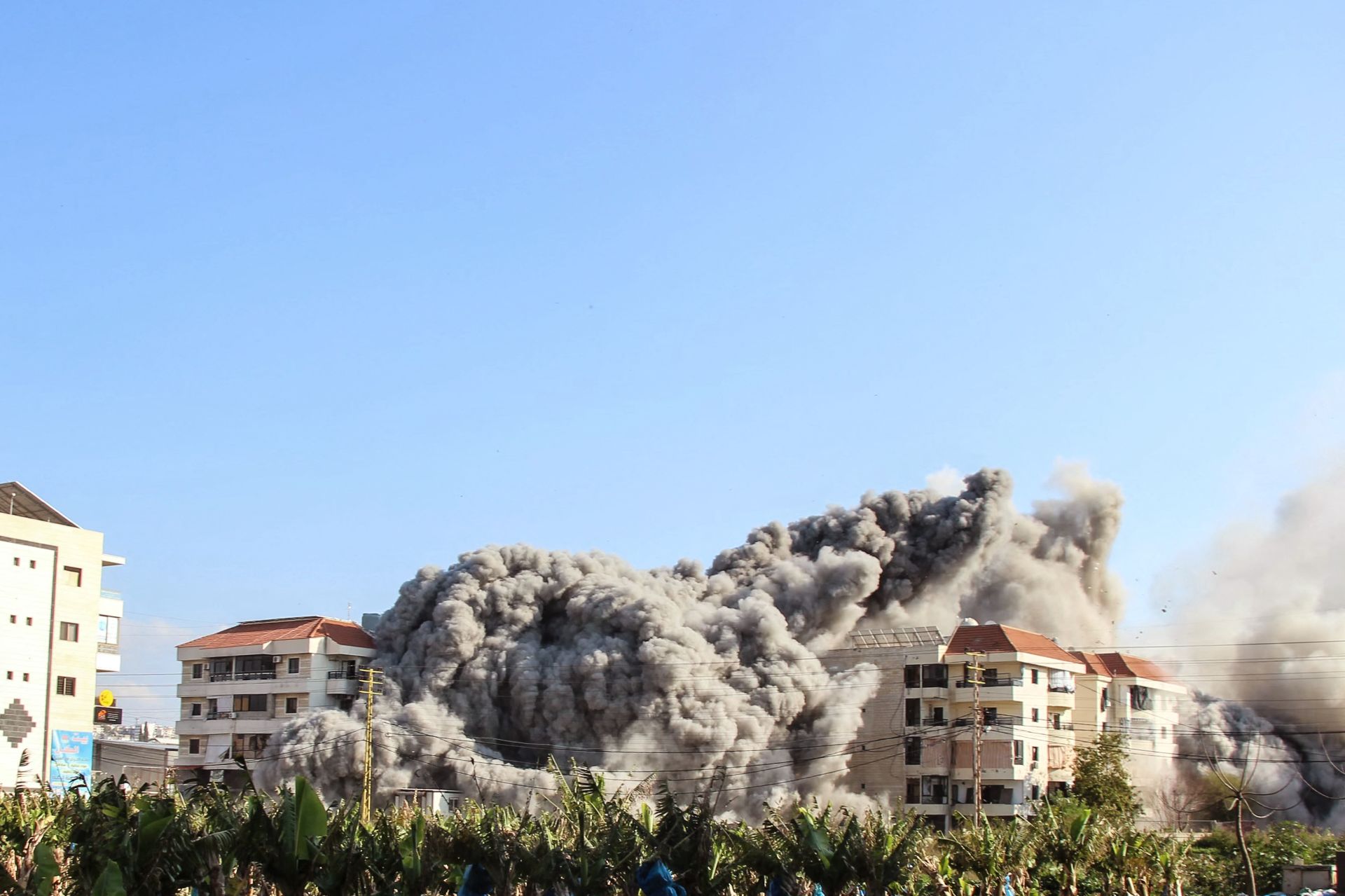
Smoke rises from the site of an Israeli airstrike that targeted an area in the southern costal city of Tyre on March 7, 2026. ©KAWNAT HAJU / AFP
The confrontation between Israel and Hezbollah intensified across Lebanon on Saturday, with Israeli airstrikes striking multiple locations in the south and the Bekaa Valley, new evacuation warnings issued to civilians, and Hezbollah launching retaliatory rocket and drone attacks toward northern Israel.
The developments come as the conflict enters its sixth day, after Hezbollah joined the wider regional war sparked by the U.S.-Israeli strikes on Iran earlier this week.
Israeli Airstrikes Target Southern Lebanon and Bekaa
While a tense and cautious calm prevailed in Beirut’s southern suburbs, the southern front lit up with a new wave of Israeli airstrikes targeting multiple towns and villages across southern Lebanon.
Israeli warplanes carried out a series of strikes across southern Lebanon, hitting towns including Ansar, Kfar Sir, Jibchit, Nabatieh al-Fawqa, Zawtar al-Sharqiya, Burj Rahhal, Tyre outskirts, Majdal Zoun, Bint Jbeil, Aita al-Shaab, Aitaroun, Zibqin, Dhayra, Yarin, and Arnoun, according to local reports.
Additional airstrikes were reported in Tyre and surrounding areas, while an Israeli strike targeted a house in Halousiyeh near Tayr Falsayeh, where a missile reportedly failed to explode.
In Kawthariyet al-Riz, a strike hit the home of Sheikh Adel al-Turki, leaving him seriously wounded and killing two of his sons.
Israeli bombardment also struck Shamstar in the Baalbek district, killing six people, according to local reports.
In the town of Zawtar al-Sharqiya, rescue teams recovered five victims from beneath the rubble of buildings destroyed by Israeli strikes.
Meanwhile, airstrikes in Nabi Sheet and surrounding areas of the Bekaa Valley killed at least 41 people and wounded 40 others, amid some of the heaviest bombardment recorded since the latest escalation began.
Israeli Military Says It Targeted Hezbollah’s Radwan Unit
The Israeli military said the strikes were part of an expanding campaign targeting Hezbollah’s military infrastructure and leadership.
According to Israeli army spokesman Avichay Adraee, the Israeli Defense Forces targeted commanders from Hezbollah’s elite Radwan Unit, along with rocket launch sites, weapons stockpiles, and other military positions in southern Lebanon and the Bekaa.
Adraee said the commanders targeted in the strikes were involved in planning attacks against Israeli civilians and military forces.
The Israeli army said it would continue to act “with determination and force” against Hezbollah following the group’s decision to join the confrontation in support of Iran.
Evacuation Warnings Expand Across Southern Lebanon
Israel issued a new round of evacuation warnings Saturday for civilians in southern Lebanon.
In one warning directed at residents in Tyre, the Israeli army urged civilians living near buildings allegedly used by Hezbollah to evacuate immediately and move at least 300 meters away from the targeted sites.
In a broader warning, Israel also called on residents south of the Litani River to leave their homes and relocate north of the river, saying Hezbollah’s activities in the area were forcing the Israeli army to operate with “large force.”
“Anyone near Hezbollah operatives, facilities, or weapons systems is putting their life in danger,” the Israeli statement said.
Hezbollah Launches Rockets and Issues Warning to Israeli Residents
Hezbollah said it carried out several attacks in response to Israeli strikes across Lebanon.
In a series of statements, the Iran-backed group said it targeted the Israeli army’s Northern Command headquarters, military positions northeast of Safed, the Tefen base east of Acre, Israeli troop concentrations near Tel al-Hamams and Khallat al-Asafir near Khiam, and Israeli military vehicles near Fatima Gate in Kfar Kila.
The group also said it fired rockets toward northern Israel and issued an Arabic and Hebrew warning calling on residents of northern Israeli settlements to evacuate toward the south.
Israeli Channel 12 reported that two drones were intercepted over the Western Galilee, with one falling in an open area and another landing near a medical facility.
Air raid sirens were also activated across parts of northern Israel following rocket launches from Lebanon.
Lebanese Government Responds as Displacement Grows
Lebanese President Joseph Aoun followed the developments through security briefings from the army command regarding the Israeli operation in Nabi Chit and the strikes on Beirut’s southern suburbs and southern villages.
Prime Minister Nawaf Salam held an emergency meeting with ministers and regional governors to coordinate the government’s response to the growing displacement crisis caused by the fighting.
Authorities said schools and public facilities are being converted into shelters, while Beirut’s Camille Chamoun Sports City stadium is being prepared to receive displaced families.
Diplomatic Pressure and Warnings from Israel
Israeli Defense Minister Israel Katz issued a direct warning to Lebanese authorities, urging them to disarm Hezbollah and prevent further attacks on Israel.
Katz warned that both the Lebanese government and population would bear the consequences of continued attacks from Lebanese territory.
“If Hezbollah destroyed Lebanon under Hassan Nasrallah, then Naim Qassem will destroy it as well,” Katz said, referring to the group’s current leader.
Israel insists it has no territorial claims in Lebanon but says it will continue operations until threats from Hezbollah are eliminated.
International Calls for De-Escalation
The United Nations Special Coordinator for Lebanon, Jeanine Hennis-Plasschaert, called for urgent dialogue between Lebanon and Israel to prevent the conflict from spiraling further.
“If the situation is dangerous now, it will certainly become worse,” she warned, urging both sides to halt hostilities and pursue negotiations.
The latest escalation comes after Hezbollah launched rockets toward Israel earlier this week, saying the attacks were retaliation for the killing of Iran’s Supreme Leader Ali Khamenei during U.S.-Israeli strikes on Iran.
Read more



Comments