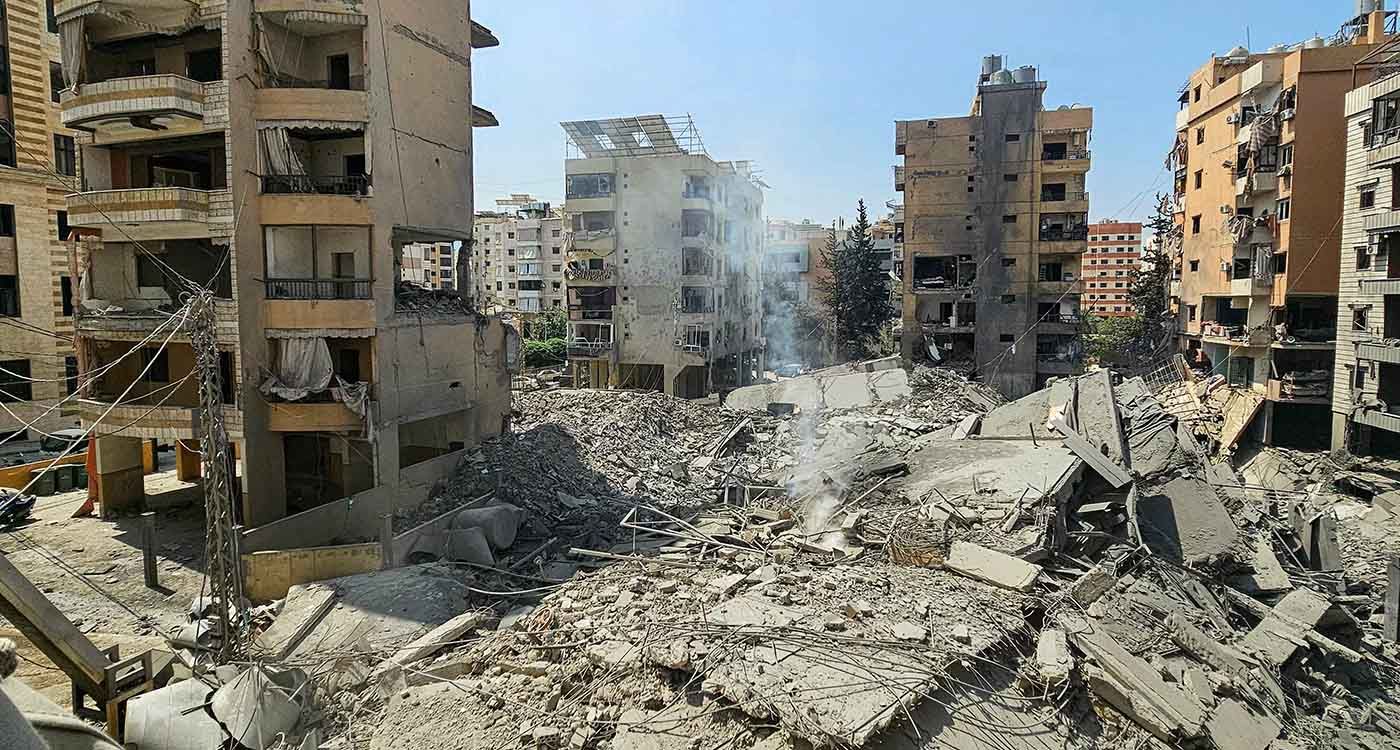
Following a steady stream of air raids overnight, Israeli forces continue to strike targets in Lebanon through Friday.
Israel’s overnight strikes targeted Hezbollah military infrastructure, command control sites, the Executive Council headquarters, and a drone storage facility, according to the Israeli army.
Strikes Continue into the Daytime
On Friday morning, Israel launched continued waves of strikes in Beirut’s southern suburbs against Hezbollah infrastructure. At least 12 strike occurrences in this area have been reported.
Strikes remained constant in this area, hitting the al-Hadath and Burj al-Barajneh areas. Warplanes are also reported to be flying over the Beirut area at low altitude.
At the same time, Israel struck sites in Nabatieh and Sidon in southern Lebanon, continuing its operations in southern Lebanon. However, these cities lie north of the Litani River, outside the zone of widespread evacuation calls on Thursday.
Israeli strikes targeted a Hamas office on the 10th floor of the Makassed building in Sidon, reportedly killing 3 people.
The Israeli army stated that this office was a node in Hamas’s global fundraising network and targeted infrastructure run by Hamas financier Issam Hashan, who is reported to have raised hundreds of millions of dollars for the organization.
Further airstrikes carried out by the Israeli army were reported in Yahmor, Shaqif, and Kfar Sir in southern Lebanon earlier on Friday.
Lebanese sources also identified additional airstrikes in southern Lebanon, targeting a vehicle between Safad al-Batikh and Tebnine.
Midday on Friday, Arabic spokesperson to the Israeli army Avichay Adraee issued an evacuation call to parts of the Bekaa Valley—Nabi Sheet, al-Khadr, Upper Sar’in, and Lower Sar’in—ahead of strikes on Hezbollah military infrastructure.
Hezbollah stated that it had targeted the Haifa naval port on Friday, and fired rockets towards Ma’aleh Malkiya in Israel.
Statements are Issued
The Lebanese state continued the position it adopted on Monday regarding non-state arms, as Prime Minister Nawaf Salam called for negotiations and protection of civilians while urging that the state retain exclusive control over arms.
Israeli Defense Minister Israel Katz stated that the Israeli army had reinforced its position in Lebanon and took control of additional “strategic points” in southern Lebanon. He said that Israel will defeat Hezbollah “one way or another” and that the Israeli army will continue strengthening its presence in Lebanon until Hezbollah no longer poses a threat.
Adraee also recommended that Lebanese account holders at the Al-Qard Al-Hassan Association—an apparatus linked to Hezbollah financial infrastructure—retrieve their funds. Al-Qard Al-Hassan Association branches were some of Israel’s first targets in Lebanon since March 2, hitting over a dozen sites on the first day of the escalation.
Increasing Casualties and Displacement
The Lebanese Health Ministry reported an updated casualties toll of 217 people killed and 798 people wounded between March 2 and March 6.
Over 400,000 people from southern Lebanon have been displaced and moved north of the Litani River, and more have evacuated from their homes in Beirut’s southern suburbs.
The UN estimates that around 50,000 Syrian refugees in Lebanon had returned to Syria over the course of the week.
The Israeli army stated that it had struck over 500 targets in Lebanon since Monday March 2.
The Israeli army also announced that 5 of its soldiers were wounded in shell fire with Hezbollah on the Lebanese-Israeli border.
Comments