- Home
- Middle East
- Khamenei Eliminated: The Collapse of a 30-Year Rule
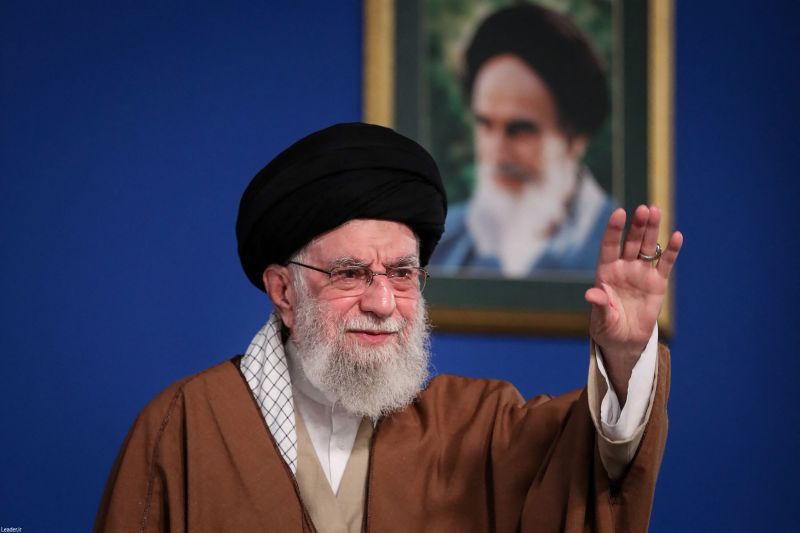
Iran's slain supreme leader, Ali Khamenei ©Khamenei.ir / AFP
Today, with reports confirming his death in the U.S. and Israeli strikes, Iran and the Middle East face a period of uncertainty. Khamenei’s passing ends an era of over three decades at the pinnacle of power, during which he shaped Iran’s domestic policies and regional strategy.
His death opens the door to intense succession struggles within the regime and could profoundly impact the stability of both the country and the region. Diplomacy, security, and the balance of power in the Middle East now face a historic turning point, as Iran must contend with a void at the top of its religious and political leadership.
Ali Hosseini Khamenei, born April 19, 1939, in Mashhad into a family of influential Shia clerics, became one of the most prominent figures in the modern Middle East. From an early age, he received a strict religious education, studying in the seminaries of Mashhad and Qom with a focus on Islamic jurisprudence and Shia theology.
His youth was marked by opposition to the regime of Shah Mohammad Reza Pahlavi, whom he criticized for authoritarianism, corruption, and a modernization policy perceived as Westernizing an Islamic country.
Khamenei quickly distinguished himself in the Iranian revolutionary movement, organizing clandestine activities, delivering religious speeches, and leading protests against the Shah. His political engagement and loyalty to Ayatollah Ruhollah Khomeini earned him a reputation as a disciplined loyalist and increased his public profile among religious opposition circles.
Rise to power
After the 1979 Iranian Revolution, which overthrew the Shah and established the Islamic Republic, Khamenei rapidly climbed the ranks of power. He held several key positions, including deputy and mayor of Tabriz, before being elected President of Iran in 1981 at the age of 42. His presidential term was dominated by the Iran-Iraq War (1980–1988), a period of intense national mobilization and immense human suffering.
During his presidency, Khamenei worked to maintain regime unity amid social and political tensions while playing a central role in developing military capabilities and training new generations of political and military cadres.
In 1989, following Khomeini’s death, Khamenei became Supreme Leader, the highest religious and political authority in Iran. This position gave him near-absolute control over the government, military, judiciary, and the Islamic Revolutionary Guard Corps (IRGC), a pillar of Iran’s regional influence.
Under his leadership, Iran pursued military and strategic strengthening, including its nuclear program, ballistic missiles, and support for allied groups across the Middle East. Khamenei also exercised strict control over internal politics, suppressing popular movements and justifying these actions in the name of national security.
Ali Khamenei embodied a mix of religious rigor and political pragmatism. His doctrine was based on the principle of Velayat-el Faqih, under which a religious jurist holds ultimate responsibility for the country. On the international stage, he adopted anti-Western and anti-Israeli rhetoric, consolidating Iran’s regional alliances with Hezbollah, Hamas, the Houthis, and various militias in Iraq and Syria.
Read more

Comments