- Home
- Middle East
- Israeli Defense Ministry Announces 'Preventive Strike' on Iran
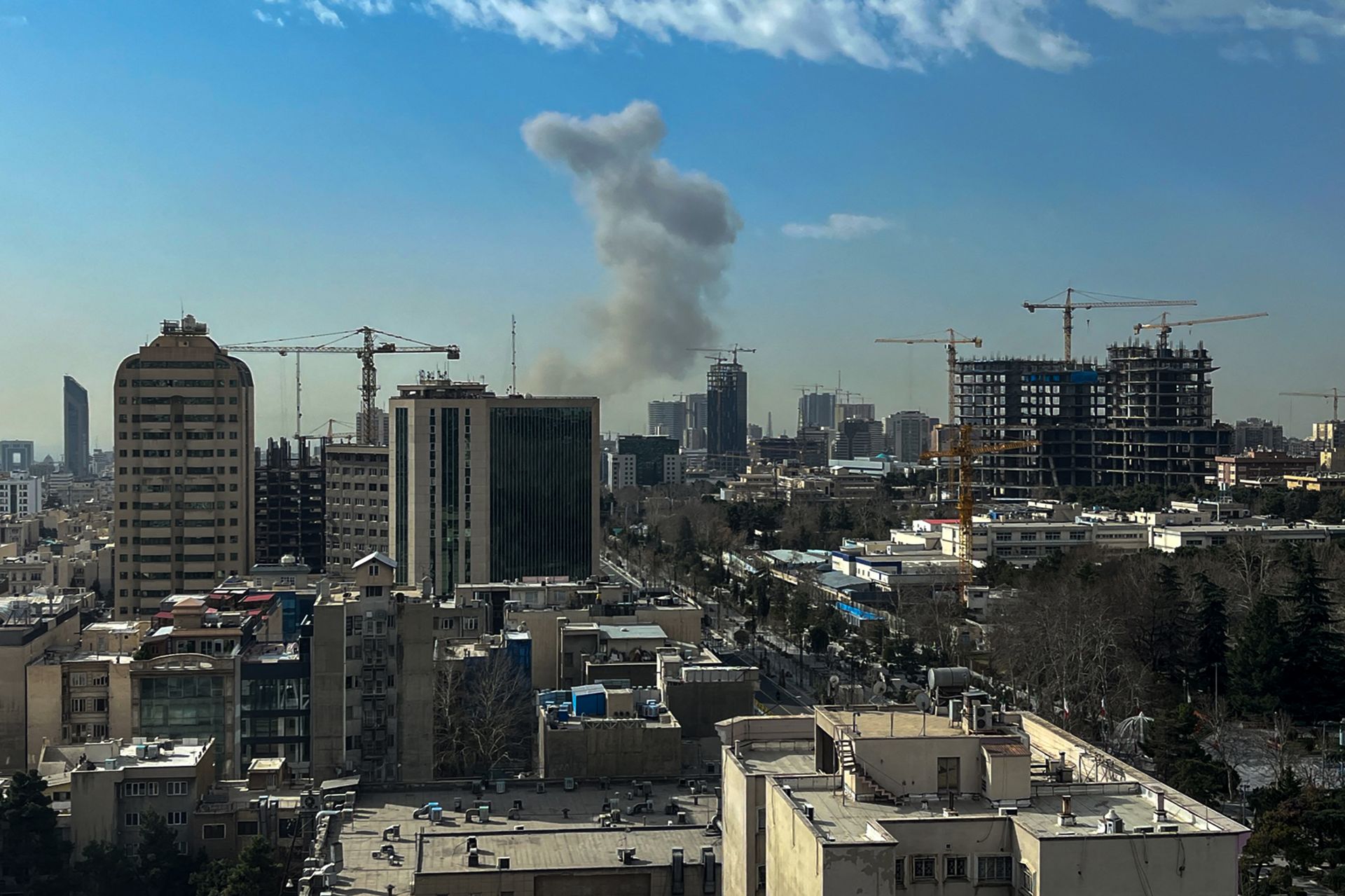
A plume of smoke rises following a reported explosion in Tehran on February 28, 2026. ©AFP
Israel's Defense Ministry announced Saturday it had launched a "preemptive strike" on Iran as sirens sounded in Jerusalem and people across the country received phone alerts about an "extremely serious" threat.
"The State of Israel has launched a preemptive strike against Iran. Defense Minister Israel Katz has declared a special and immediate state of emergency throughout the country," read a statement from his ministry.
Israel’s Channel 12 reported, citing a security official, that the initial phase of the operation is expected to include four days of intense joint strikes against Iran.
According to the Israeli Broadcasting Corporation, joint Israeli-American attacks are ongoing, and government headquarters were targeted in the preemptive strike, including the Iranian intelligence headquarters and the Iranian presidential palace. Israel is reportedly carrying out a long list of assassinations.
Nearly 30 sites were targeted across Iran, including the residence of Iran’s Supreme Leader and the headquarters of the intelligence services of the Islamic Revolutionary Guard Corps, according to Yedioth Ahronoth. Explosions were reported in the cities of Qom, Isfahan, Kermanshah, and Karaj.
Israeli media outlets also reported what they described as an attempted assassination of Iranian President Masoud Pezeshkian, though no confirmation has been issued by Iranian officials.
Israeli officials indicated that a long-planned military operation had been launched in coordination with the United States and that planning for the operation had been underway for months, with the timing finalized weeks ago.
Shortly after the reports emerged, Iran’s Mehr News Agency announced that the country’s airspace had been fully closed “until further notice,” a measure typically taken during large-scale military contingencies. At the same time, Iranian media reported disruptions to mobile phone networks in parts of Tehran, along with degraded internet services. The cause of the communications outages was not immediately clear, and Iranian authorities have yet to provide an official explanation.
The ripple effects extended beyond Iran’s borders. Iraq’s Ministry of Transportation announced it was clearing Iraqi airspace ahead of a full closure, a precautionary step often taken during periods of heightened regional military risk.
Regional governments and international observers are closely monitoring developments as official confirmations remain limited and the situation continues to evolve rapidly.
Read more



Comments