- Home
- Middle East
- Direct U.S.-Iran Talks Mark Key Moment in Geneva Nuclear Negotiations
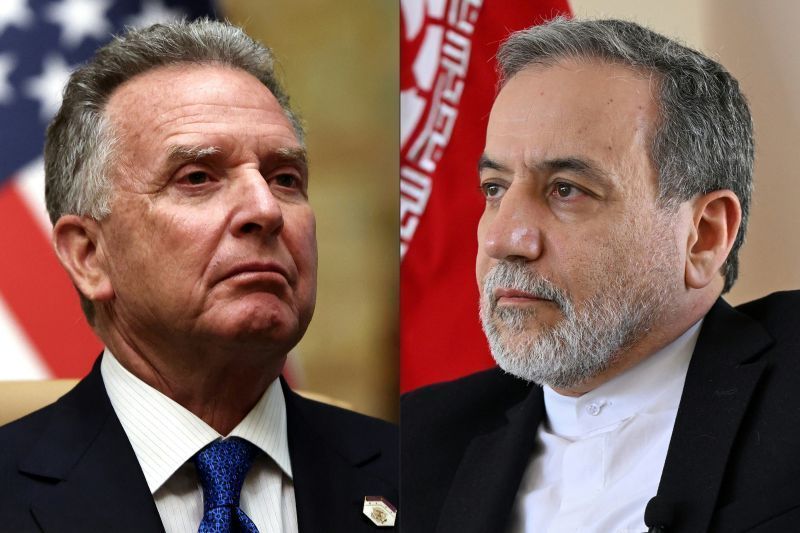
U.S. envoy Steve Witkoff meets Iranian FM Abbas Araghchi amid renewed efforts to revive stalled nuclear negotiations. ©AFP
President Trump's envoys Steve Witkoff and Jared Kushner have held more than three hours of negotiagtions with Iranian Foreign Minister Abbas Araghchi in Geneva on Thursday to try and reach a breakthrough towards a nuclear deal.
Al-Busaidi and the director general of the International Atomic Energy Agency, Raphael Grossi, both participated in the negotiations. Al-Busaidi said during a break in the talks that "we've been exchanging creative and positive ideas" and "hope to make more progress."
According to Axios, citing an informed source, the third round of nuclear negotiations took place in two stages. The first stage was indirect, with Omani Foreign Minister Badr al-Busaidi relaying messages between the parties. The second stage involved a direct meeting between American and Iranian negotiators.
Washington pushes permanent deal
In the ongoing talks in Geneva, U.S. negotiators were expected to make clear that Iran must dismantle its three main nuclear sites, Fordow, Natanz, and Isfahan, and hand over all remaining enriched uranium to the United States, officials said.
The U.S. is insisting on zero enrichment, but its negotiating team may be open to allowing Iran to operate a Tehran-based reactor that handles very low-level enrichment for medical purposes, U.S. officials said.
Flexibility was signaled on Iran’s demand to retain the right to enrich uranium, but only if Tehran could demonstrate that there is no viable pathway to developing a nuclear weapon.
They are also expected to emphasize that any nuclear agreement must be permanent, with no sunset clauses, unlike the previous pact negotiated under the Obama administration, which Republicans have long criticized as too weak.
Third round opens amid military buildup
Negotiators reconvened in Geneva for a third round of indirect U.S.-Iran nuclear talks under Omani mediation, with both sides arriving amid heightened tensions and a significant U.S. military buildup in the region.
Iran’s delegation, led by Foreign Minister Abbas Araghchi, presented a new package of proposals focused on sanctions relief and nuclear guarantees, though Western officials described Tehran’s stance as lacking flexibility on key enrichment issues.
Iran has publicly affirmed its readiness to continue negotiations and insists it will not pursue nuclear weapons, while U.S. envoys maintain pressure for comprehensive, permanent restrictions. These developments come as analysts say the talks are critical in narrowing deep gaps between the parties and could determine whether diplomacy prevails or tensions escalate further.
Read more
Comments