- Home
- Middle East
- Netanyahu: Iran Deal Must Eliminate Enrichment, Curb Ballistic Missiles
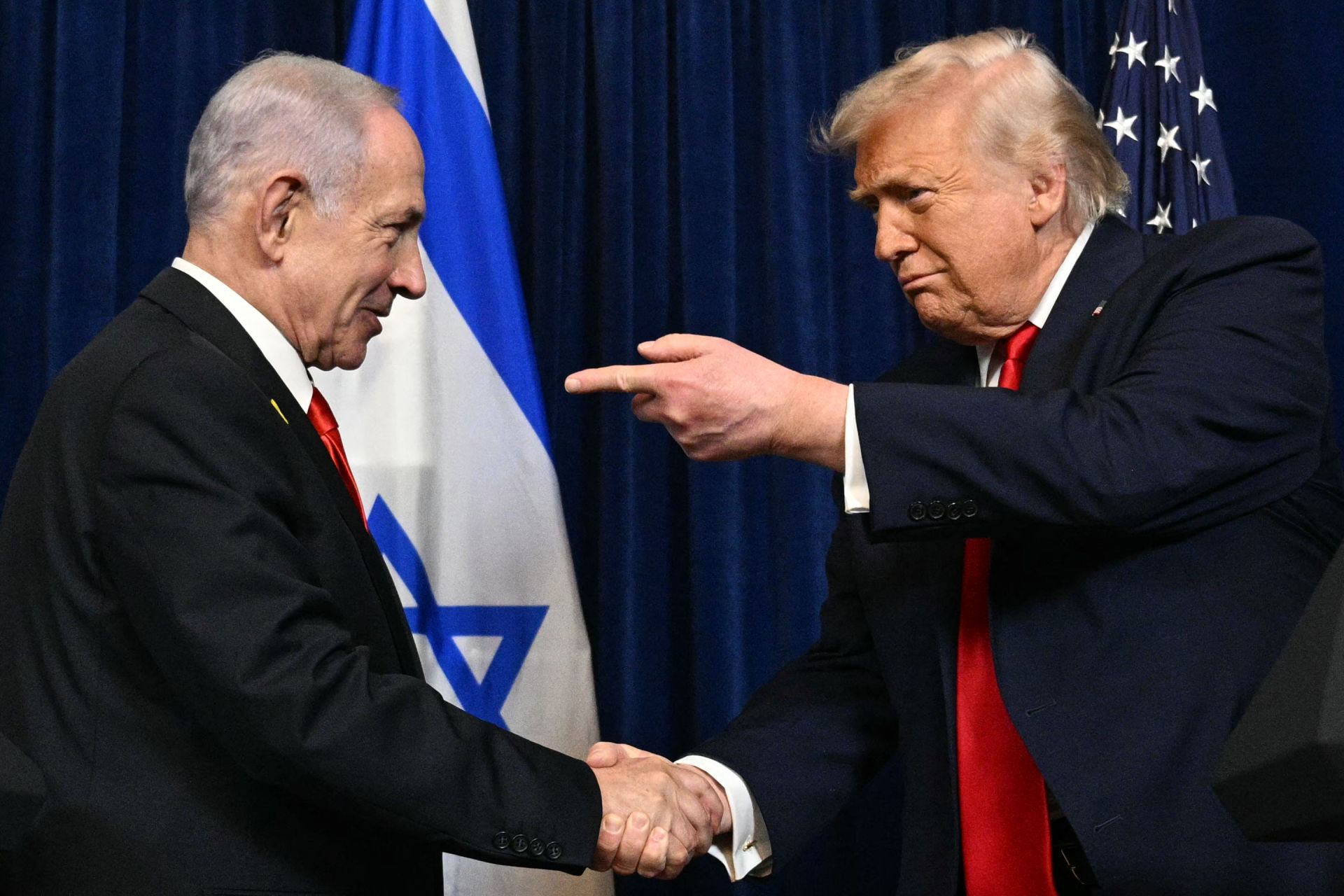
U.S. President Donald Trump and Israeli Prime Minister Benjamin Netanyahu shake hands as they arrive to address reporters during a joint press conference at Trump’s Mar-a-Lago residence in Palm Beach, Florida, on December 29, 2025. ©Jim Watson / AFP
Netanyahu on Sunday publicly reinforced Israel’s red lines, saying any agreement with Iran must include the removal of all enriched uranium from Iranian territory, the dismantling of Tehran’s enrichment infrastructure, strict inspections, and limits on Iran’s ballistic missile capabilities.
Speaking in Jerusalem at a conference of major American Jewish organizations, Netanyahu said he had conveyed these demands directly to Trump earlier this month.
“The first is that all enriched material has to leave Iran,” Netanyahu said. “The second is that there should be no enrichment capability; dismantle the equipment and the infrastructure that allows you to enrich in the first place. The third is resolving the ballistic missile issue.”
He also called for what he described as “real inspection, substantive inspections, no lead-time inspections,” stressing that any deal must include continuous monitoring of Iran’s nuclear program.
U.S. President Donald Trump told Israeli Prime Minister Benjamin Netanyahu in December that he would support Israeli strikes on Iran’s ballistic missile program if negotiations between Washington and Tehran fail, CBS News reported Sunday, citing two sources familiar with the discussions.
The message was delivered during a meeting in Florida, according to the report, highlighting growing coordination between the United States and Israel as renewed nuclear diplomacy enters a decisive phase.
Araghchi heads to Switzerland as talks resume
Netanyahu’s remarks came as Iranian Foreign Minister Abbas Araghchi traveled to Switzerland on Sunday ahead of a second round of renewed nuclear talks with U.S. officials later this week.
Iran and the United States restarted indirect negotiations in Muscat on February 6, months after previous talks collapsed following Israeli strikes on Iranian military and nuclear-linked sites last June, which escalated into a 12-day war. The United States later joined the campaign, hitting key Iranian facilities before a ceasefire took hold.
Trump has repeatedly warned that “bad things” could happen if diplomacy fails, even as he signals openness to a negotiated outcome.
Uranium stockpile and missiles at the center of dispute
Significant uncertainty surrounds Iran’s nuclear stockpile. Inspectors from the International Atomic Energy Agency reported in June, before Israeli and U.S. strikes, that Tehran possessed more than 400 kilograms of uranium enriched to 60%, a level just short of weapons-grade.
Israel argues that Iran’s missile program represents an immediate threat alongside its nuclear activities, pressing Washington to ensure any agreement addresses both.
Iran, for its part, has rejected expanding negotiations beyond the nuclear file, insisting its missile capabilities are non-negotiable and framing them as essential to national defense.
High stakes for diplomacy
Israeli officials say Netanyahu is seeking to shape the outcome of talks before any potential agreement is finalized, warning that a narrow nuclear deal would leave Iran’s broader military capabilities intact.
With Araghchi en route to Europe, U.S. naval assets already positioned in the region, and Israel pressing for tougher terms, diplomats and analysts say the coming days could determine whether diplomacy gains traction or whether the standoff slides toward renewed confrontation.
Read more


Comments