- Home
- Middle East
- Iran Rejects Military Pressure as Nuclear Talks Resume Under Shadow of U.S. Naval Buildup
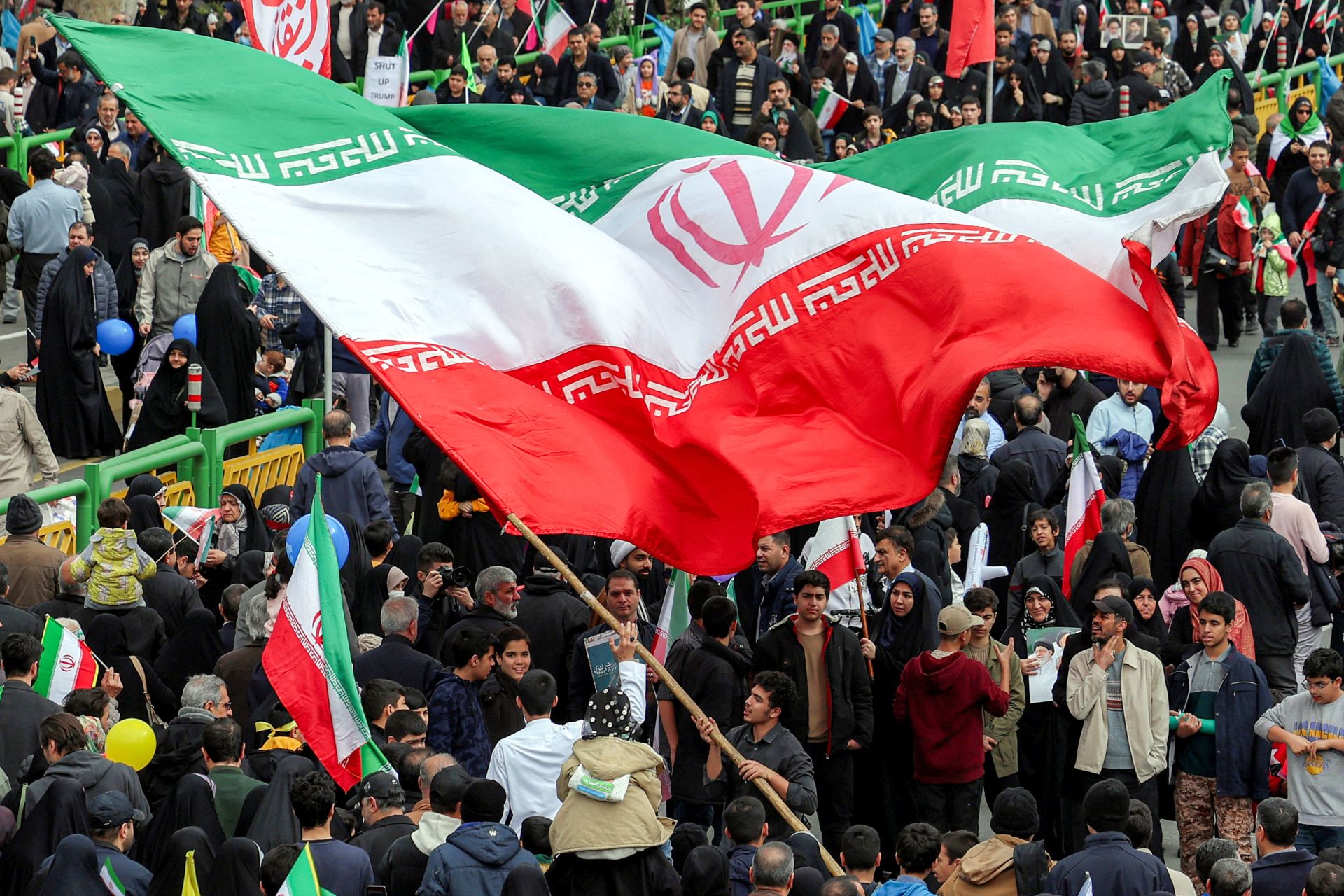
A man waves a giant Iranian flag during a rally marking the 47th anniversary of the 1979 Islamic revolution in Tehran on February 11, 2026. ©- / AFP
Jalal Dehqani Firouzabadi, secretary of Iran’s Strategic Council on Foreign Relations, said Thursday there is “no military solution” to Iran’s nuclear file, arguing that recent history has already proven the limits of force.
Speaking to Iran’s ISNA news agency, Firouzabadi said the current talks differ fundamentally from previous negotiating rounds, pointing to last summer’s 12-day conflict with Israel, in which the United States also took part, as a turning point that has deepened mistrust and complicated diplomacy.
“You are now negotiating with a party that attacked you,” he said, adding that confidence in Washington has sharply eroded.
Firouzabadi described the renewed talks as politically heavier and psychologically charged, warning that Iran must remain vigilant against what he called past “deception scenarios,” referring to U.S. strikes on Iranian nuclear facilities that occurred while diplomatic channels were still formally open.
Despite this, he framed Washington’s return to negotiations as a strategic gain for Tehran, saying it reflects an American realization that Iran’s nuclear program cannot be dismantled by force.
He stressed that talks remain at a preliminary stage, with both sides outlining red lines rather than engaging in detailed technical negotiations, but said even agreement on continuing dialogue should be viewed as a positive development.
Diplomacy Under Deterrence
Firouzabadi also underscored Iran’s dual-track approach: diplomacy backed by military readiness.
“Diplomacy plays a deterrent role and seeks to prevent war,” he said. “But the primary deterrent comes from military power.”
His remarks come as the United States increases its naval footprint in the region. American officials have confirmed preparations to deploy a second aircraft carrier to join forces already operating near Iran, amid warnings from Donald Trump that “bad things” could happen if talks collapse.
Iranian military leaders, meanwhile, say they are closely monitoring what they describe as suspicious movements by U.S. forces.
Rear Admiral Shahram Irani, commander of Iran’s navy, said Thursday that Iranian forces are tracking “enemy movements around the clock,” adding that Tehran’s priority is safeguarding maritime security and protecting Iranian shipping.
He also suggested that Washington fears internal Iranian unity more than military confrontation, framing popular resilience as a strategic asset.
Iranian officials have warned that any attempt to seize Iranian oil shipments or escalate militarily would provoke a response, while reiterating that Tehran remains open to negotiations — provided U.S. demands are not, in their words, excessive.
Core Disputes Remain
While both sides describe the first round of talks held in Oman last week as “positive,” fundamental disagreements persist.
Iran continues to reject any discussion of its ballistic missile program and insists that uranium enrichment is a sovereign right. Tehran has signaled limited flexibility on enrichment levels and inspections in exchange for sanctions relief but has ruled out abandoning enrichment entirely or dismantling its missile capabilities.
Washington, for its part, has pushed for tighter limits on Iran’s enriched uranium stockpile and broader constraints on Tehran’s regional influence.
Turkish Foreign Minister Hakan Fidan said Thursday that both Washington and Tehran are showing increased flexibility, though he cautioned that expanding negotiations to include missiles could derail diplomacy and risk another war.
Trump has publicly maintained that he prefers a negotiated outcome but continues to reinforce U.S. military posture in the Gulf, keeping pressure on Tehran as talks proceed.
A Fragile Window
Iranian officials say they are prepared for continued dialogue but warn against optimism. Firouzabadi urged caution, saying foreign policy requires preparing for worst-case scenarios even while pursuing diplomacy.
Tehran argues that last year’s conflict demonstrated the limits of military coercion and believes the U.S. now recognizes that a diplomatic track is unavoidable.
With negotiations expected to resume soon and U.S. naval assets already in place, the coming days could prove decisive, determining whether the standoff moves toward compromise or slides closer to another regional escalation.
Read more



Comments