- Home
- Middle East
- Most Families of Foreign Fighters Left IS-Linked Camp in Syria: Sources
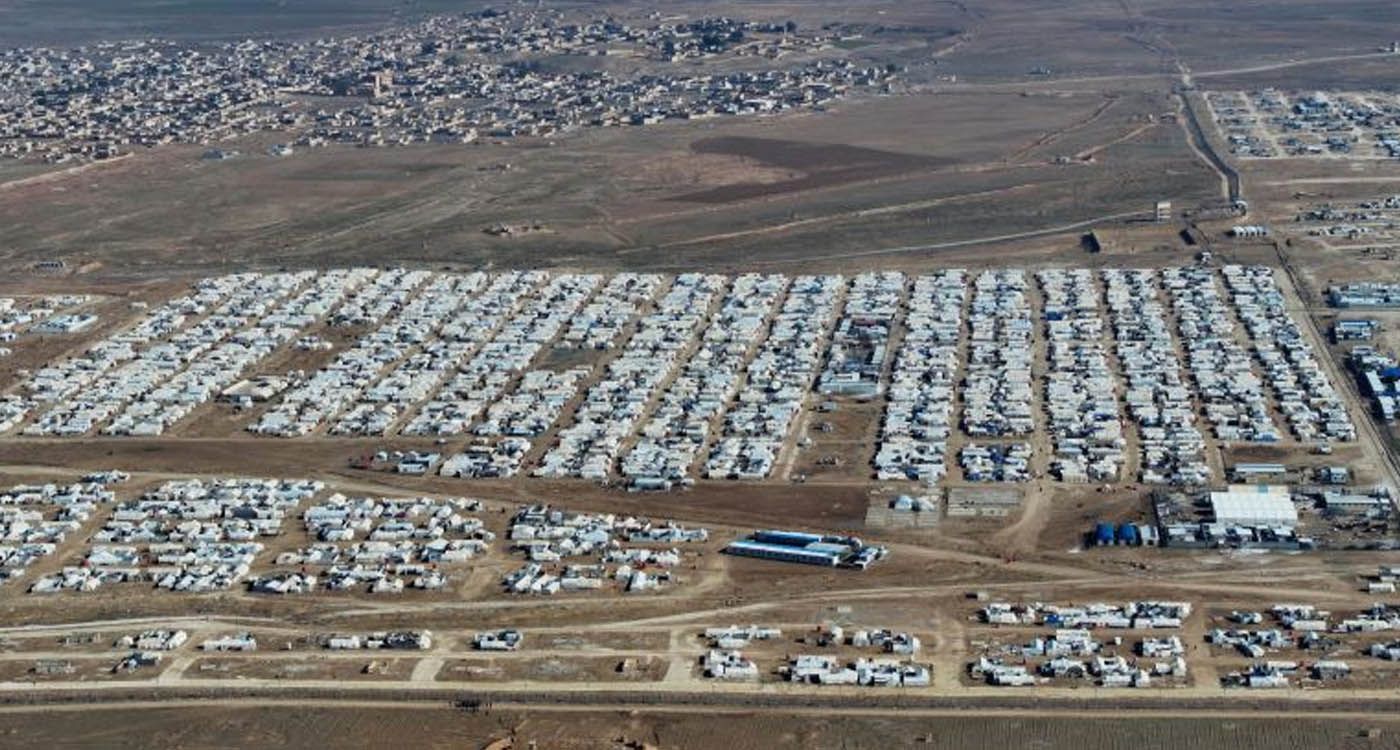
Vue aérienne du camp d'Al-Hol dans une région désertique de la province syrienne de Hassaké, le 21 janvier 2026. ©OMAR HAJ KADOUR/AFP
Most foreign families have left northeast Syria's Al-Hol camp, which holds relatives of Islamic State group fighters, since the departure of Kurdish forces who previously guarded it, humanitarian sources told AFP on Thursday.
The defence ministry meanwhile announced that the army had taken control of the Al-Tanf base after the withdrawal of US forces deployed there as part of the coalition against the IS, as Damascus seeks to extend its control over all of Syria.
Al-Hol, located in a desert region of Hasakeh province, is Syria's largest camp housing the relatives of suspected IS fighters.
Last month, the government took over the camp from the Kurdish administration which had long handled it, as the Kurds ceded territory and Damascus extended its control across swathes of Syria's northeast.
A source from a humanitarian organisation, speaking on condition of anonymity, told AFP that "since last Saturday... there are no more than 20 families in the foreigners' annex".
The Kurdish-led SDF said on January 20 that they had been forced to withdraw from Al-Hol, while the army, which entered the camp the following day, accused them of abandoning the site.
Women and children, including many from Russia, the Caucasus and Central Asia, have lived in the high-security section of the camp, separate from Syrians and Iraqis.
A second source from another humanitarian organisation, also requesting anonymity, said the foreigners' annex was basically empty, with some women having moved to the main camp.
An eyewitness told AFP they saw armed men, some appearing to be foreigners, taking fully veiled women from the camp in vehicles after government forces took control.
A humanitarian organisation working in Al-Hol told AFP "the population in the camp has significantly reduced".
"We have been unable to meaningfully resume our programming due to people leaving the camp, the fact that our centres were damaged and looted, and the safety and security situation is still unstable," it said.
A source from the camp administration, which now falls under Syria's foreign ministry, told AFP that authorities were carrying out a camp census, without confirming whether anyone had left.
If any escaped, it was blamed on the Syrian Democratic Forces (SDF), "which withdrew from the site" without properly handing it over, the source added, requesting anonymity.
‘Smuggled Out’
Prior to the changeover, the camp held some 24,000 people, mostly women and children, including some 15,000 Syrians, several thousand Iraqis and more than 6,000 other foreigners from around 40 nationalities.
An aid worker in Syria told AFP on condition of anonymity that "it's clear that many people including foreigners have left the camp, but there are no official figures yet as the verification process" is ongoing.
Images shared with AFP showed largely empty streets in the camp's usually busy market area.
The first humanitarian source said "a large number of them (foreigners) were smuggled out to Idlib and to other provinces", while a small number joined the main camp.
Idlib was a bastion of rebel and jihadist groups, before an Islamist-led alliance launched a lightning offensive from there that toppled longtime Syrian ruler Bashar al-Assad in 2024.
A Syrian camp resident who identified himself as Abu Mohammed, 35, told AFP by WhatsApp that after the Kurdish administration left, "the women and children in the foreigners' section moved to the Syrian and Iraqi section of Al-Hol, and some fled".
"A couple of days later, they (foreigners) started leaving the camp in large numbers," he said.
In Lebanon, a man requesting anonymity told AFP that four members of his family who had been held in Al-Hol for years had returned to the country along with relatives of other Lebanese fighters.
"They were able to leave the camp after government forces turned a blind eye," he said, requesting anonymity.
An Iraqi security source told AFP on condition of anonymity that Baghdad was coordinating with the US-led anti-IS coalition to bring a last batch of 300-350 Iraqi families home.
The US military began transferring thousands of suspected IS jihadists including foreign detainees from Syria to Iraq last month.
AFP
Read more

Comments