- Home
- Middle East
- Turkey Says Washington and Tehran Showing New Flexibility as Nuclear Talks Resume
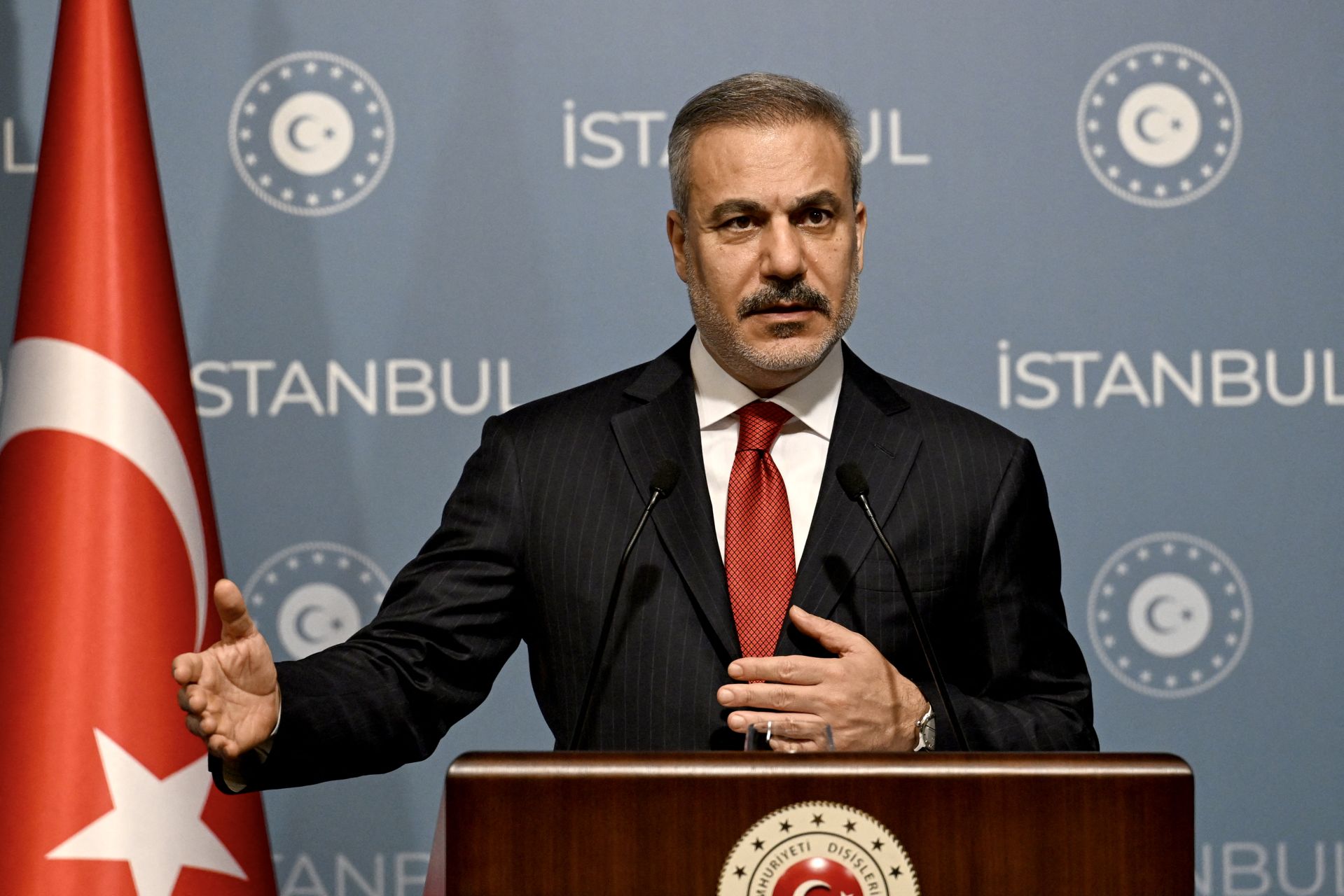
Turkish Foreign Minister Hakan Fidan. ©Ozan Kose / AFP
Turkey’s foreign minister said the United States and Iran are displaying rare signs of pragmatism in efforts to revive negotiations over Tehran’s nuclear program, suggesting Washington may now be prepared to tolerate limited uranium enrichment under strict conditions.
In an interview with the Financial Times published Thursday, Hakan Fidan said both sides appear increasingly aware of each other’s red lines after weeks of heightened regional tension.
“It is positive that the Americans appear willing to tolerate Iranian enrichment within clearly set boundaries,” Fidan said, adding that Tehran, in turn, recognizes the urgency of reaching an agreement.
“The Iranians now understand they need a deal with the Americans, and the Americans understand that Iran has certain limits. It’s pointless to try to force them,” he told the paper.
Enrichment, sanctions, and inspections
Washington has until now demanded that Iran relinquish its stockpile of uranium enriched up to 60 percent, a level close to weapons-grade material, while Tehran has insisted on its right to enrichment and the lifting of sweeping financial sanctions.
Iranian President Masoud Pezeshkian has reiterated that any agreement must include sanctions relief and recognition of Iran’s nuclear rights.
Fidan said he believes Tehran “genuinely wants to reach a real agreement,” and would accept caps on enrichment levels alongside a robust international inspection regime, similar to the framework established under the 2015 nuclear accord.
U.S. and Iranian diplomats held indirect talks in Oman last week as part of renewed mediation efforts involving regional actors, including Turkey. Those contacts came amid a visible U.S. military buildup in the Gulf, ordered by President Donald Trump, which raised fears of a possible escalation.
Trump said earlier this week he was considering deploying a second aircraft carrier to the Middle East even as preparations continue for another round of negotiations.
Missiles remain a flashpoint
While Ankara has played a behind-the-scenes role facilitating dialogue, Fidan warned that expanding talks beyond the nuclear file could derail diplomacy altogether.
“The moment ballistic missiles are added to the agenda, it brings nothing but another war,” he said.
Iran has consistently rejected negotiating over its missile program, describing it as a core element of national defense. Its top diplomat, Abbas Araghchi, has maintained that discussions must remain strictly focused on nuclear issues.
The evolving U.S. position on enrichment marks a potential shift from Washington’s earlier hardline stance, which called for Iran to fully dismantle sensitive nuclear activities. Neither the White House nor the State Department immediately commented on Fidan’s remarks.
A fragile opening
The diplomatic push comes against a backdrop of deep mistrust, recent domestic unrest inside Iran, and growing Israeli pressure on Washington to ensure any agreement also addresses Tehran’s missile capabilities and support for regional armed groups.
Still, Turkish officials say both sides now appear to be testing whether a narrower, technically focused deal could stabilize the situation and avert another regional confrontation.
Read more


Comments