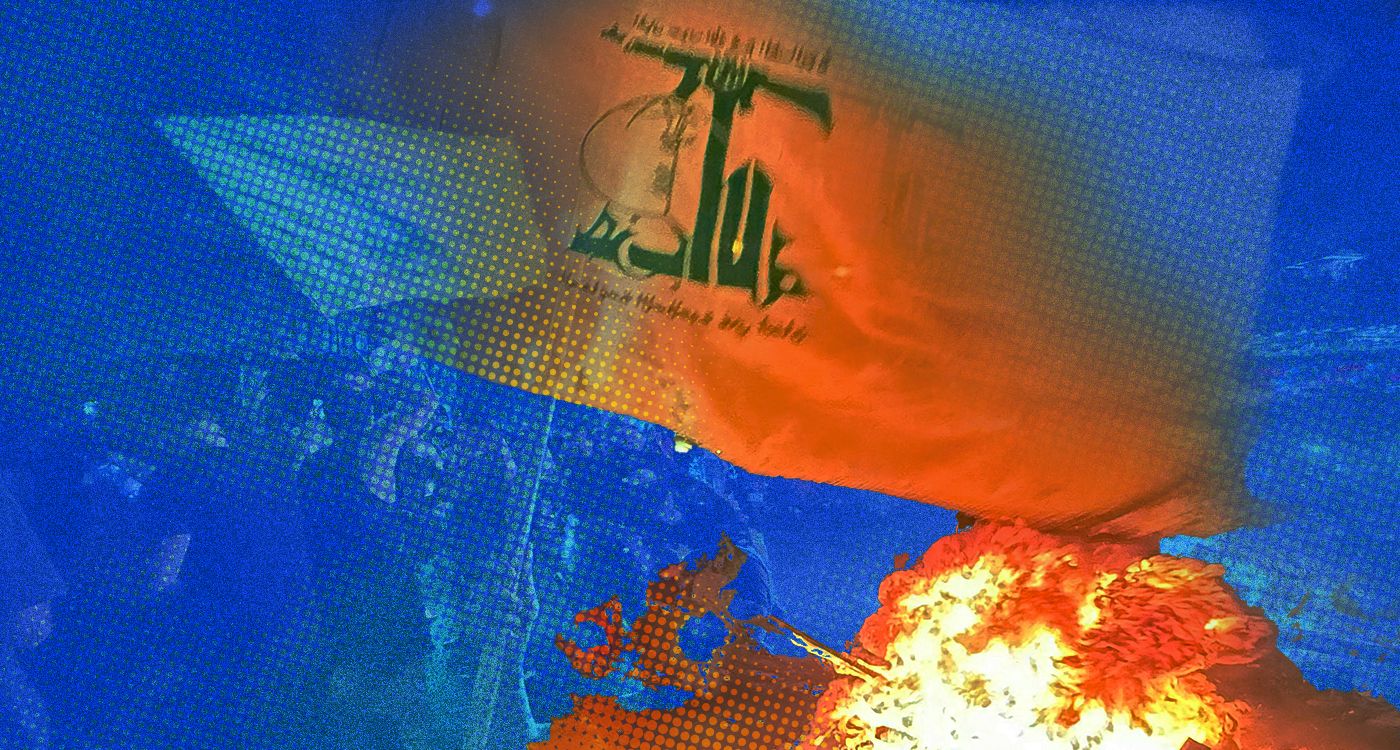
As Hezbollah faces mounting pressure, the risk is growing that the group could once again turn to assassinations to preserve its fragile military, political, and financial positions.
In December 2025, fresh revelations about the activities of Hezbollah’s assassination squad, Unit 121, brought the group’s use of political violence back into the spotlight. The Israel Defense Forces (IDF) said the secretive Hezbollah apparatus had murdered Lebanese figures to silence them regarding the group’s role in the improperly stored ammonium nitrate that exploded at the Port of Beirut on August 4, 2020.
Between 2017 and 2021, Customs officers Joseph Skaff and Mounir Abou Rjeily, photographer Joe Bejjani, and prominent Hezbollah critic Lokman Slim were killed by shootings, a stabbing, and a fatal fall, which the IDF attributed to Hezbollah.
This was not the first time these mysterious killings were linked to Hezbollah. A July 2023 investigation published by Amnesty International described the links between the Beirut port blast, which killed at least 220 people, and the brutal murder of these four men.
In November 2025, the IDF said that Hezbollah’s Unit 121 was responsible for the assassination of Lebanese Forces official Elias al-Hasrouni, a staunch opponent of the organization, staging the killing as a car accident.
These assassinations are the latest in a series attributed to Hezbollah’s Unit 121, which has a long record of violence aimed at subverting Lebanese democracy. Likely established around 2000, Unit 121 uses terror tactics—car bombings, mob-style shootings, and stabbings—to carry out professional assassinations, mostly targeting political opponents, under direct orders from Hezbollah’s leadership.
Alongside physical violence, pro-Hezbollah circles have waged campaigns of online intimidation and threats against the party’s critics. Quieter, but no less dangerous, threats have been directed to journalists and activists.
Hezbollah has undertaken extensive efforts to reconstitute its operational strength and re-establish its dominance over the Lebanese political landscape. Given the opportunity, Hezbollah will use every tool and capability at its disposal, including political assassinations, to recreate the chokehold it once exerted over Lebanon.
A History of Violence
Hezbollah’s use of political assassinations dates back to the late 1980s, according to media reports, when the Islamist group targeted officials of the secular Lebanese National Resistance Front and Lebanese Communist Party, rivals for the mantle of resistance against Israel.
This deadly tactic remained largely dormant until 2004, when Lebanese politicians, led by former Prime Minister Rafik Hariri, and foreign powers began urging Syria to end its security and political dominance over Beirut. In September 2004, the UN Security Council adopted Resolution 1559, which called for Syria’s withdrawal from Lebanon and the disarmament of its local ally, Hezbollah.
In October 2004, Druze politician Marwan Hamadeh, an anti-Assad regime figure, survived an assassination attemptwhen a bomb exploded near his car in the Lebanese capital. On February 14, 2005, a massive truck bomb in downtown Beirut killed Hariri and 21 others, sparking the Cedar Revolution protests that led to Syria’s withdrawal from Lebanon later that spring. A June 2005 assassination killed Samir Kassir, a prominent leader of the Cedar Revolution.
In November 2006, Hezbollah and its allies withdrew from the Lebanese government in a failed bid to stop it from backing a UN Security Council-mandated investigation into Hariri’s assassination. In the ensuing months, a wave of assassinations killed five politicians from the March 14 alliance opposed to Hezbollah, a Lebanese Armed Forces officer, and a Lebanese security official probing Hariri’s murder. These assassinations came to a temporary end when Hezbollah and its allies regained veto power in a new Lebanese government after wielding violence in May 2008 fighting in Beirut and other parts of Lebanon.
The Special Tribunal for Lebanon, established to bring to justice Hariri’s killers, in 2011 indicted four Hezbollah members from Hezbollah’s Unit 121. This covert unit, whose existence remained secret until after the STL found a Hezbollah member guilty in 2020, is widely believed to be responsible for the wave of assassinations in Lebanon.
Even after Hezbollah consolidated political power after 2008, it did not sheathe its sword of political killings. Wissam al-Hassan, a top Internal Security Forces official and former Hariri security chief, was assassinated in October 2012. Mohammad Chatah, a Future Movement figure and critic of Hezbollah, was killed in a car bombing in downtown Beirut in December 2013.
Unit 121’s next challenge was to silence Lebanese Customs after two of its officers drafted a warning of the risks posed by the 2,750 tons of ammonium nitrate housed at the Beirut port. Their killings started before the August 4, 2020 explosion, presumably to steer the public eye away from its existence, and continued afterward to suppress any evidence of Hezbollah’s culpability.
Risks of Unit 121 reactivation
Hezbollah is heading into the Parliamentary elections, tentatively scheduled for May 2026, weakened by significant losses inflicted during its conflict with Israel. Its leader, Naim Qassem, is widely perceived to lack the broad charismatic appeal of his widely popular predecessor Hassan Nasrallah, who was assassinated by Israel in September 2024.
The group’s conflict with Israel led to extensive destruction of Shia-populated areas, with foreign aid for reconstruction contingent on the group dismantling its arsenal. Hezbollah cannot cover the cost of compensating these homeowners from its own funds, fueling mistrust and discontent among its traditional supporters. Hezbollah’s fiscal deficit will also likely constrain the group’s campaign efforts ahead of the vote.
Hezbollah likely eyes success in the elections as a pathway to financial reprieve. Ongoing unrest in Iran could sharply reduce Hezbollah’s budget, or even end Tehran’s funding entirely if regime change occurs. Additionally, Hezbollah's illicit revenue streams are under mounting pressure as drug trafficking and money laundering operations in Syria and Venezuela face disruption from U.S., Syrian and Lebanese enforcement.
Hezbollah is undoubtedly evaluating the patronage model used by Amal, wherein political loyalty is exchanged for state resources. To facilitate this, the party must install loyalists at the helm of lucrative ministries to channel state funds, employment opportunities, and public contracts toward its base.
Ultimately, Hezbollah seeks to sweep all 27 Shia seats in Lebanon’s parliament along with its ally the Amal Movement with the aim of securing a veto block over any future cabinet decisions regarding its military apparatus. The group is coming under increasing criticism for giving Israel the pretext to continue its airstrikes in Lebanon by not disarming nationwide and ending its efforts to reconstitute its military command and infrastructure.
As Lebanon’s government prepares to expand state efforts to disarm Hezbollah north of the Litani River, Hezbollah official Mahmoud Qomati said such a move could lead to a civil war, joining a chorus of warnings from the party. However, these threats were met with disdain by opposing politicians, suggesting Hezbollah’s domestic political deterrence has waned.
Given these dynamics, the risk is rising that Hezbollah could reactivate its assassination unit to intimidate or eliminate political opponents advocating the group’s disarmament, including independent Shia figures who resist pressure to abandon political campaigns against the party.
As demonstrated by the assassination of Lokman Slim in February 2021, Hezbollah is willing to use such tactics within its own community and might do so to stifle any opposition candidates ahead of the elections.
Amid international pressure to curtail Hezbollah’s power, a strategic window has emerged to dismantle the organization’s brutal machinery of violence. This moment represents a critical juncture for the Lebanese state to reassert its monopoly on the use of force and end Hezbollah’s campaign of terror against the country’s citizens and leaders.

Comments