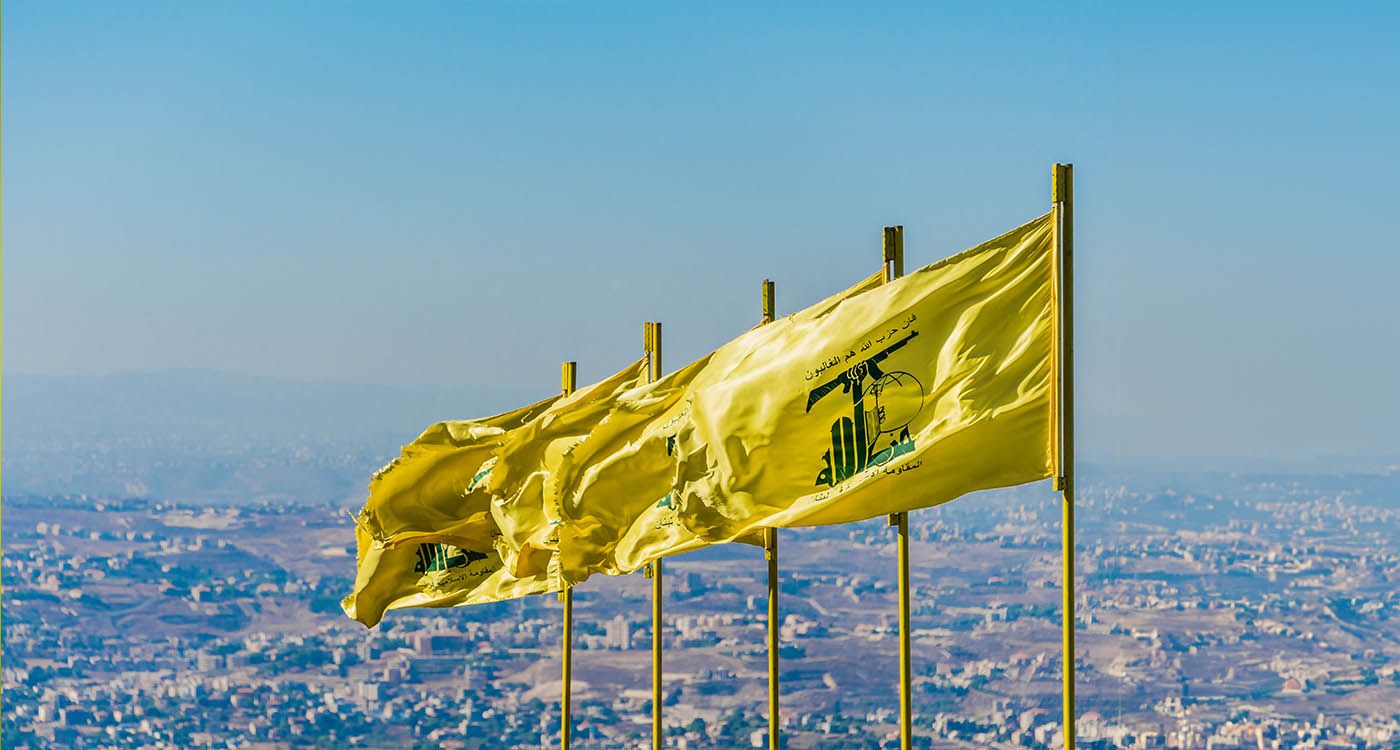
Kuwait added eight Lebanese hospitals to its national terrorism list on Monday in an effort to target service sectors that Hezbollah incorporates into its cashflow.
This development grows the list of sanctioned Lebanese entities by the Kuwaiti government, which notably includes the Hezbollah-affiliated financial apparatus Al Qard Al Hassan.
The named hospitals are part of what is often described as a “health force” that supports Hezbollah’s ecosystem alongside its political and military wings. Hezbollah’s health infrastructure has been a key tool for Hezbollah to access funds and resources from Lebanese state institutions, according to Nidaa al-Watan.
Lebanon’s Ministry of Public Health has sizable funding that contains a notable portion of the national budget: approximately $480 million in 2025.
Some of the financial resources directed towards Lebanon’s national budget come from international aid and remittances, which incentivizes governments such as Kuwait to ensure their resources do not get funneled into Hezbollah’s financial apparatus.
Following the 2020 port blast in Beirut, a public financing scandal arose when hospitals in Hezbollah’s network received funding increases compared to hospitals that suffered more damage and treated more casualties from the blast radius. Nidaa al-Watan outlined the example of the al-Rasoul al-A’zam Hospital receiving an additional 5.5 billion Lebanese pounds in 2020 despite seeing no explosion damage.
Even with sanctions, hospitals have been a tool to access funding from the Lebanese state. Several Hezbollah-affiliated hospitals, including the aforementioned al-rasoul al-A’zam hospital, have been subject to U.S. scrutiny but provide employee salaries and budget allocations through Lebanese ministries in cash when bank accounts are frozen.
As Hezbollah has faced setbacks in its influence and support systems, it has become increasingly dependent on resources allegedly siphoned from Lebanese state ministries such as the Ministry of Public Health.
The Bashar al-Assad regime facilitated Hezbollah’s smuggling of goods through Syria ranging from arms and military hardware to drugs, pharmaceuticals, and physical cash. These networks have been significantly cut back by Ahmed al-Sharaa leadership. Additionally, Iran’s financial resources are increasingly limited, decreasing the amount of Iranian fiscal support directed towards Hezbollah. The organization can no longer safely rely on these sources to finance their operations.
Kuwait’s sanctions against the eight Lebanese hospitals were announced amidst a wave of sanctions carried out by western governments, including the U.S. and EU, targeting the Iranian shadow fleet, the IRGC, and key Iranian officials. The U.S. congress also introduced a bill last week to propose sanctioning any individuals in the Lebanese government obstructing its upcoming parliamentary elections
Comments