- 06
- Feb.
- 2026

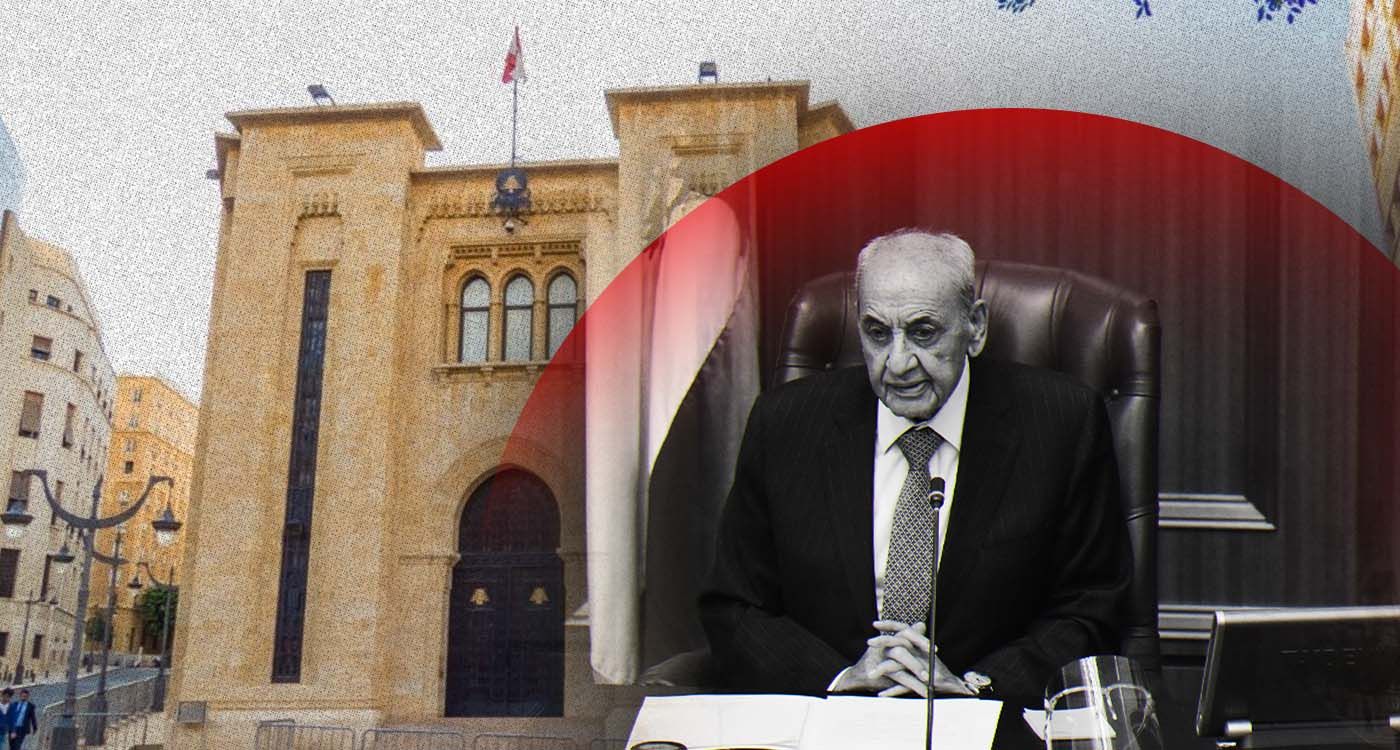
Fortunate countries see their leaders come and go; in hapless ones, time ravages everything but their rulers. Lebanon is trapped in the latter camp, with one politician freezing his grip on power and the country’s chance for reform.
The country’s banks collapsed and its currency crashed, the port exploded, half the youth emigrated, and whole neighborhoods are now run on backup electricity generators and WhatsApp voice notes.
And yet one constant remained, almost geological in its permanence: Nabih Berri sitting in the speaker’s chair of the Lebanese Parliament, the same way he has since 1992. If Lebanon were a museum, Berri would be the only exhibit that never gathers dust.
Thirty-plus years.
Seven terms.
Three decades of “temporary arrangements.”
Lebanon’s crisis is systemic, one more entrenched even than geopolitical or financial storms. The machinery of power is built to prevent change, with Berri the chief engineer. Thomas Friedman once wrote that some countries are run by institutions and others by “fixers.” Lebanon perfected the fixer model.
Need a law? Call Berri.
Need a delay? Call Berri.
Need a compromise? Call Berri.
Need nothing to happen at all? Definitely call Berri.
The Speaker in most democracies is a referee. In Lebanon, the Speaker became the thermostat, deciding when the heat goes up and when the system freezes.
No budget? Freeze.
No president? Freeze.
No reforms? Freeze.
No accountability? Freeze.
In theory, this kept the country “stable.” In practice, it turned Parliament into a waiting room where laws go to die. Lebanon didn’t fail for lack of ideas, but for lack of decisions.
Berri’s real power lies beyond procedural control of the Parliament. He leads the Amal Movement, the political half of the Shia duopoly that governs in tandem with Hezbollah. Amal wears a suit, staffing state institutions, while Hezbollah dons fatigues, supplying the weapons. Together, they form a complete ecosystem.
Outsiders misunderstand this key element, believing that Hezbollah dominates Lebanon just with its rockets. The party also asserts its control through state budgets and contracts, parliamentary votes, leveraging its influence within ministries and customs at ports. Hezbollah’s main ally, Berri, can slow any reform that threatens this status quo.
Berri’s Parliament has long been the bridge between official institutions and that shadow state. So when Western policymakers talk about “disarming Hezbollah,” they are missing half the picture. You do not dismantle a parallel army if the political system that protects it remains intact.
Disarmament without political reform is theater. You cannot talk about Lebanese sovereignty while the same political gatekeepers who normalized the militia-state hybrid still run the legislature.
To be fair, Berri has always had a ready defense. He is the dealmaker, a mediator who can talk to everyone. Diplomats love him for that. In every crisis, there is a sentence whispered in embassies: “Call Berri. He can fix it.”
And sometimes he does. But, paradoxically, the same man who can temporarily fix Lebanon is also the reason Lebanon always needs fixing.
He negotiates calm, not change.
He manages symptoms, not causes.
He keeps the patient alive, but never allows surgery.
It is like having the world’s best ambulance driver, but no hospital.
Meanwhile, the country moved on without its politicians. Young Lebanese have left to build startups in Dubai and Paris instead of Beirut or Tripoli, while doctors and teachers have emigrated. Lebanon exported its talent and kept its warlords.
As a result, Lebanon is trapped in its past, funded by its diaspora, and surviving on nostalgia, more memory than country.
So what does “ending Berri’s role” actually mean? Any politics of revenge is no solution. The Shia deserve equitable and fair power in Lebanon’s system. Ending his role simply means that no office should be held eternally, with its holder becoming part of the furniture and outliving an entire generation.
If Lebanon wants to convince its people—and the world—that reform is possible, it needs to prove that power can rotate. Once state offices are freed from rulers, and instead held by leaders, everything else can become possible.
A Parliament that actually passes banking reform.
A judiciary that isn’t blocked.


Comments