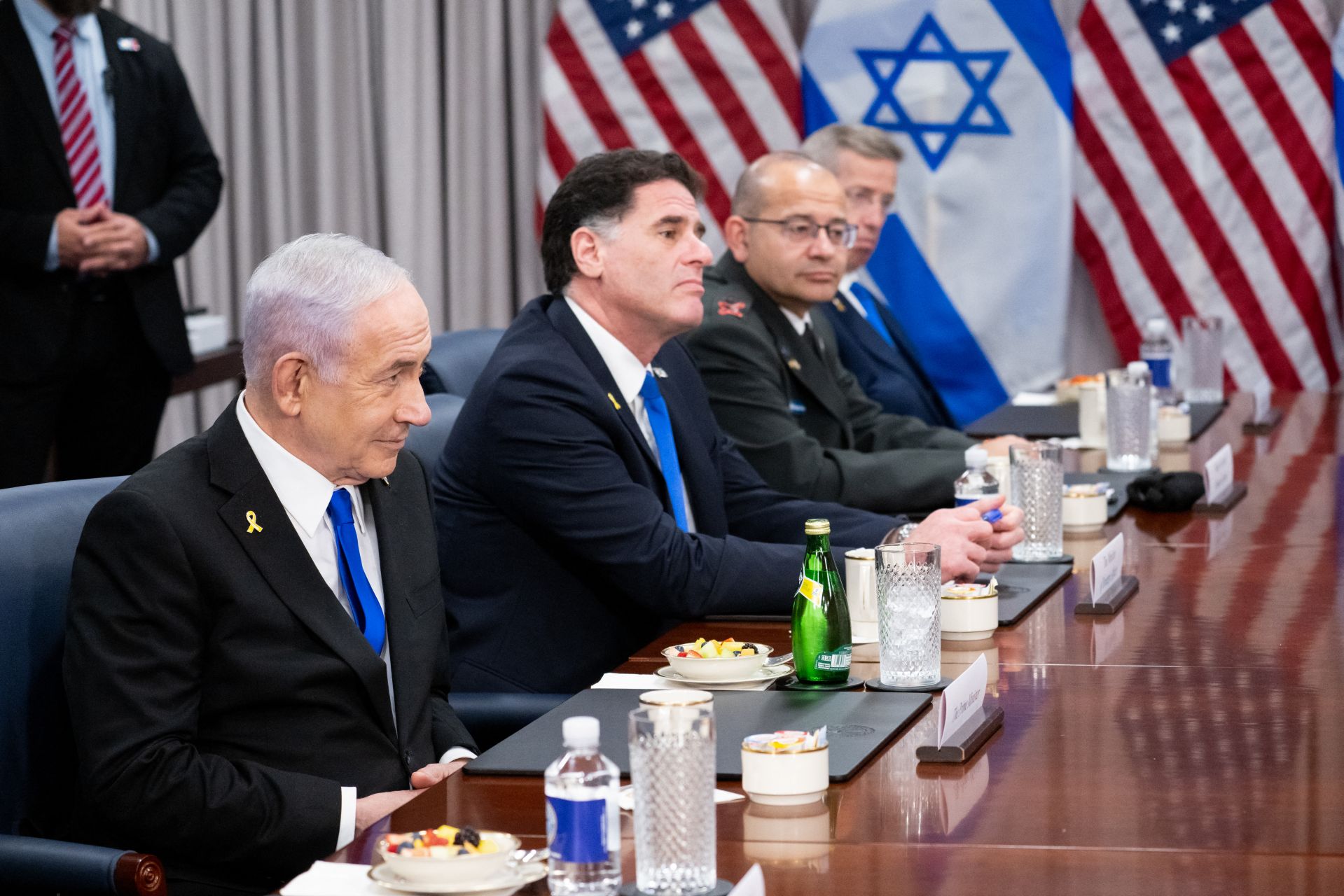
Ron Dermer, recently-appointed head of the Israeli negotiating delegation with Lebanon, expressed that he is “making progress with Lebanon” regarding a political agreement between the two countries.
On a deal with Lebanon, he expressed that “it is possible to talk about a potential peace agreement, but for a deal to be implemented, Hezbollah will need to be disarmed.”
Israeli Prime Minister Benjamin Netanyahu appointed Dermer to the country’s Lebanon file on Friday. Dermer was previously Israel’s Minister of Strategic Affairs, during which he was a member of Israel’s War Cabinet during the Israel-Hamas War and lead negotiator for the release of hostages in 2025.
Last week, Lebanese President Joseph Aoun proposed direct negotiations between Lebanon and Israel. On Monday, Aoun reiterated his position in a speech at Baabda Palace, stating that he hopes “this initiative will create an opening to end the daily losses endured by all Lebanese.”
Following Hezbollah’s launching of attacks on Israel on March 2 and Israel’s subsequent expansion of operations in Lebanon, the Lebanese government convened and banned Hezbollah military and security activity.
While Dermer’s position hints at the possibility of bilateral interest in direct negotiations, obstacles remain in both Lebanon and Israel, hindering the conditions necessary for both sides to come to the table.
Obstacles in Lebanon
Speaker of Parliament Nabih Berri has urged that political negotiations with Israel must be held after a full ceasefire. As a result, he has not fielded any Shi’ite figures to the delegation
Berri’s position challenges the consensus-based approach that a Lebanese negotiating coalition would need to legitimize a deal with Israel, with continued Shi’ite opposition to talks from within the government.
Fears of inciting civil strife have been a factor in the Lebanese government’s slow approach towards Hezbollah disarmament prior to March 2. With possible clashes between the Lebanese army and Hezbollah militants, forced disarmament could widen rifts within the army.
Despite these factors, support within political circles for negotiations with Israel to end the war and reach a comprehensive settlement is growing, according to Nidaa al-Watan.
Obstacles in Israel
Israeli officials maintain a position that direct talks are unlikely under current conditions.
Israel has seen the Lebanese government as unable to enforce state monopoly on weapons, leading to skepticism that political negotiations with Lebanon would supplant Israel’s direct targeting of Hezbollah infrastructure and operatives to achieve disarmament.
With ebbs and flows in attacks between Israel and Hezbollah, Israel has established a doctrine of enforcing security for its northern residents amid looming threats from an armed Hezbollah in southern Lebanon. This has led to a zero-tolerance approach towards any Hezbollah presence near the border.
In addition, members of Israel’s governing coalition view destruction of Hezbollah infrastructure as a more reliable security guarantee than relying on a verbal agreement from the Lebanese government. Any engagement in direct negotiations for a security deal or normalization without total and verified disarmament of Hezbollah is seen as putting Israel in a weaker position.
Despite Dermer’s comments, the Israeli army’s continued ground invasion deeper into southern Lebanon amid discussions of a renewed “buffer zone” further indicate that Israeli policy is focused on military actions over diplomatic agreements.
Comments