- Home
- Middle East
- Vance: Preventing Iran From Acquiring Nuclear Weapons Is a “Red Line”
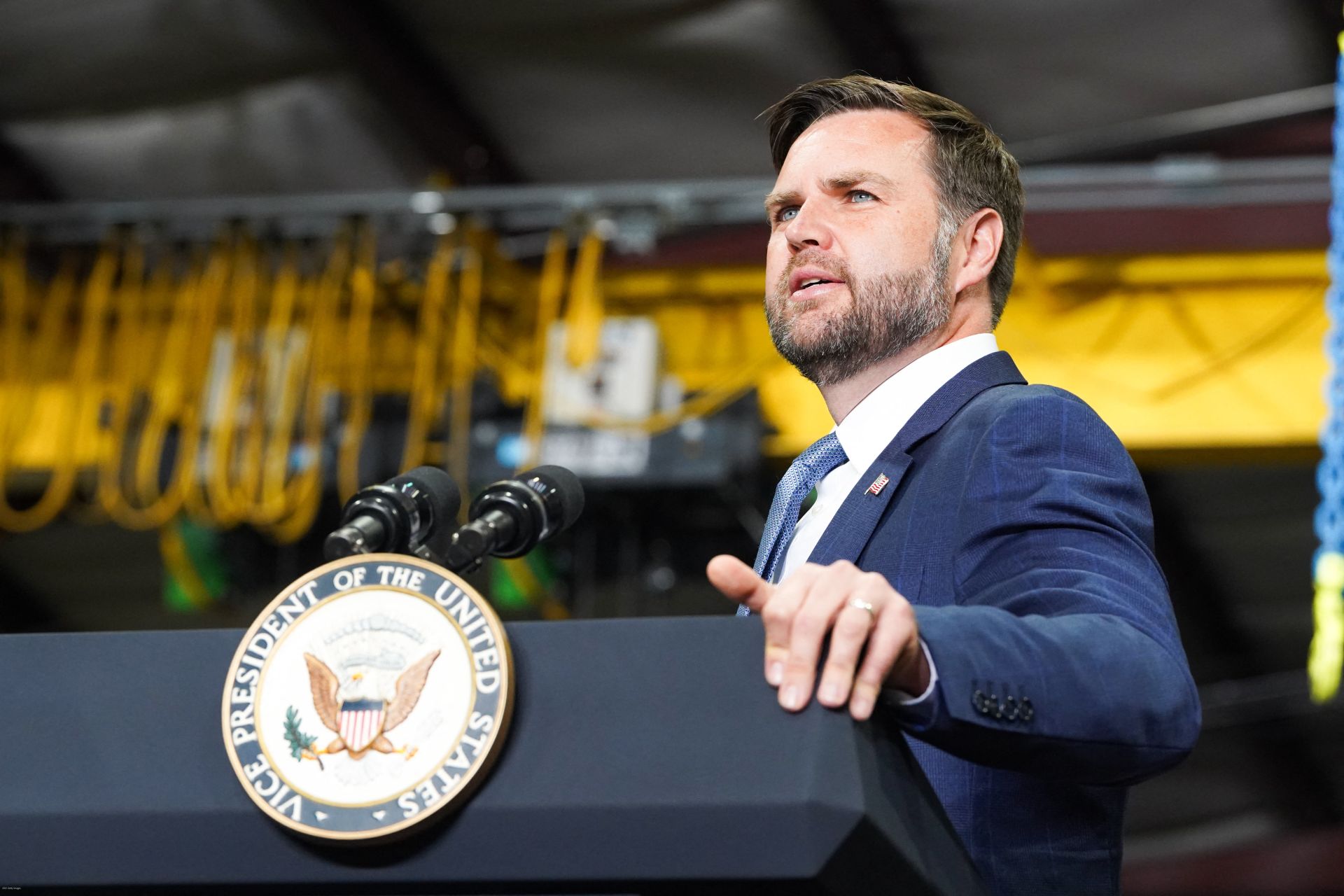
Vice President JD Vance speaks to supporters of President Donald Trump at an event on August 21, 2025 in Peachtree City, Georgia. Vance spoke about Trump's One Big Beautiful Bill. ©Megan Varner / Getty Images / AFP
U.S. Vice President J.D. Vance said Wednesday that preventing Iran from obtaining nuclear weapons remains a top priority for Washington, stressing that President Donald Trump has repeatedly made clear that Tehran crossing that threshold would constitute a red line for the United States.
Speaking on The Megyn Kelly Show, Vance said the Trump administration continues to pursue diplomacy with Iran while keeping military options on the table, adding that Tehran “will not get a nuclear bomb under President Trump.”
Vance also noted that Washington would prefer any political change in Iran to come from within, emphasizing that the Iranian people, not foreign powers, should determine their country’s future.
He acknowledged that negotiations with Tehran remain difficult, pointing to Iran’s political system and the decisive role of Supreme Leader Ali Khamenei. Vance described the process as unusually complex, saying the U.S. cannot engage directly with the individual who ultimately governs the country, unlike talks with leaders of Russia, China, or North Korea.
Meanwhile, U.S. Secretary of State Marco Rubio said American officials are working to keep diplomatic channels open, stressing that any dialogue should go beyond Iran’s nuclear program to include ballistic missiles, regional proxy networks, and Tehran’s treatment of its own population.
Rubio added that Iran’s religious leadership does not reflect the will of its people, describing a deep gap between those in power and ordinary citizens.
On the Iranian side, Foreign Minister Abbas Araghchi confirmed that nuclear discussions with Washington are set to take place in Muscat, thanking Omani mediators for facilitating the talks. Iranian officials have indicated they want discussions limited strictly to the nuclear file.
These developments come amid renewed diplomatic efforts and rising regional tensions, as both sides publicly maintain openness to dialogue while warning that failure to reach an agreement could lead to further escalation.
Read more



Comments