- Home
- Middle East
- Trump Confirms Speaking to Iran, Says He Plans to Again
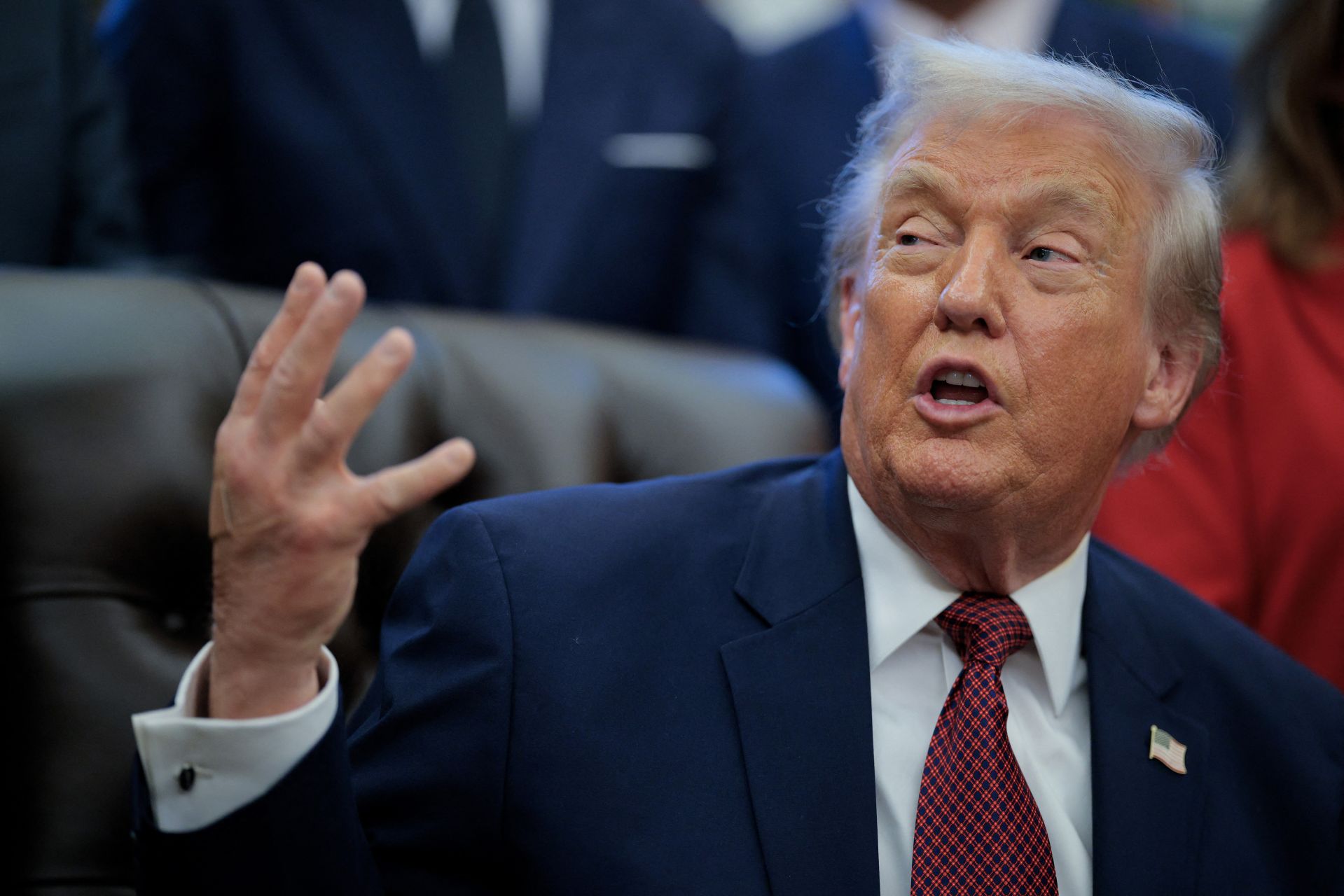
Le président américain Donald Trump annonce des changements aux normes nationales en matière d'économie de carburant dans le Bureau ovale de la Maison Blanche, le 3 décembre 2025, à Washington, DC. ©Chip Somodevilla / Getty Images / AFP
U.S. President Donald Trump announced on Thursday evening that he intends to hold talks with Iran. When asked by reporters about the possibility of talks with Tehran, Trump said, "Yes. I intend that. We have a lot of very large and powerful ships heading to Iran right now, and it would be great not to have to use them.”
Asked if he’s any conversations with Iran in the last few days or if he’s planning to, Trump responded, “I have had and I am planning on it.”
Amid the tensions, Trump has been presented with additional military options for attacking Iran, to cause further damage to the regime’s nuclear and missile programs as well as weaken Supreme Leader Ayatollah Ali Khamenei, The New York Times reported.
Citing U.S. officials, the newspaper said among the options being considered are potential raids by U.S. troops, such as sending commandos to nuclear facilities that were not damaged during the 12-day war in June, though Trump has yet to make a decision on whether to attack the country.
Another operation would include several strikes against the Islamic Republic’s leadership with the aim of creating the chaos needed for Iranian security forces to oust Khamenei, the report said, while adding it was “unclear” who would run the country instead in such a situation, or whether they would be more amenable to good ties with the West.
Israel, meanwhile, is pressing for a joint operation to go after Iran’s ballistic missile program, which has largely recovered since June, officials told The Times.
All the options go beyond those that were presented two weeks ago to the U.S. president, according to the officials.
The officials said that Trump is adopting a similar approach to Iran as the one he took toward Venezuela by building up forces nearby while threatening the country’s leader to accept his demands or face military action. However, one of the officials said that the U.S. president and his top aides understand that an operation against the Islamic Republic would be far more risky than the operation in Venezuela.
The report said officials are doubtful that Tehran will accept Washington’s negotiating terms, which include ending uranium enrichment and support to its terror proxies across the Middle East, and limits to its ballistic missile program, which would severely limit its ability to carry out attacks on Israel.
Message from U.S. Defense Secretary
The remarks came after U.S. Defense Secretary Pete Hegseth said the U.S. is prepared to use "all options" to prevent Iran from pursuing nuclear weapons, while emphasizing that Washington is still leaving room for a diplomatic deal.
"With Iran right now, ensuring that they have all the options to make a deal. They should not pursue nuclear capabilities," Hegseth said at a Cabinet meeting along with President Trump.
Hegseth stressed that the Pentagon stands ready to carry out any directives issued by Trump, signaling that military options remain firmly on the table if diplomacy fails. "We will be prepared to deliver whatever this president expects of the War Department, just like we did this month," he said, referring to the U.S. capture of Venezuelan President Nicolas Maduro on January 3.
An American missile destroyer docked at Israel’s Red Sea port city of Eilat on Friday. According to the Israeli military, the arrival of USS Delbert D. Black was pre-planned and part of the ongoing cooperation between the IDF and the U.S. military. American warships regularly sail in the Red Sea area, although their arrival at Eilat Port is rare.
Iran Responds
In Iran, top political, military and judicial authorities continue to send messages of defiance, indicating that Iran’s focus is on defence and not talks. “Tehran’s priority is currently not to negotiate with the U.S., but to have 200 percent readiness to defend our country,” Kazem Gharibabadi, a senior member of the Iranian negotiating team, was quoted as saying by state media.
Gharibabadi said that messages have recently been exchanged with the U.S. through intermediaries. He added that even if conditions were suitable for talks, Iran would remain fully prepared to defend itself.
Read more



Comments