- Home
- Middle East
- Trump Says Diplomacy With Iran Still Possible
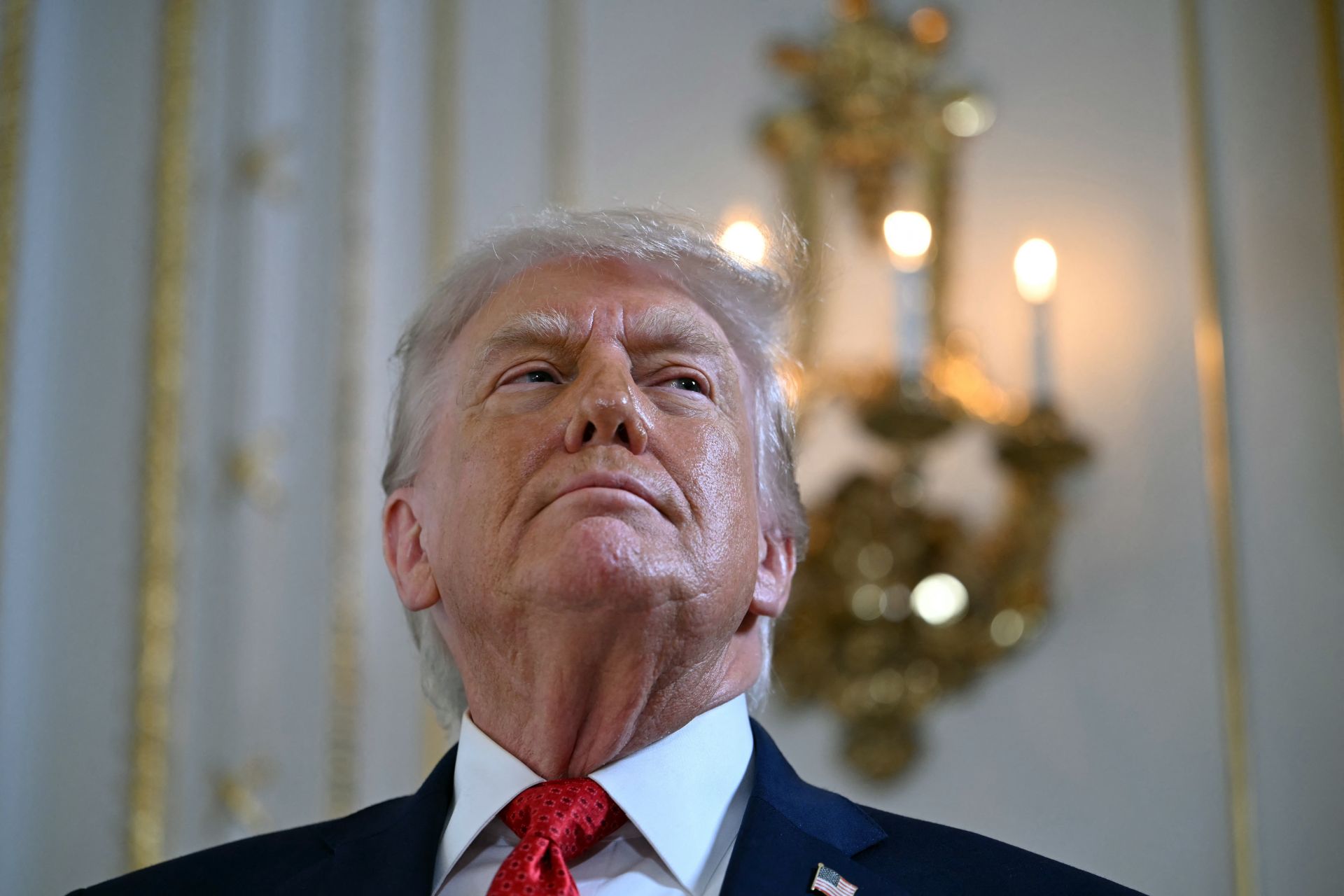
US President Donald Trump arrives to attend a ceremony naming Southern Boulevard at the Mar-a-Lago ballroom in Palm Beach, Florida, on January 16, 2026. ©Andrew Caballero-Reynolds / AFP
U.S. President Donald Trump said on Tuesday diplomacy remains an option with Iran, even as Washington ramps up its military presence in the Middle East and warns that the situation remains volatile.
In an interview with Axios published Monday, President Trump said Tehran has signaled a desire to engage in talks, describing repeated outreach from Iranian officials.
“They want to make a deal. I know that. They’ve called many times… they want to talk,” the U.S. president said.
At the same time, the president acknowledged growing instability, saying the situation with Iran is “not stable” following the deployment of what he described as a “large fleet” to the region.
No Final Decision Yet
President Trump said he has not yet made a final decision on how to proceed and declined to detail the military options presented by his national security team. According to sources cited by Axios, the president is expected to continue consultations this week, with additional military scenarios likely to be put forward.
A U.S. official told Reuters that Washington remains open to engagement if Iran chooses to reach out, adding that Tehran is fully aware of the conditions required for talks.
“I think they know the conditions,” the official said. “They are aware of the terms.”
Iran Warns of Retaliation
Iran, meanwhile, has issued renewed warnings against any military action. Foreign Ministry spokesman Esmaeil Baghaei said Tehran would respond forcefully to any attack, warning that retaliation would be severe.
“Iran will respond to any military aggression with a response that will cause regret,” Baghaei said during a press briefing earlier Monday.
He added that Iran considers itself to be facing a “comprehensive hybrid war,” pointing to military actions carried out by Israel and the United States in June, and warned that continued pressure would not be confined to Iran alone but could destabilize the wider region.
Baghaei also dismissed reports of contact between Iranian Foreign Minister Abbas Araghchi and U.S. envoy Steve Witkoff, saying such claims were false.
U.S. Military Movements Continue
The diplomatic signaling comes as U.S. forces continue preparations in the region. U.S. Central Command said American aircraft and equipment have arrived in the Middle East ahead of a multi-day readiness exercise aimed at testing rapid deployment and operational flexibility.
Separately, the U.S. military confirmed that the aircraft carrier USS Abraham Lincoln and its strike group have arrived in the Middle East after redeploying from the South China Sea.
The American president referenced the carrier deployment in his comments, saying the U.S. fleet positioned near Iran is larger than American naval forces stationed elsewhere, underscoring the scale of the buildup.
A Narrow Diplomatic Window
The U.S. president has repeatedly raised the possibility of military action against Iran in recent weeks before softening his rhetoric after Iranian authorities reportedly halted executions of protesters. U.S. officials say that pause factored into the president’s decision not to authorize immediate strikes.
For now, Washington is signaling a dual track: maintaining military readiness while leaving the door open to diplomacy. Whether that balance holds may depend on developments inside Iran and on whether Tehran chooses engagement over escalation.
Read more
Comments