- 25
- Jan.
- 2026

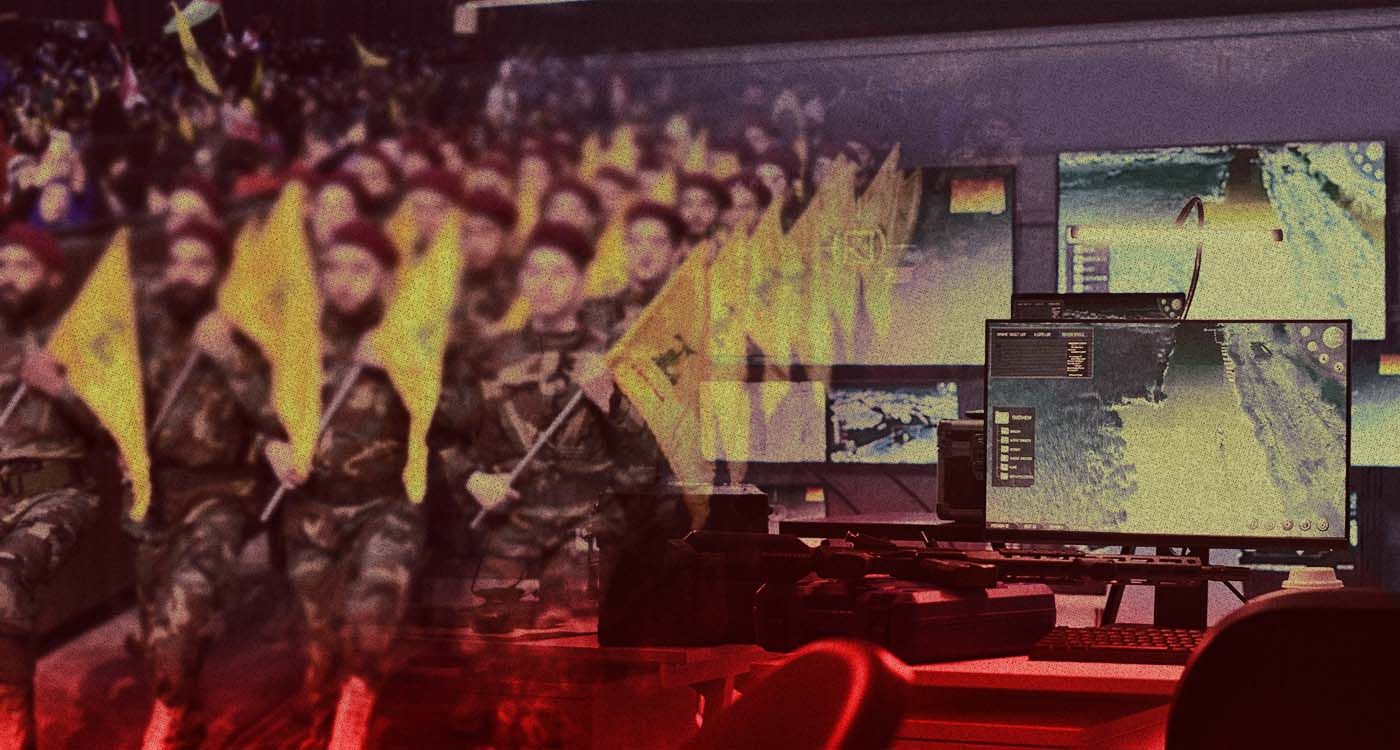
If Lebanon were a normal country, the presidency would be the one place where politics slows down, where disputes are processed through institutions, where crises are turned into decisions, and where the state, at minimum, performs statehood.
But Lebanon is not a normal country. And that is why the recent surge of pro-Hezbollah campaigning against President Joseph Aoun feels less like ordinary criticism and more like a coordinated effort to reduce the presidency to a symbolic, cautious, and permanently constrained role.
The campaign against Lebanon’s president is tailored for X and other social media: fast, repetitive, and engineered for viral outrage, then reinforced by video clips that travel across platforms and shows, edited into short moral indictments rather than policy critiques. It reflects how modern political pressure feeds into an ecosystem to create a sense of inevitability.
In this ecosystem, two names stand out: Hassan Olleik and Ali Berro, both linked to Hezbollah-aligned media space and both central in circulating content that targeted not only Aoun’s positions but the dignity of the presidency itself. L’Orient Today documented a campaign “by individuals close to Hezbollah,” including journalists, that is circulating videos against Aoun, triggered by his insistence that weapons must be monopolized by the state.
This reveals that Hezbollah and its supporters are fighting on terrain where they still enjoy asymmetric advantage: narrative, mobilization, and the politics of humiliation. This fight is over a future in which the Lebanese state stops being an administrative shell and becomes a sovereign authority with a monopoly on force. Every time Aoun speaks in favor of this future, he touches on Hezbollah’s deepest vulnerability.
The organization’s legitimacy is built on the claim that its weapons are a “necessary exception” because the state is weak, Israel is a threat, and the region is hostile. This claim worked when the exception appeared to be temporary. When it became a permanent fixture, the costs became unbearable.
After years of economic collapse and the destructive cycles of war, the public mood, inside and outside Hezbollah’s base, has shifted from pride to fatigue. Fatigue is dangerous to movements built on permanence. Fatigue makes people ask transactional questions: What did we gain? What did we lose? Who pays? Who rebuilds?
That is where Aoun, who is not just another politician, becomes a problem. He is a former army commander, meaning he can talk about the state’s authority without sounding like a salon intellectual. And he came into office at a moment when international assistance, reconstruction talk, and Lebanon’s re-entry into Arab and Western diplomacy are all increasingly tied, explicitly or implicitly, to one principle: the state must function. Aoun’s vision is for a Lebanon where the militia exception ends.
Hezbollah’s media ecosystem has reacted by attacking the messenger and daring the state to overreact. Its counterattack is not just against Aoun, but the very idea that the presidency can embody a new national contract. The media campaign has taken a shrill tone, insulting the presidency in an attempt to shift the debate from policy to identity.
Hezbollah aims to redefine disarmament as “betrayal,” sovereignty as “serving the Americans,” reform as “targeting the resistance,” and any attempt at state authority as “humiliating the people who defended the country.” If you cannot win the argument on outcomes, then you try to make the audience feel attacked and defensive.
Beneath the campaign lies the quieter truth that Hezbollah is not just angry at Aoun, it is anxious about the toll of time. With time, “resistance” turns into routine, while citizens slowly begin to ask whether the country can exist another decade with Hezbollah’s arms.
The state’s response has now added a new, combustible layer of judicial escalation. Al Jadeed reported that the public prosecutor issued a “search and investigation” memo concerning Ali Berro on grounds tied to “attacking the president,” and that Hassan Olleik and others were summoned in connection with “insulting” Aoun. Al-Akhbar previously reported a “search and investigation notice” related to Berro after he refused to appear for questioning in an earlier case, illustrating that this legal track has been building over time.
This leaves Lebanon in a classic trap. If the presidency and judiciary clamp down too hard, Hezbollah-aligned media can sell it as persecution, proof that the “state” is merely a tool of foreign-backed forces and that the resistance is under siege. If the presidency does nothing, the campaign will succeed in degrading the office into a punchline and demonstrate to every future president that sovereignty is mere rhetoric.
Aoun symbolizes the state’s attempt, imperfect and perhaps too late, to reclaim its most basic right, the right to decide.

Comments