- 09
- Jan.
- 2026

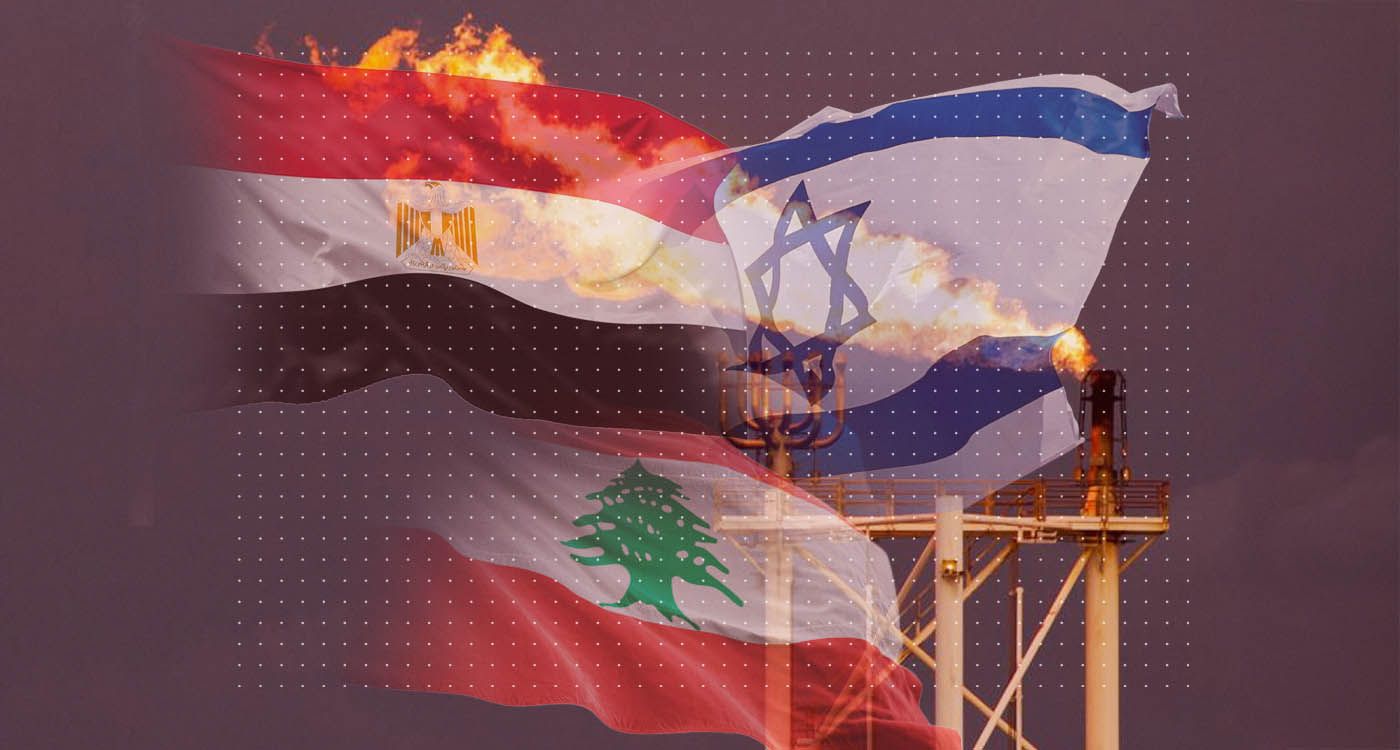
Two eastern Mediterranean natural gas deals announced twelve days apart highlight shifting energy dynamics amid dramatic geopolitical transformations in the region, with Lebanon aiming to benefit.
On December 17, 2025, Israeli Prime Minister Benjamin Netanyahu announced a $35 billion gas deal with Egypt, describing the agreement as “the largest gas deal in Israel’s history.” Less than two weeks after this historic agreement was announced, Lebanon signed a Memorandum of Understanding (MoU) with Cairo on December 29 to purchase natural gas from the country.
Through the plan, Lebanon seeks to lower energy production costs for the beleaguered state utility Électricité du Liban—long unable to provide reliable power—while reducing dependence on fuel oil. Under the proposal, the Deir Ammar power plant in northern Lebanon would be supplied with natural gas, a cheaper and cleaner fuel.
Egypt’s Ministry of Petroleum and Mineral Resources reportedly plans to export around 2 billion cubic feet of natural gas per month to Lebanon via pipeline. In parallel, the Lebanese government plans to lease a floating storage and regasification unit (FSRU) to regasify liquefied natural gas (LNG) imported by ship for the Deir Ammar plant.
A key question remains regarding the plan: will the natural gas sent to Lebanon by Egypt originate from Israel, which fought a war with Hezbollah in 2024 and recently entered into U.S.-mediated direct talks with Beirut.
“Israeli molecules”
When commercial production at the Leviathan offshore field began in January 2020, Israel reversed regional energy dynamics by exporting natural gas southward to Jordan and Egypt via the Arab Gas Pipeline (AGP), which had previously supplied gas northward. This same regional network of pipelines will be used to supply Lebanon.
“Most likely, Egypt will send natural gas to Jordan, which will then divert some of this gas north via the Rehab gas station to Syria and then to Lebanon,” said Noam Raydan, an energy expert and senior fellow at the Washington Institute for Near East Policy.
“This will consist of gas with Israeli origin because Jordan and Egypt are importers of Israeli gas,” Raydan explained.
Andrew Tabler, former director for Syria at the National Security Council's Middle East Affairs Directorate, confirmed this assertion. He told This is Beirut that “gas coming from the AGP would almost certainly include a lot of Israeli molecules.”
The issue of Israeli-origin natural gas emerged in 2022, when the U.S. and its Arab allies promoted a plan to export gas from Egypt to Lebanon, similar to the MoU signed last month. The initiative ultimately did not move forward due to concerns about transit through then-Assad-controlled Syria.
A report by the Washington Institute for Near East Policy said this plan would have entailed using Israeli natural gas effectively disguised as “Egyptian” to circumvent political sensitivities in Syria and Lebanon.
Describing the natural gas as being solely “Egyptian” would have been misleading under this plan, according to the report. Egypt may have been paying for the natural gas initially, and therefore can be described as its owner, but most or all of it would have originated from Israel’s offshore Leviathan field.

Source: Peter Stevenson, “Israel Halts Tamar & EMG Flows As Fight With Hamas Continues,” MEES, October 13, 2023.
New Political Landscape, Old Structural Challenges
Since the fall of the Assad regime in December 2024, Washington has built ties with the new Syrian government and provided sanctions relief, making last month’s MoU between Cairo and Beirut far more feasible than the 2022 plan championed by the Biden administration.
“During that period of time, [natural gas transit via Syria] would have been in violation of U.S. sanctions. This time, it would not be because those sanctions have been lifted. This is a major difference,” Tabler said.
The gas deal is also a critical indicator of a shift in how economic agreements are being pursued. Tabler noted that political agreements have traditionally preceded economic ones. “Now, in the era of the second Trump administration, things are changing,” he said, pointing to Egypt and Israel continuing economic cooperation despite heightened political tensions between them.
Despite these advances, there are still significant obstacles to building on the December 2025 MoU. Raydan said that it remains unclear whether the volumes of gas delivered to Lebanon via the Arab Gas Pipeline would be sufficient to operate all turbines at the Deir Ammar power plant at full capacity.
She noted that Lebanon is facing severe economic constraints, while the proposed plan would require extensive rebuilding and ongoing maintenance, all of which would demand significant time and funding.
“The government is bankrupt. Who will pay for this?” Raydan asked.


Comments