- 04
- Jan.
- 2026

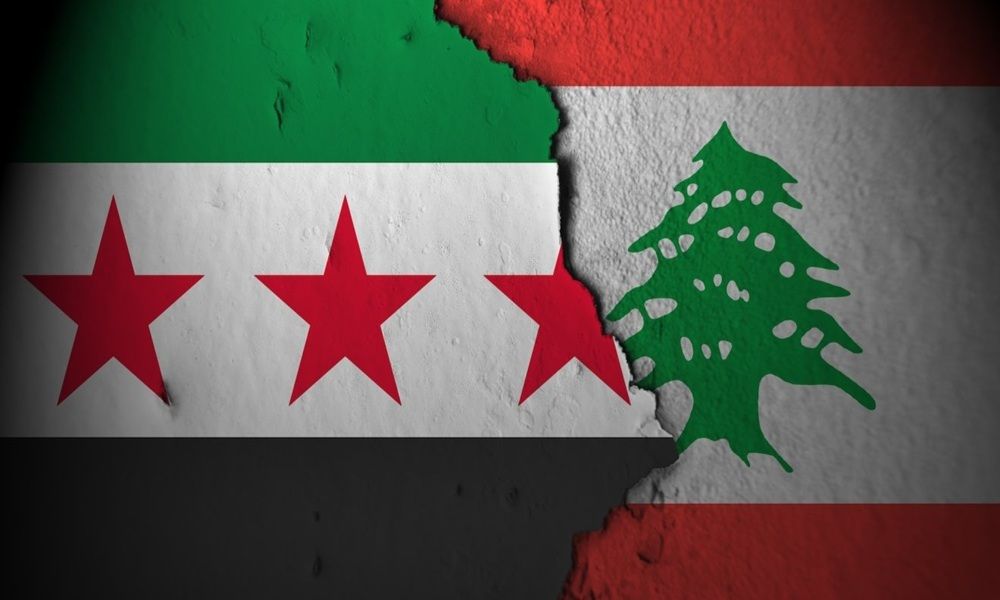
Entering 2026, Syria and Lebanon stand at an inflection point along the region’s active fault line. While both nations shook off paralysis at roughly the same time a year ago, neither has become truly stable. What separates them is the nature of the risks they face in the near and medium-term as the Middle East undergoes uneasy post-war realignments.
Syria’s transition was more historic than Lebanon’s, with the fall of the regime in December 2024 ending decades of the Assad family’s authoritarian rule and effectively ending a prolonged civil war. Under interim President Ahmad al-Sharaa, Syria’s new authorities moved quickly to consolidate control through a transitional constitutional framework, a multi-year political roadmap, diplomatic re-engagement, and public signals of minority inclusion, steps followed by U.S. and EU sanctions relief. Refugee returns and renewed regional ties have marked a visible break from Syria’s long isolation.
Yet Syria’s core challenge is whether it can achieve stability without repeating the exclusionary practices of the Assad era. Power remains concentrated, and institutions are still embryonic. Political legitimacy, meanwhile, is uneven across the country’s regions and communities. The state’s effective reach is challenged by localized reprisals and sectarian violence, Israeli military actions, unresolved Kurdish autonomy, and the lingering threat of extremist remnants.
While these challenges and risks are not unusual for a country in transition from authoritarianism, they are made more consequential by Syria’s vast reconstruction needs. Investor confidence in the country is fragile and institutional failures would have regional consequences.
Lebanon’s trajectory has been narrower, less dramatic, and deliberately incomplete. Joseph Aoun’s election as president in January 2025 ended a prolonged constitutional vacuum and restored basic executive function under a government led by Nawaf Salam. The process was an institutional reboot rather than a systemic reset. It reopened channels of decision-making, diplomacy, and conditional reform, but left intact the political order that produced Lebanon's economic collapse and paralysis.
This distinction matters because while Lebanon’s institutions are once again functioning, their credibility remains damaged. Public trust in the financial system is still shattered, depositor losses remain unresolved, and efforts for reforms face entrenched resistance.
History offers no guarantee that this moment will prove any less fleeting than previous Lebanese “resets.” What makes Lebanon’s current trajectory different is an alignment of international leverage, conditional aid, and internal security shifts that, for now, are pointing in the same direction.
Lebanon holds its clearest advantage over Syria in terms of security, though this issue is far from settled. Hezbollah entered 2025 weakened by war and strategically constrained by the fall of Assad, which disrupted the organization’s supply lines. The Lebanese state has not dismantled Hezbollah, nor fully imposed a monopoly of arms, but it has begun treating sovereignty as an operational policy rather than a rhetorical red line.
All of this remains reversible. Hezbollah retains social depth and adaptive capacity, while Israel’s military pressure on Lebanon remains a destabilizing wildcard. Still, the balance between state authority and non-state power has moved enough to change international calculations about Lebanon’s viability.
Economically, neither country is close to recovery, but Lebanon’s path is more viable. The government has taken politically costly steps toward banking restructuring and fiscal transparency, aligning itself, however imperfectly, with IMF conditions and Gulf expectations. Lebanon’s financial architecture is badly damaged, but it exists, is internationally legible, and can absorb pressure and assistance if reforms continue. Syria, by contrast, faces a reconstruction burden an order of magnitude larger, even after sanctions relief, with weaker legal safeguards and far higher security risks.
Socially, Syria’s transition carries deeper historical meaning. The end of Assad’s rule freed decades of suppressed memories, trauma, and political speech. Refugee returns and public reckoning reflect a genuine psychological break with the past. But this openness has also exposed unresolved grievances, which are surfacing in the absence of strong mediating institutions.
Lebanon’s society, shaped by exhaustion, has prioritized survival and basic stability over transformation, producing fewer moments of catharsis, but also fewer internal shocks during the country’s transition.
By any sober assessment, neither country has “arrived.” Syria has achieved transformative change without yet stabilizing its state. Lebanon has achieved institutional restoration without yet transforming its system. In a region edging toward uneasy peace deals and post-conflict realignments, stability—not symbolism—determines which countries move ahead first.


Comments