- 06
- Mar
- 2026

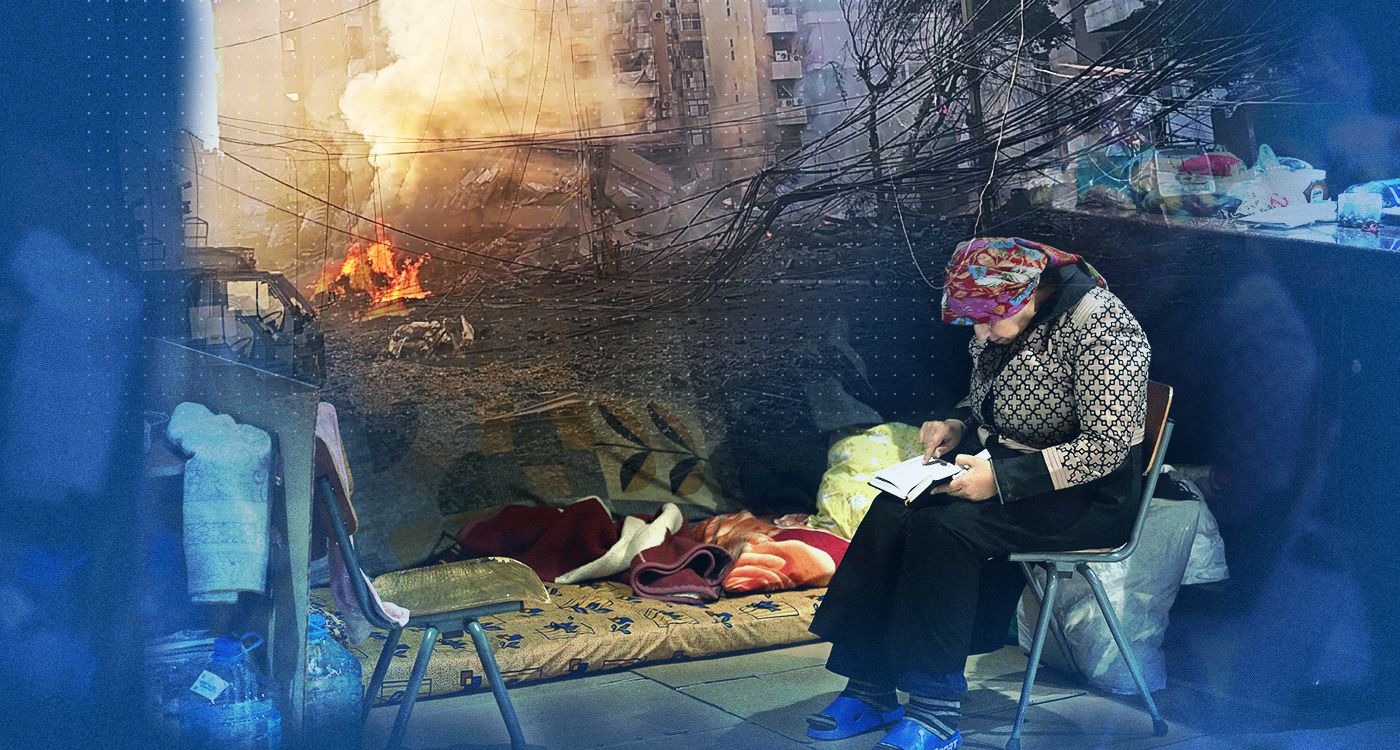
Hezbollah consolidated its power on the simple promise that confronting Israel would protect its people. Yet once again, its military actions have forced a mass exodus of its support base from South Lebanon and the southern suburbs of Beirut.
Cars are fleeing war zones in slow convoys, carrying the few essentials panicked people can pack in minutes. Some head to Beirut, others to Mount Lebanon or coastal towns where they hope to find temporary shelter. But many are discovering something unexpected when they arrive: the doors that once opened quickly to take them in are opening more slowly this time.
Some of the schools that hosted displaced families during the 2024 War are not reopening as shelters for the displaced, or are hesitant to do so. Displaced residents have been gathering outside schools that once served as shelters, only to find them locked. In other areas, rents are skyrocketing overnight amid surging demand. Meanwhile, neighborhoods are debating whether they can absorb another wave of displaced.
Lebanon has endured displacement many times before. But something subtle has changed this time: Lebanese solidarity, like the country’s infrastructure, has begun to wear down.
For decades, Hezbollah’s power has rested on a social contract with the communities that form its backbone: the movement would confront Israel, and its supporters would bear the costs. This contract has survived moments of sacrifice, but it becomes unstable when sacrifice turns into a permanent condition.
Families fleeing the south and Dahyeh are now being displaced for the second time in a little over a year. Some had rebuilt their homes after previous wars only to have to abandon them again. Children who had to change schools need to do so again. The humiliation of this experience is raising questions among Hezbollah’s supporters that loyalty once kept silent.
All one has to do is watch videos of street interviews circulating on social media. People are openly questioning Hezbollah’s decision to plunge Lebanon into war—some even in tears—as they ask: why?
This mood shift might appear small, but it is significant. Movements like Hezbollah that rely on social cohesion depend on unquestioning loyalty. Once this loyalty becomes negotiable, the political terrain starts shifting under Hezbollah’s feet.
A far larger trend is also unfolding in Lebanese society as a whole. The question is why Lebanese people are less eager to mobilize for displaced families than they were in previous wars. To understand this dynamic, one has to look at the digital battlefield of social media.
During the last war, large numbers of Lebanese outside Hezbollah’s core constituency opened their doors to displaced families from the south. Volunteers organized food drives, and civil society groups coordinated shelter. Entire neighborhoods in Beirut and Mount Lebanon hosted families they had never met before.
Yet at the same time, Hezbollah’s social media ecosystem took a harsher tone. Critics of the party were mocked. Those questioning the logic of the war were accused of betrayal. Anyone expressing doubts about its military campaign could quickly be branded a “Zionist agent.”
The same Lebanese offering humanitarian assistance to Hezbollah’s supporters were being insulted online. This fueled resentment among Lebanese who offered solidarity only to be met with political arrogance. The behavior of a loud minority online shaped how an entire community was perceived by other Lebanese.
This social media arrogance among Hezbollah-aligned commentators is exemplified by Ali Berro, who has built a reputation for provocation. In his videos, Berro has progressed from mocking Prime Minister Nawaf Salam to launching direct attacks on President Joseph Aoun.
His videos regularly insult political leaders, journalists, and public figures who criticize Hezbollah, in a tone many Lebanese describe as juvenile, arrogant, and openly contemptuous of the state.
Such videos and such a tone shape perceptions that harden when a moment of crisis arrives. A landlord deciding whether to rent to a displaced family will remember the insults hurled on social media in the last war. A school administrator debating whether to open classrooms as shelters remembers the ugly mudslinging by loud influencers boosting Hezbollah.
Of course, none of this means that Lebanese society has lost its compassion. Far from it, many families and organizations are once again assisting their displaced compatriots. But the immediate reflex to help, the unquestioned solidarity, has started to weaken.
Lebanon’s economic collapse since 2019 has strained the country’s social fabric. Years of political paralysis have hollowed out the state’s ability to manage crises. Now digital polarization is amplifying mistrust between communities. The result is a country where displacement no longer produces automatic unity.
Now Lebanon faces the immediate crisis of war and a more subtle but potentially more consequential social crisis. The Lebanese people, unable to count on the state for help, have relied on each other to bear the burdens of crises. If these social solidarity networks weaken, the country will enter unfamiliar territory.
While bombs destroy buildings, they can be rebuilt. But resentment can break social bonds among citizens that will be far harder to repair. Lebanon now finds itself at a bitter moment of reckoning as it bears the consequences of years of Hezbollah’s arrogance, provocation, and miscalculations.



Comments