- 29
- Dec.
- 2025

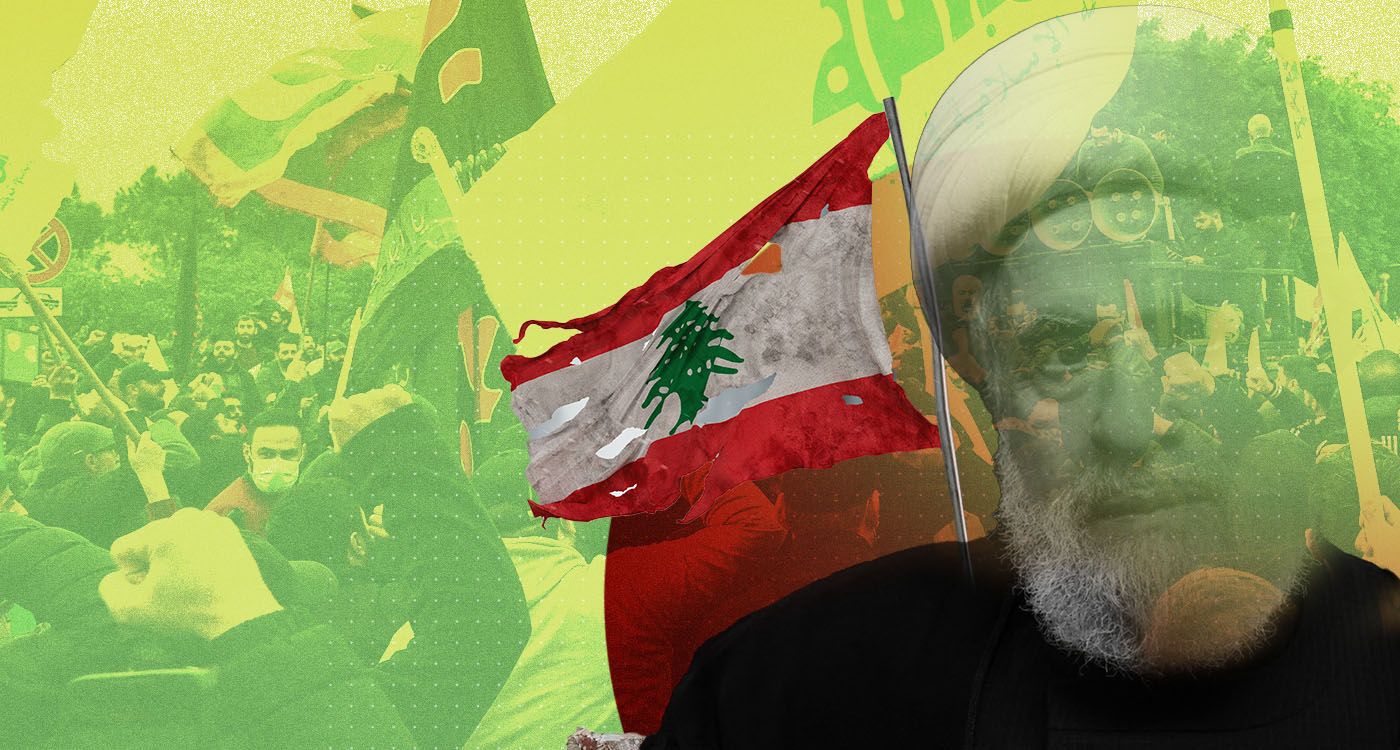
Hezbollah cannot be dismantled by persuasion, nor can it be defeated by force alone without tearing Lebanon apart.
Any serious discussion about de-radicalizing Hezbollah supporters must begin by discarding comforting illusions about the organization. It is not a fringe extremist group operating on the margins of Lebanese society but a heavily armed political-military organization embedded in parliament, municipalities, unions, border economies, and a regional axis led and financed by Iran. Treating it as a mere ideological deviation, or imagining that its support base can be “educated away,” is not just naïve—it is strategically dangerous.
Yet acknowledging Hezbollah’s power does not mean accepting its permanence. Armed movements rooted in identity, grievance, and welfare substitution have been weakened before. The lesson from history is that force without social disengagement always fails. Lebanon’s problem today is that Hezbollah enjoys both coercive power and social legitimacy within its core constituencies. Breaking that combination is the only realistic path forward.
The first uncomfortable truth is that many Hezbollah supporters are driven by fear, social status, and survival strategies in a collapsed state, not just theology or ideology. When the Lebanese state ceased to provide electricity, healthcare, education, or basic economic security, Hezbollah filled the vacuum, and loyalty followed. Any strategy that ignores the fact that its supporters are driven by rational adaptation to state failure is bound to fail.
Social psychology helps explain why moral condemnation has achieved nothing. In environments of chronic threat, group identity hardens, and support becomes fused with personal dignity. Criticism from outside the group is interpreted not as argument but as attack. This is why sanctions, rhetorical pressure, and media ridicule have often strengthened Hezbollah’s internal cohesion rather than weakened it. Pressure without exit pathways produces a siege mentality.
European counter-extremism experience offers a sobering but useful parallel—not because Hezbollah resembles European jihadist cells in scale or structure, but because the underlying psychological mechanisms are similar. Britain’s Prevent and Channel frameworks, Denmark’s Aarhus Model, and Germany’s HAYAT program all emerged from a recognition that late-stage repression alone does not change belief systems. These initiatives focused on early intervention, disengagement, and reintegration, often through civilian institutions rather than intelligence services. Their success was uneven and politically controversial, but their core insight remains relevant: people exit radical milieus when alternatives are credible, protected, and materially viable.
The key difference, and the point hawks rightly insist on, is that Hezbollah operates under conditions of coercion that European counter-extremism programs have rarely faced. In large parts of southern Lebanon and the southern suburbs of Beirut, dissent carries real social and sometimes physical consequences. Support is not always freely expressed; it is often enforced through surveillance, intimidation, and reputational punishment. Any Lebanese deradicalization strategy that ignores this coercive environment is fantasy. Exit must therefore be discreet, shielded, and, in some cases, geographically separated from Hezbollah’s zones of social control.
This realism matters especially when addressing a proposal that surfaces periodically in Washington and elsewhere: integrating Hezbollah fighters directly into the Lebanese Armed Forces (LAF). This idea should be treated with extreme caution, if not rejected outright in its current form. Armed forces are not neutral containers into which combatants can simply be poured. They are institutions built on unified doctrine, a monopoly of loyalty, and a shared understanding of legitimate authority. Hezbollah fighters are not merely armed individuals; they are members of an ideologically disciplined organization whose chain of command, strategic orientation, and ultimate allegiance lie outside the Lebanese state.
From a social-psychological perspective, premature integration risks importing a foreign identity into the army itself. Fighters who have not undergone disengagement and rehabilitation do not shed their primary loyalties at the barracks gate but instead carry them inside. The result would not be national integration but institutional contamination: parallel loyalties, selective obedience, and internal fragmentation within the LAF, the one institution that still commands cross-sectarian legitimacy. History offers ample warnings. Post-conflict militaries that absorbed unreformed militias—from Iraq after 2003 to parts of the Balkans in the 1990s—often found themselves weakened, politicized, and penetrated rather than stabilized.
Integrating Hezbollah fighters without prior rehabilitation effectively rewards armed coercion by presenting an example of parallel force structures serving as a viable path into national institutions. This undermines deterrence, corrodes morale within the LAF, and alienates communities that still view the army as the last non-sectarian pillar of the state. At minimum, any discussion of integration must follow a prolonged process of disengagement, vetting, and ideological demobilization—not as a shortcut around it.
This is where hard realism matters. Disengagement cannot rely on public renunciation or televised “moderation.” It must rely on quiet decoupling: reducing dependency, weakening enforcement, and expanding personal options. Hezbollah’s welfare provision is a strategic weapon. As long as the group controls access to medicine, fuel, tuition, and jobs, its supporters' loyalty will continue. Neutral, externally monitored welfare channels—whether state-led, municipal, or internationally administered—are instruments for splitting Hezbollah’s supporters from the group.
Equally important is the creation of exit pathways that do not publicly humiliate those who take them. Militias endure in part because leaving them carries a reputational death sentence. Denmark’s Aarhus Model demonstrated that disengagement accelerates when individuals can leave without being viewed as traitors. In Lebanon, this logic must be paired with security guarantees, anonymity, and in some cases internal relocation. Without such protection, no amount of counseling will overcome fear.
Families also matter, not just as moral authorities but as leverage points. Germany’s HAYAT program showed that relatives are often the first to notice radicalization and the last to be reached by the state. In Hezbollah’s environment, family influence can be decisive precisely because it operates below the radar of formal enforcement. As such, families should be empowered through counseling and support.
Understanding why people support an armed movement does not absolve that movement of responsibility for violence, state capture, or regional destabilization. A hawkish strategy must insist on accountability at both the leadership and operational levels while simultaneously weakening the social ecosystem that sustains it.
There is, however, a strategic limit that must be stated plainly. Domestic deradicalization efforts will fail if external sponsorship remains unaddressed. Iranian financing, training, and media reinforcement can re-radicalize faster than any local program can disengage. Any serious plan must therefore be nested within regional containment and financial disruption. Social disengagement works only when the supply lines of legitimacy and money are cut.
Finally, success must be defined narrowly and ruthlessly. The goal is not ideological conversion or holding national reconciliation seminars. The goal is a reduced willingness to use violence, declining recruitment, shrinking coercive capacity, and a gradual shift from armed loyalty to civilian dependency. These outcomes are measurable, and they take years, not months.
The hard truth is this: Hezbollah cannot be dismantled by persuasion, nor can it be defeated by force alone without tearing Lebanon apart. But it can be weakened by systematically separating its support base from the conditions that make loyalty necessary. Achieving this requires discipline, patience, and a refusal to indulge seductive shortcuts—especially the idea that integration without rehabilitation can substitute for real disengagement.
For hawks, the takeaway should be clear: de-radicalization is not appeasement, but long-term battlefield shaping. The question is not whether Lebanon can afford such a strategy, but whether it can afford another decade of pretending that slogans, sanctions, or premature integrations could do the job instead.



Comments