- Home
- Middle East
- An Unprecedented Christmas Message and a Call for Peace in the Levant
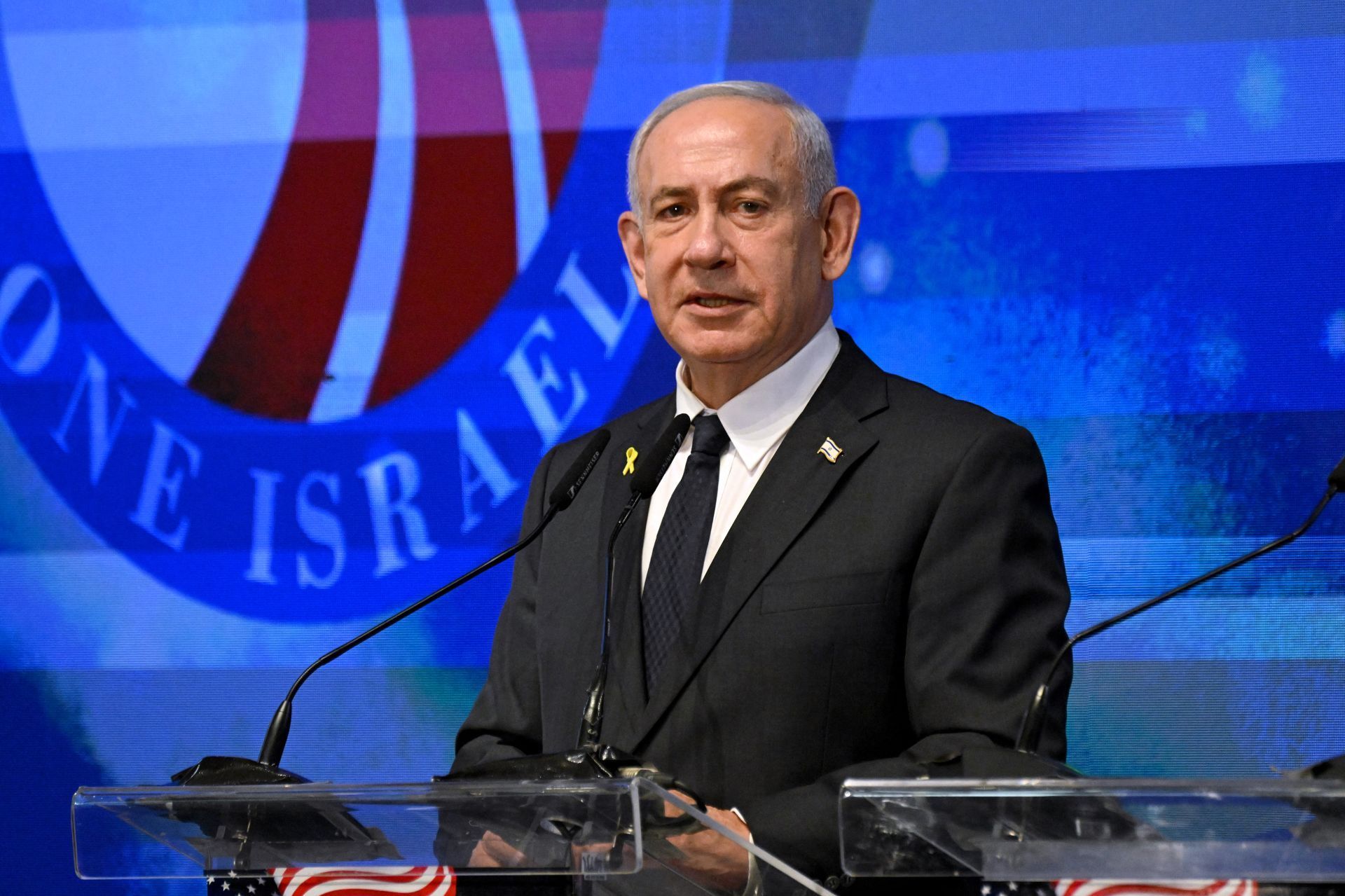
Israeli PM Benjamin Netanyahu ©Debbie Hill/POOL/AFP
For the first time since returning to office, Israeli Prime Minister Benjamin Netanyahu addressed a Christmas message to Christians around the world last night. Broadcast from Jerusalem, his address carried symbolic weight, signaling a notable shift in rhetoric that extended far beyond a traditional seasonal greeting.
By highlighting the Christian presence in the Holy Land and the freedom of worship guaranteed in Israel, the Israeli Prime Minister sought to situate his remarks within a broader regional framework focused on the protection of religious minorities, interfaith coexistence, and stability in the Levant.
Christians and Jews: A Shared Destiny in the Levant
Benjamin Netanyahu’s Christmas message highlights a reality often overlooked amid conflict: Christians and Jews are native communities of the Levant, deeply rooted in its history, culture, and spiritual geography. Their survival and flourishing are not merely matters of religious concern but a major civilizational and political issue.
In a region shaped by wars, radicalism, and state collapse, coexistence between Christians and Jews remains a key indicator of stability. Where these communities can live freely, practice their faith without fear, and participate fully in public life, societies tend to be more open, pluralistic, and resilient.
To all our Christian friends around the world - Merry Christmas! pic.twitter.com/IImci2WcbH
— Benjamin Netanyahu - בנימין נתניהו (@netanyahu) December 24, 2025
Lebanon: A Fragile Crossroads of Religious Coexistence
This issue is especially important for Lebanon, a country historically built on religious pluralism and confessional coexistence. The weakening of the state, the large-scale departure of Christians, and the growing influence of military and ideological agendas have deeply undermined this balance.
In this context, regional peace is not a diplomatic abstraction but a vital necessity. For Lebanon, it is essential for restoring sovereignty, achieving economic stability, and safeguarding its pluralistic model. For Israel, it offers a strategic horizon to secure its northern borders and establish durable regional ties.
Why Israeli-Lebanese Peace Has Become Unavoidable
Benjamin Netanyahu’s speech, while not mentioning Lebanon directly, comes at a time when diplomatic lines are shifting. Ceasefires, de-escalation mechanisms, and indirect talks have all shown their limits. In the long term, only a negotiated peace based on mutual interests and reciprocal security guarantees can prevent the Levant from falling back into cyclical conflict.
For both Lebanon and Israel, the continuation of direct negotiations, even if discreet, gradual, and pragmatic, is essential. They allow security, territorial, and economic issues to be addressed directly, without intermediaries who might be exploited, and help anchor solutions in the realities on the ground.
A Religious Statement with Political Consequences
By addressing Christians at Christmas, Benjamin Netanyahu sent a message that goes beyond the religious sphere. He reminded the world that the protection of minorities, religious freedom, and coexistence are not incompatible with security imperatives but can in fact form their very foundation.
In a fractured Levant, where communities are too often manipulated by conflict, peace between Israel and Lebanon would be not only a strategic turning point but also a message of hope for Christians, Jews, and all the peoples of the region: that lasting coexistence remains possible, provided it is desired and built through dialogue.
Read more


Comments