- 17
- Dec.
- 2025

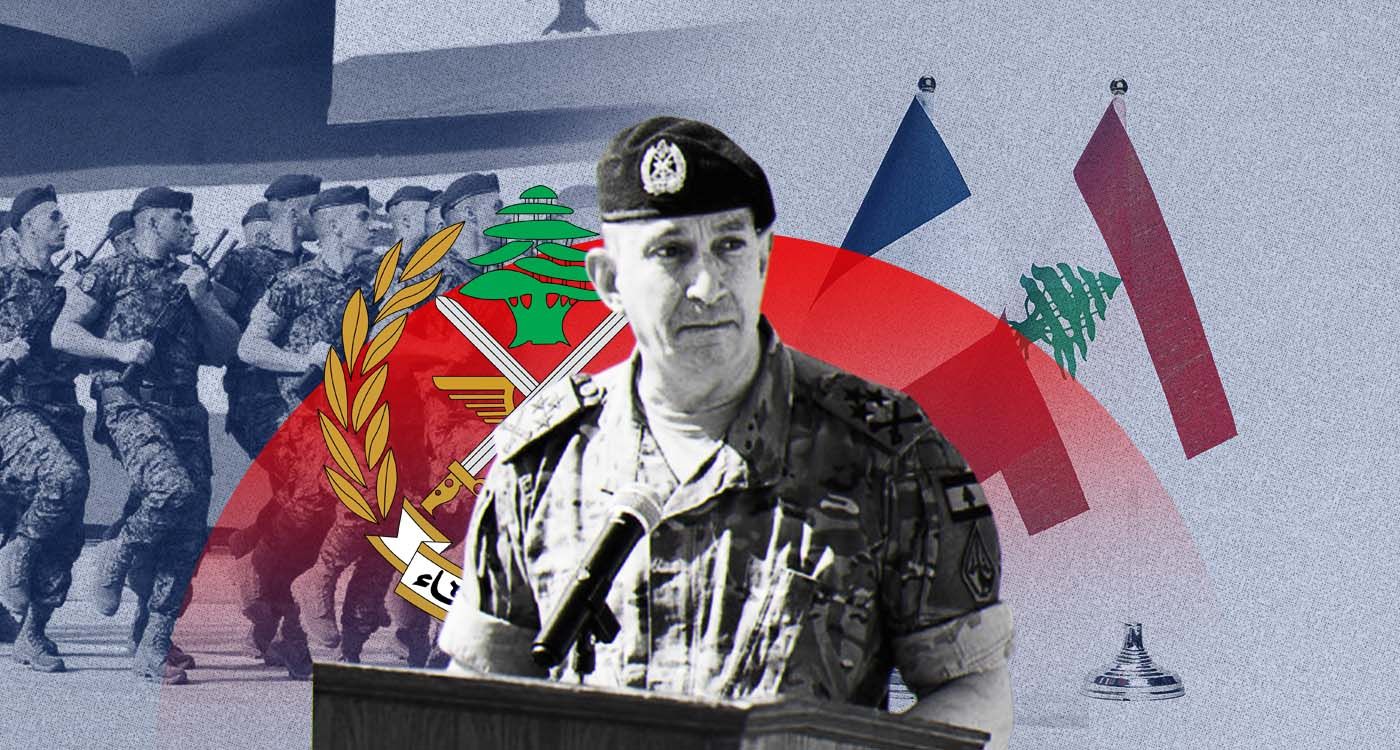
On Thursday in Paris, one of the most sensitive moments in Lebanon’s current diplomatic timeline will unfold. A closed-door meeting on the Lebanese Armed Forces’ (LAF) needs will bring together the army’s commander-in-chief, General Rodolph Haykal; US Special Envoy Morgan Ortagus; Saudi envoy Prince Yazid bin Farhan; France’s special envoy for Lebanon, Jean-Yves Le Drian; and Anne-Claire Legendre, President Macron’s adviser for North Africa and the Middle East. The makeup of the meeting alone underscores the high level of importance international partners attach to Lebanon’s security file.
Agenda of the Meeting
Officially framed as a technical and preparatory session, the meeting carries significant political and security weight at a time when the army faces intense expectations and pressure. According to journalist and political analyst Ali Hamade, interviewed by This is Beirut, it will not be a decision-making session, but rather a review of the army’s operations over the past six months, since August 5 and 7, when the Lebanese government officially tasked it with disarming Hezbollah.
Central to the discussions will be Haykal’s report on recent operations, particularly in areas south of the Litani River. The dossier remains closely scrutinized by Western and regional capitals, which assess progress based on tangible results.
Hamade adds that the army could use the meeting to announce the conclusion of its operations south of the Litani River. “The military considers the mission assigned to this sector complete,” he says, noting that such an announcement, if made, would mark the end of one phase before opening a broader one.
The second phase of the Paris meeting will focus on the army’s needs to continue its nationwide mission. “We should expect a detailed presentation of the army’s requirements, essential for securing the entire Lebanese territory,” says Hamade. These include disarmament of Hezbollah in remaining areas, border security, especially along the Lebanese-Syrian frontier, recruitment of new personnel, sustainable funding, equipment, and logistical capabilities. The list is extensive and far exceeds the army’s current resources.
Expanding Military Needs
The Paris meeting is part of a broader strategic sequence. According to Hamade, it marks the first step toward organizing a major international conference in support of the Lebanese army in early 2026, likely in January or February. The conference would be co-hosted by Lebanon and France, coordinated from Paris, and backed by the United States and Saudi Arabia, aiming at raising funds and mobilizing support.
In Beirut, President Joseph Aoun has closely overseen Lebanon’s participation. On Wednesday morning, he met with General Haykal at Baabda Palace to provide instructions ahead of his trip. The message is clear: the army must appear as a credible actor on the ground and as the main instrument capable of gradually restoring state authority nationwide.
This strategy has been reflected on the ground through initiatives supporting the official narrative. On Monday, the army organized a tour of southern Litani for ambassadors, chargés d’affaires, and military attachés to showcase measures extending state authority. The following day, the US Embassy confirmed Ambassador Michel Issa’s participation in a similar visit alongside the military command.
While no tangible commitments are expected on Thursday, the assessment will carry significant weight in upcoming decisions. Officially, no executive decisions will result from the Paris meeting. Each envoy will report back to their government, and any additional support will depend on the evaluation of measures implemented on the ground.
The Paris meeting is a crucial test for both Lebanese diplomacy and the army. Its ability to convince international partners will partly determine the scale of future support and, more broadly, Lebanon’s capacity to mitigate the risk of renewed security tensions.

Comments