- Home
- Middle East
- Rubio Says Iran Talks Show Progress but Key Issues Remain Unresolved
©Mandel Ngan / AFP
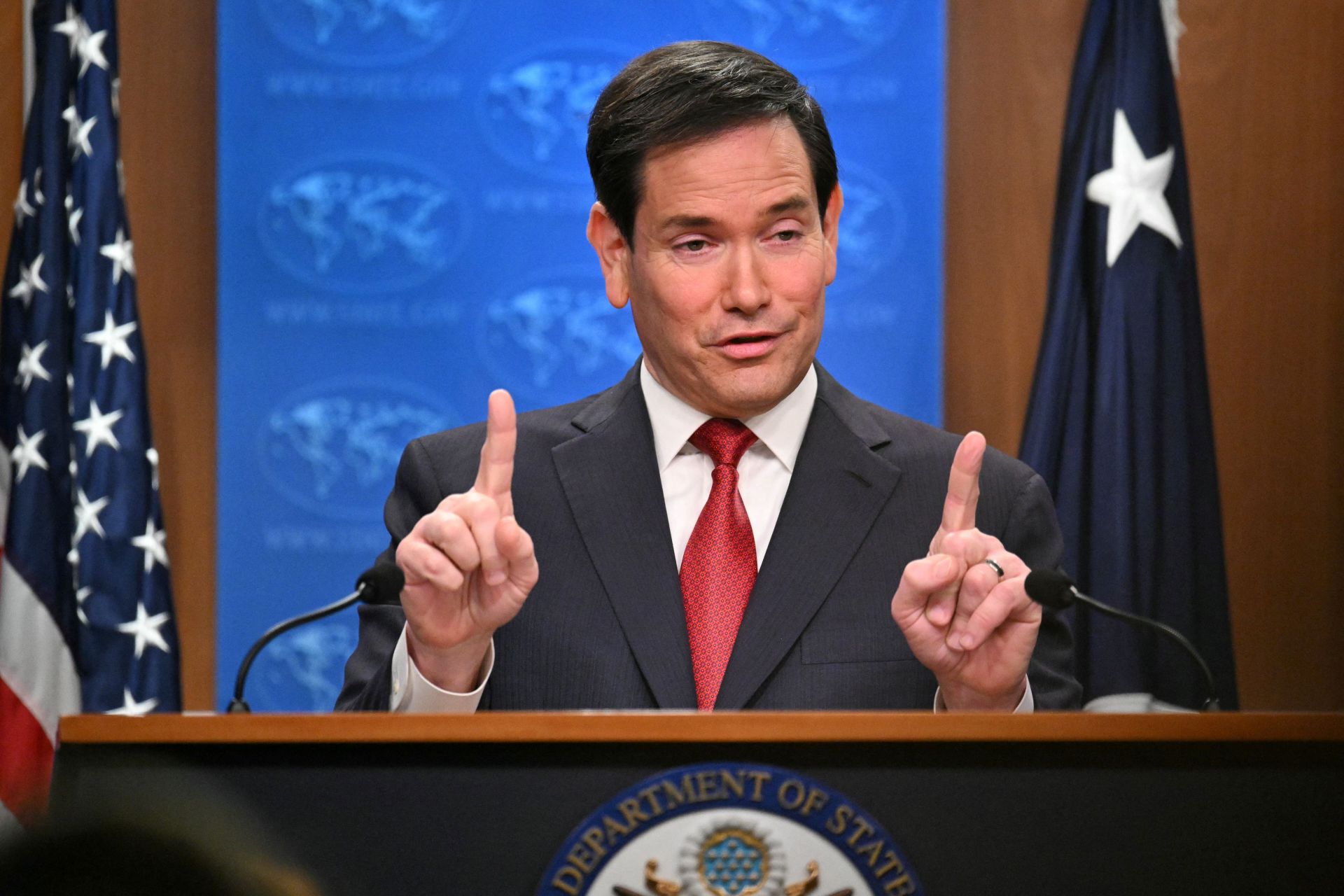
U.S. Secretary of State Marco Rubio on Saturday indicated that diplomatic discussions with Iran remain active, suggesting that developments could emerge within days while reaffirming Washington’s core demands on Tehran’s nuclear program.
Speaking during a visit to India, Rubio said that “there might be some news later today… there may not be,” adding that negotiations were still ongoing.
“There has been some progress done. Even as I speak to you now there is some work being done,” Rubio said, noting that a potential announcement could come within “a couple of days.”
He reiterated Washington’s central position: “Iran can never have a nuclear weapon,” stressing the need to address uranium enrichment and secure limits on Iran’s nuclear activities. Rubio also emphasized that the U.S. administration prefers a diplomatic resolution, stating: “The president’s preference is to deal with it in a diplomatic way.”
His remarks came amid contrasting statements from Iranian officials and ongoing military pressure from U.S. forces in the region.
Iranian Declarations
Earlier the same day, Iranian officials presented mixed signals on the state of negotiations and Tehran’s strategic posture.
The Spokesperson of the Iranian Foreign Ministry Esmail Baghaei said that the diplomatic process remains uncertain but ongoing. “We are very far, yet very close to reaching an agreement,” he said. Baghaei also accused U.S. officials of inconsistency in negotiations. “U.S. officials continue to change their positions during the negotiations,” he added.
Separately, Iran’s chief negotiator, Mohammad Bagher Ghalibaf, issued a warning regarding potential escalation with Washington. He said Iranian forces have significantly rebuilt their capabilities during the recent ceasefire period.
“Our armed forces have rebuilt themselves during the ceasefire period in such a way that if Trump commits another act of folly and restarts the war, it will certainly be more crushing and bitter for the United States than on the first day of the war,” Ghalibaf wrote on social media.
His comments followed meetings in Tehran with Pakistan’s army chief, Field Marshal Asim Munir, who has played a role in regional diplomatic outreach efforts aimed at de-escalation.
Blockade continues
The U.S. Central Command (CENTCOM) announced that its maritime enforcement operation targeting Iranian shipping routes has reached a significant milestone, with more than 100 commercial vessels redirected.
According to CENTCOM, the operation began on April 13 under a presidential directive and involves preventing commercial traffic from entering and exiting Iranian ports.
Over the past six weeks, more than 15,000 U.S. service members have participated in the mission, which has resulted in the redirection of 100 vessels, the disabling of four, and the passage of 26 humanitarian aid ships.
“Allowing zero trade into and out of Iranian ports has squeezed Iran economically,” said CENTCOM commander Adm. Brad Cooper, adding that U.S. forces are executing the mission with “precision and professionalism.”
The operation is supported by more than 200 aircraft and naval assets, including carrier strike groups, amphibious ready groups, and multiple destroyers.
CENTCOM stated that the blockade applies to vessels of all nationalities operating in and out of Iranian ports across the Arabian Gulf and the Gulf of Oman.
Read more



Comments