- Home
- Middle East
- Iran Condemns U.S. Sanctions as Washington Expands Pressure on Hezbollah’s Institutional Network
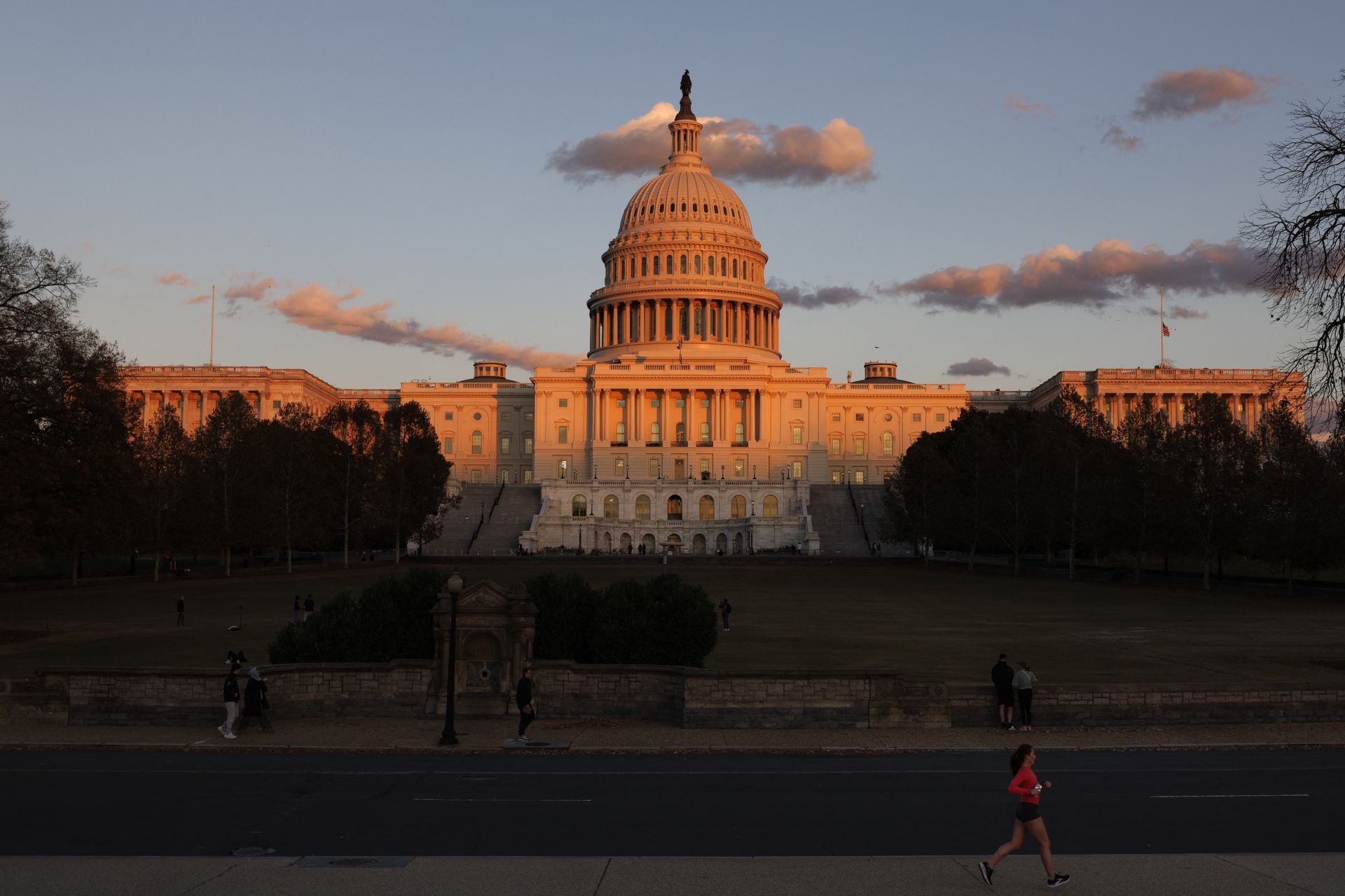
US Congress moves toward lifting long-standing Syria sanctions, pending Senate approval and the president’s signature. ©Photo by TOM BRENNER / GETTY IMAGES NORTH AMERICA / GETTY IMAGES VIA AFP
Iran on Friday strongly condemned new U.S. sanctions targeting Iranian Ambassador-designate to Lebanon Mohammad Reza Sheibani, as well as several Lebanese political, military, and security officials accused by Washington of supporting Hezbollah.
In a statement, the Iranian Foreign Ministry described the sanctions imposed by the U.S. Treasury Department as “illegal and unjustified,” accusing Washington of violating international law and disregarding “the principle of respect for the national sovereignty of states.”
Tehran also denounced sanctions imposed on Hezbollah lawmakers, officials affiliated with the Amal Movement, and members of Lebanon’s security establishment. The reaction came a day after the U.S. Treasury sanctioned nine individuals it accused of “obstructing the peace process in Lebanon” and preventing Hezbollah’s disarmament.
Among those targeted were Hezbollah MPs Ibrahim al-Moussawi, Hussein Al-Hajj Hassan, Hassan Fadlallah, and former minister Mohammed Fneish. The sanctions also targeted Lebanese military and intelligence officials accused by Washington of sharing information with Hezbollah during the ongoing conflict.
Mohammad Reza Sheibani, who was included in the U.S. sanctions list, had previously been declared persona non grata by Lebanon’s Ministry of Foreign Affairs on 14 May 2024, after Beirut withdrew its approval of his appointment and ordered him to leave the country, citing violations of diplomatic norms and concerns over his activities in Lebanon.
Hezbollah and Amal Reactions
Hezbollah responded Thursday with a sharply worded statement rejecting the sanctions and portraying them as part of an American effort to pressure Lebanon politically and militarily. The group described the measures as “an American attempt to intimidate the free Lebanese people” and accused Washington of seeking to reinforce “the Zionist aggression” against Lebanon.
According to Hezbollah, the real reason behind the sanctions is the refusal of its MPs and officials “to disarm the resistance” and accept what it called “projects of surrender” imposed in favor of Israel.“These sanctions are a badge of honor,” the group declared, insisting the measures would have no impact on its policies or activities. Hezbollah also accused the United States of attempting to intimidate Lebanon’s official security institutions and subordinate the Lebanese state to “American tutelage.”
The Amal Movement likewise condemned the sanctions imposed on officials Ahmad Baalbaki and Ali Safawi, describing the measures as “unacceptable and unjustified.” Amal argued the sanctions target not only the two individuals but also the movement itself and its political role in Lebanon.
Pressure Security Institutions
Beyond the political fallout, the sanctions have intensified scrutiny on Lebanon’s military and security apparatus.
Washington accused Brigadier General Khattar Nasser Eldin from General Security and Colonel Samir Hamadi from Lebanese Armed Forces Intelligence of sharing “important intelligence” with Hezbollah.
The move marks a sensitive escalation, as the United States remains one of the Lebanese Armed Forces’ principal international supporters while simultaneously accusing members of Lebanon’s security institutions of cooperating with Hezbollah.
On Friday, Lebanese Army Commander General Rudolph Haykal appeared to indirectly respond to the controversy during remarks commemorating Resistance and Liberation Day.
“Attacks against the military institution through accusations, sectarian rumors, and disinformation will not deter the army from carrying out its mission,” Haykal said. Although he did not directly mention the sanctions in his statement
The latest measures may indicate a broader shift in U.S. strategy — from targeting Hezbollah primarily as a military organization to targeting what critics increasingly describe as its institutional and political infrastructure within the Lebanese state.
Read more

Comments