- Home
- Middle East
- Trump Says U.S. Not Likely to Accept New Iran Peace Proposal
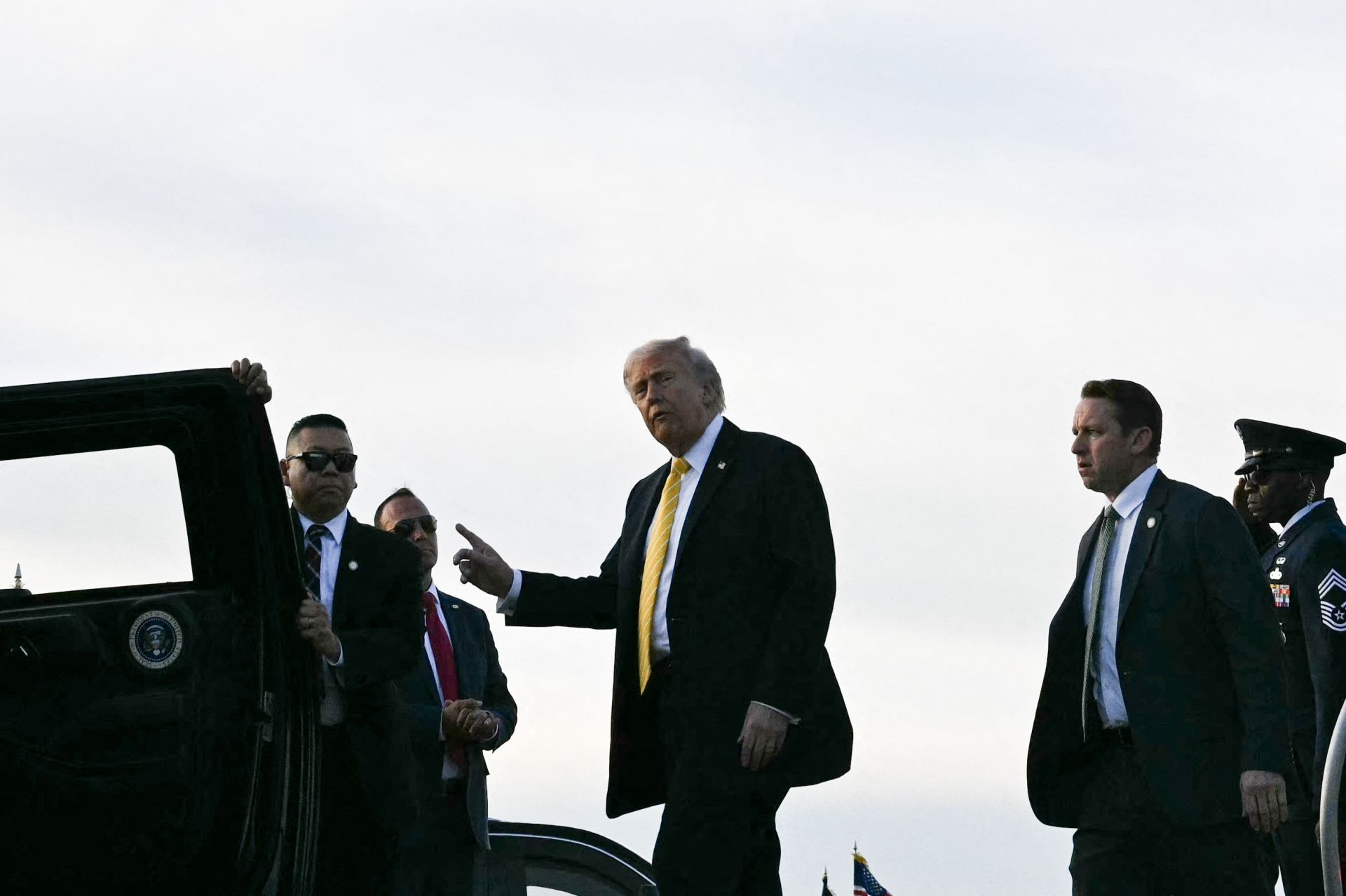
US President Donald Trump steps off Air Force One at Miami International Airport in Miami, on May 2, 2026. ©JIM WATSON / AFP
U.S. President Donald Trump said Saturday he would review a new Iranian peace proposal but cast doubt over its prospects as he left open the possibility of future attacks on Iran.
Negotiations between the two countries have been deadlocked since a ceasefire came into effect on April 8, with one round of peace talks to end the more than two-month war having failed in Pakistan.
The grim outlook came after Iran's Tasnim and Fars news agencies reported Tehran submitted a 14-point proposal to mediator Islamabad. Details included ending the conflict on all fronts and enacting a new framework for the crucial Strait of Hormuz, Tasnim said.
"I will soon be reviewing the plan that Iran has just sent to us, but I can't imagine that it would be acceptable, in that they have not yet paid a big enough price for what they have done to humanity and the world over the last 47 years," Trump said on his Truth Social platform.
In a brief interview with reporters in West Palm Beach, Florida, he declined to specify what could trigger new military action against the Islamic Republic.
"If they misbehave, if they do something bad, but right now, we'll see," he said. "But it's a possibility that could happen, certainly."
On Saturday, Mohammad Jafar Asadi, a senior figure in the Iranian military's central command, said: “A renewed conflict between Iran and the United States is likely."
"Evidence has shown that the United States is not committed to any promises or agreements," he added, according to the Fars news agency.
Deputy Foreign Minister Kazem Gharibabadi told diplomats in Tehran, "The ball is in the United States' court to choose the path of diplomacy or the continuation of a confrontational approach."
Iran, he said, was "prepared for both paths."
'Hypocritical'
U.S. news site Axios reported earlier in the week that Trump's envoy Steve Witkoff had asked for Tehran's nuclear program to be put back on the negotiating table.
Iran's mission to the UN pointed to the massive U.S. nuclear arsenal, accusing Washington on Saturday of "hypocritical behavior" towards Iran's own atomic ambitions.
There was no legal "restriction on the level of uranium enrichment, so long as it is conducted under the IAEA's supervision, as was the case with Iran," it said, using the abbreviation for the UN nuclear watchdog.
Iran has maintained a stranglehold on the Strait of Hormuz since the war began, choking off major flows of oil, gas, and fertilizer to the world economy, while the United States has imposed a counter-blockade on Iranian ports.
Oil prices are about 50 percent above pre-war levels.
The vice speaker of Iran's parliament, Ali Nikzad, said that under draft legislation being considered for managing the waterway, 30 percent of tolls collected would go towards military infrastructure, with the rest earmarked for "economic development."
"Managing the Strait of Hormuz is more important than acquiring nuclear weapons," he said.
Iran's economic toll
In Washington, lawmakers were wrestling over whether Trump had breached a deadline to seek congressional approval for the war.
Administration officials argue the ceasefire paused a 60-day clock, after which congressional authorization would be required, a claim disputed by opposition Democrats.
In Iran, the war's economic toll is deepening, with oil exports crimped and inflation surging past 50 percent.
"Everyone is trying to endure it, but... they are falling apart," 40-year-old Amir, a Tehran resident, told an AFP reporter based outside the country.
"We still have not seen much of the economic effects because everyone had a bit of savings. They had some gold and dollars for a rainy day. When they run out, things will change."
AFP
Read more
Comments