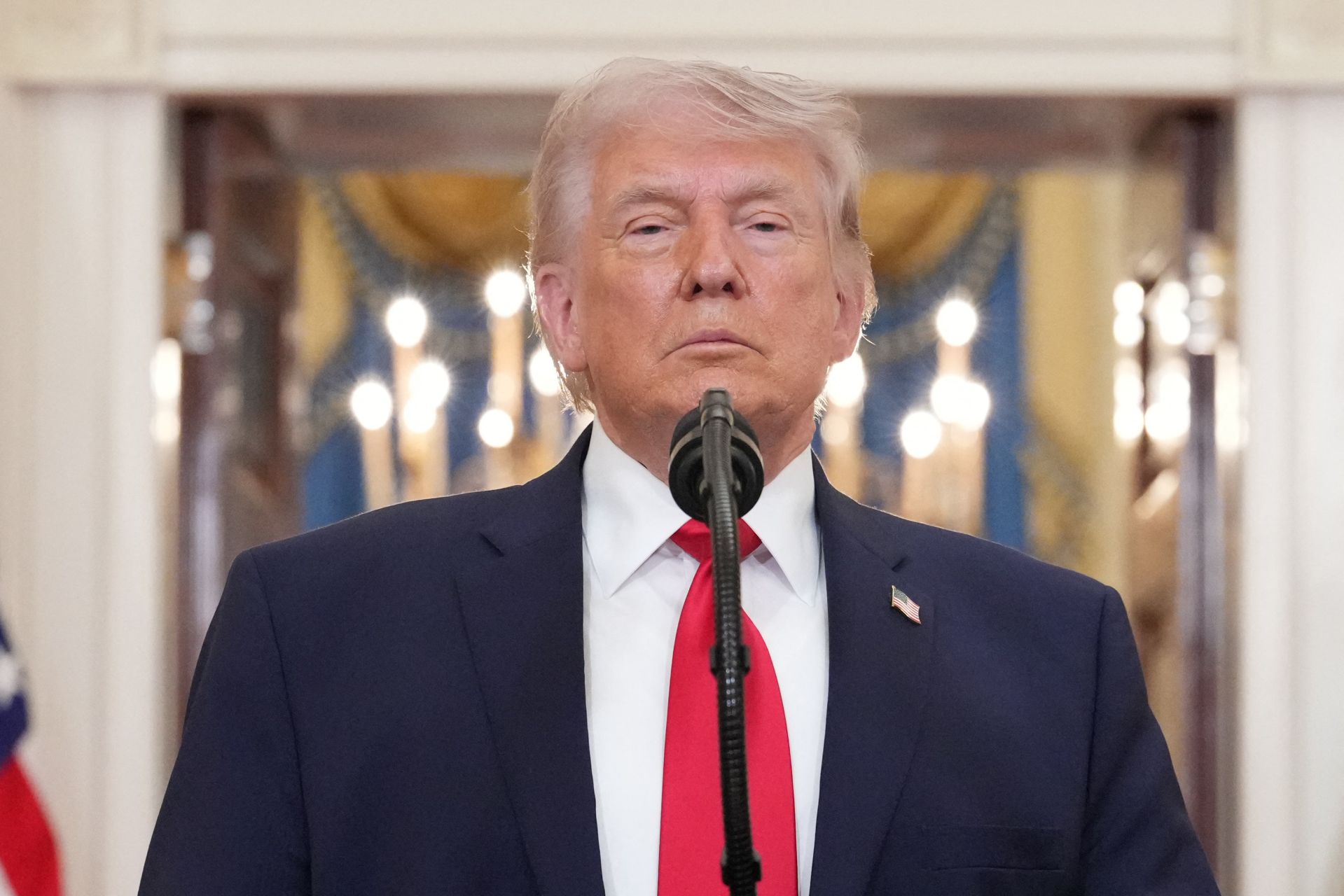
U.S. President Donald Trump announced a 10-day ceasefire between Israel and Hezbollah in a series of Truth Social posts set to take effect at 5 p.m. EST, following what he described as “excellent conversations” with Lebanese President Joseph Aoun and Israeli Prime Minister Benjamin Netanyahu.
Trump presented the deal as an initial step toward a broader effort to “achieve peace,” framing it less as a temporary pause and more as the opening phase of a wider diplomatic push. He also directed Vice President JD Vance, Secretary of State Marco Rubio, and Chairman of the Joint Chiefs of Staff General Dan Caine to engage directly with both sides, signaling that Washington intends to quickly build on the momentum.
Speaking later to reporters, Trump described the ceasefire as an effort to create “breathing room” after months of escalating cross-border exchanges, while acknowledging that the situation remains fluid.
He suggested the pause could pave the way for further talks and invited Aoun and Netanyahu at the White House for a meeting in the coming days. This has been built on the historic meeting between the Ambassadors of Lebanon and Israel at the State Department earlier this week.
On Iran, Trump struck a dual tone, pairing optimism about a potential deal with clear warnings that the situation could quickly deteriorate. He said the United States is “very close” to an agreement with Tehran, indicating that Iranian officials may be willing to accept limits on their nuclear program, including restrictions on enriched uranium.
He framed the moment as a possible turning point, even floating the idea of traveling to finalize a deal, while reiterating that the core objective remains preventing Iran from obtaining a nuclear weapon.
At the same time, Trump underscored that the diplomatic window remains fragile. He warned that if negotiations fail, the current pause in fighting could collapse and military operations would resume, reinforcing his broader strategy of coupling diplomacy with sustained pressure.
His remarks cast the coming days as decisive, outlining a narrow path in which the conflict could either move toward resolution through negotiations or slip back into escalation if Iran does not meet U.S. demands.


Comments