Lebanon and Israel engaged in the first round of United States-brokered talks in Washington DC today to discuss cooperation on Hezbollah disarmament. The talks were a major historic milestone, the first in-person meetings between Lebanese and Israeli representatives since 1993.
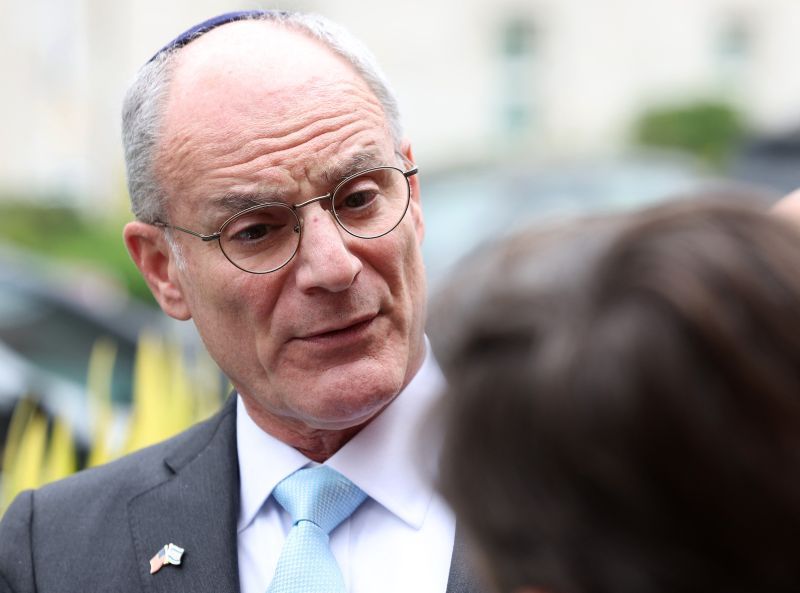
Following two hours of talks, Israeli Ambassador to the U.S. Yechiel Leiter described cooperation “on the security and civil fronts to achieve a complete peace treaty,” saying that the two countries discovered they were on the “same side of the equation.”
In attendance were Lebanese Ambassador to the U.S. Nada Hamadeh and Israeli Ambassador to the U.S. Yechiel Leiter, facilitated by U.S. Secretary of State Marco Rubio, U.S. Ambassador to Lebanon Michel Issa, and State Department Counselor Michael Needham. They were also joined in a pre-meeting photo-op by U.S. Ambassador to the U.N Mike Waltz.
Leiter Speaks on Cooperation
In a press briefing after the talks, Israeli Ambassador to the U.S. Yechiel Leiter, said Israel and Lebanon were “both united in liberating Lebanon from an occupation power dominated by Iran's Hezbollah,” adding, “the moment we have the security agreement solved, we can embark on a harmonious relationship like we have with the other Abraham Accord countries.”
“The Lebanese government made it clear they will no longer be occupied by Hezbollah,” he said, describing talks as promoting a “long term vision,” where there will be a “clearly delineated border, and where the only reason we'll need to cross each others territory will be to conduct business or to go on vacation.”
He finished a Q&A, saying “this is not a pipe dream, its a reality that can really happen in our lifetime.”
‘Historic Opportunity’
At the opening of talks between Israel and Lebanon at the U.S. State Department, Secretary of State Marco Rubio described the negotiations as “historic opportunity” to permanently end “twenty or thirty years of Hezbollah's influence in this part of the world.” He stressed that “the Lebanese people are victims of Iranian aggression, and, and this needs to stop.”
“The hope today,” Rubio said, “is that we can outline the framework upon which a permanent and lasting peace can be developed.” He said that the objective of the talks go well beyond a ceasefire and will take a long time to achieve saying, “this is a process, not an event. This is more than just one day.”
Beirut
Minutes before the meeting in Washington, Lebanese President Joseph Aoun said he hoped negotiations would mark “the beginning of the end” of the Lebanese people’s suffering.
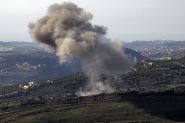
The negotiations come amid a week of calm in Lebanon’s capital which has seen no strikes, either within city-limits or in the southern suburbs, since talks were announced last thursday. In the south, fighting continues around the major southern city of Bint Jbeil, which Israel said it had completely encircled as of yesterday, April 13.
Hezbollah Intransigence
Directly before negotiations began, Hezbollah officials warned they would begin striking northern Israel, and minutes later claimed that they had struck 13 northern Israeli towns with simultanous rocket barrages.
Last night, Hezbollah Secretary General Qassem called on Lebanese authorities to cancel the planned meeting, calling negotiations pointless, and promising Hezbollah would fight on “until their last breath.”


Comments