- Home
- Middle East
- U.S. Vice President JD Vance: ‘We Were Unable to Reach an Agreement’ With Iran
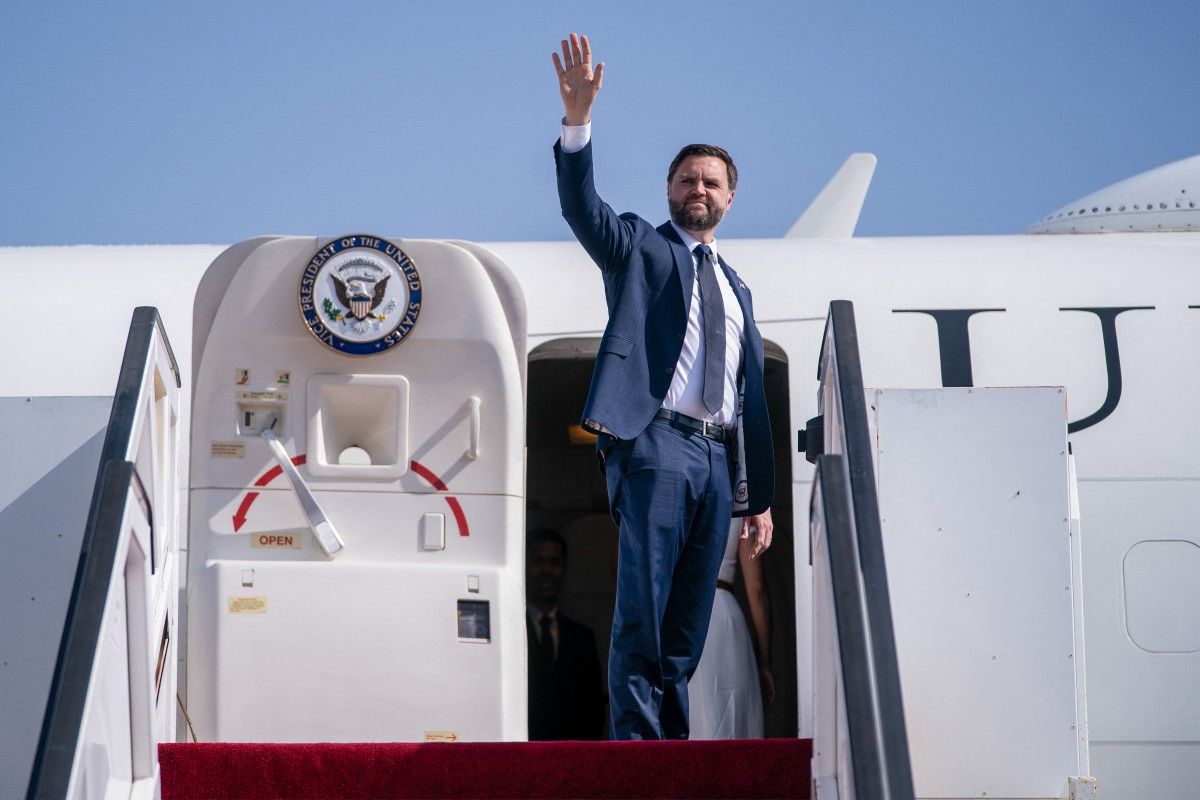
©Photo by NATHAN HOWARD / POOL / AFP
On Sunday morning, U.S. Vice President JD Vance held a press conference following 21 hours of negotiations with Iranian officials in Islamabad, Pakistan, announcing that “we were unable to reach an agreement.”
He emphasized that “Iran decided not to accept our terms” as U.S. negotiators sought to adhere to the agenda and demands it set ahead of the talks.
Disputes Over Status of Enriched Uranium
Iran’s Foreign Ministry stated that the two countries reached a consensus on a number of points during the talks, but maintained disputes over two important issues. According to an Axios report, the U.S. and Iran faced an impasse regarding Iran’s stockpile of enriched uranium and Iran’s insistence to control the Strait of Hormuz.
“We’ve made very clear what our red lines are,” Vance added, “We want to see a clear commitment from Iran that it will not pursue nuclear weapons.”
Iranian officials insisted throughout the negotiations that the U.S. had held “extreme demands” which it must abandon.
Spokesperson to Iran’s Foreign Ministry Esmail Baghaei said in a statement on X that talks between the U.S. and Iranian delegations in Islamabad focused on the nuclear file, the Strait of Hormuz, and war reparations. He expressed that the talks also also included discussions of sanctions relief and an end to war in Iran and the entire region.
Baghaei asserted that the success of talks depends on the seriousness of the U.S. negotiating delegation, good-faith participation, and “the acceptance of Iran’s legitimate rights and interests,” referring to Iran’s nuclear program.
Hormuz Remains a Sticking Point
Pakistani sources expressed that disputes over the status of the Strait of Hormuz remained a sticking point in negotiations, according to a CNN report.
Amid the negotiations, the U.S. Central Command announced that two warships have crossed through the Strait of Hormuz into the Gulf to clear mines laid by Iran.
In response to U.S. naval vessels traversing the Strait, the IRGC Navy Command asserted that it will only allow non-military ships to pass through the Strait of Hormuz under strict regulation, and any passing military ships would be met with a firm response.
The Revolutionary Guards added that “the IRGC Navy has full authority to manage the Strait of Hormuz intelligently.”
An Iranian negotiator told Iranian state media that Iran did not accept U.S. conditions with regards to the Strait of Hormuz and nuclear energy.”
U.S. President Donald Trump continued to emphasize his demands regarding the Strait, stating that the U.S. will open the Strait of Hormuz even if the U.S. does not use it.
Vance Leaves Islamabad After Failed Talks
Vance said that U.S. negotiators “showed flexibility and came with good intentions, but unfortunately were unable to reach an agreement.”
He concluded that “Iranians must realize that this was our last offer and we didn’t make any other.”
Following his announcement on a failed agreement, Vance left Islamabad to return to the United States.
On Saturday amid the negotiations, U.S. President Donald Trump stated that “we are winners of the talks regardless” and that he did not “care” if an agreement with Iran is reached.
According to a source from Iran’s negotiating delegation, there is no currently-set plan for a time and place for future negotiations, Iranian State media reports.
The source also asserted that the U.S. delegation was looking for an excuse to withdraw from negotiations.
The Pakistani Foreign Ministry stated that it will continue to communicate with the U.S. and Iran in its endeavors to mediate an agreement between the two countries, and called for maintaining and extending the ceasefire.
Read more


Comments