- Home
- Middle East
- Netanyahu Conditions Talks on 'Real Peace Agreement' With Lebanon
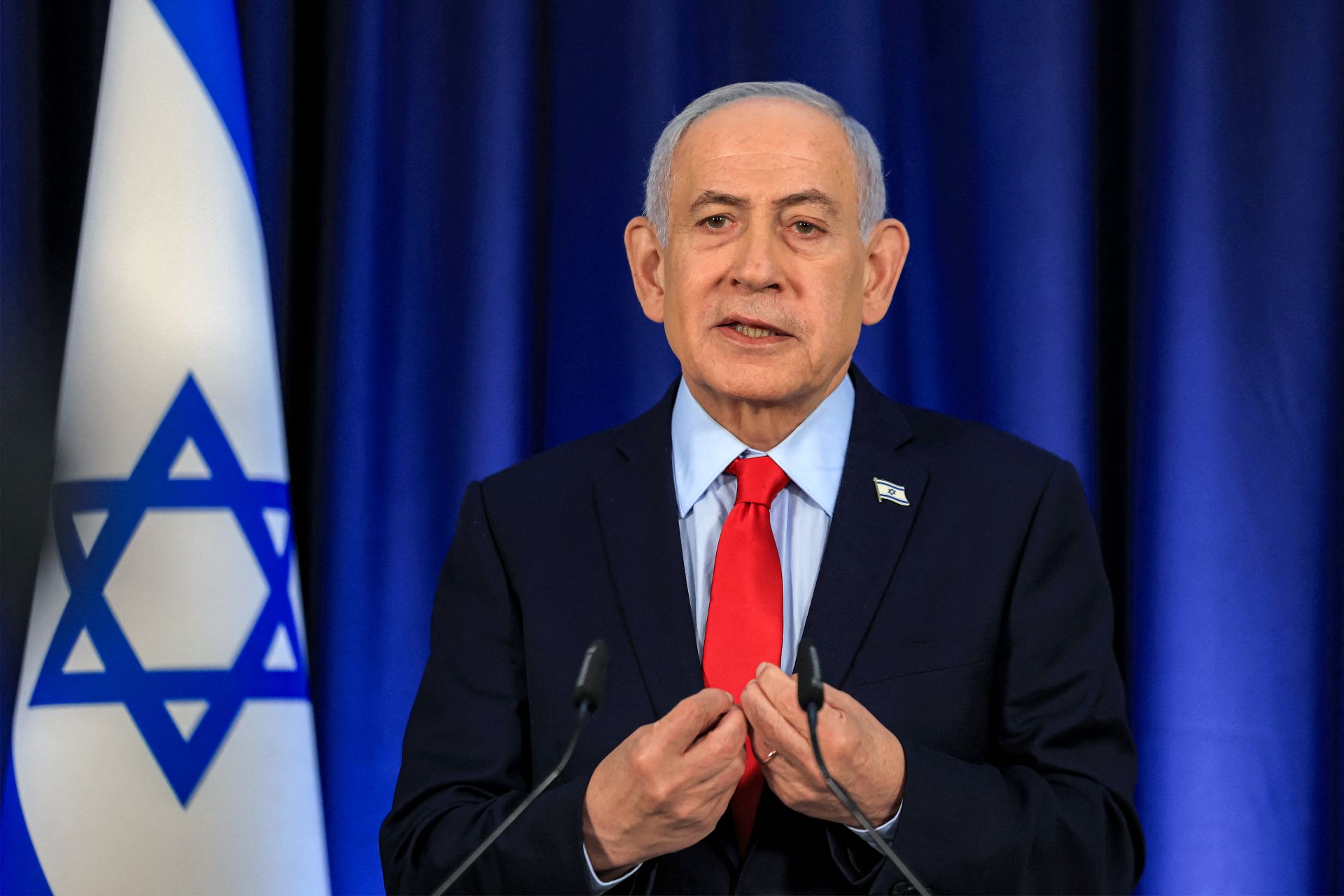
Israeli Prime Minister Benjamin Netanyahu speaks during a press conference in Jerusalem on March 19, 2026. ©RONEN ZVULUN / POOL / AFP
In a statement to the press on Saturday, Israeli Prime Minister Benjamin Netanyahu said Israel’s military campaign has reshaped the regional landscape, revealing that Beirut had approached Israel in recent weeks to pursue direct negotiations, something he described as unprecedented.
He confirmed approving the talks but set clear conditions, saying any agreement would require both the disarmament of Hezbollah and the establishment of a “real peace agreement” that would endure.
He revealed that military operations on the northern front are far from over, citing Israel’s destruction of around 150,000 Hezbollah rockets, while acknowledging that additional capabilities remain and will be addressed.
He also detailed the creation of buffer zones across multiple fronts, including an 8 to 10 kilometer zone inside southern Lebanon, aimed at securing Israel’s northern border and enabling displaced residents to return.
He placed these measures within a broader regional strategy, noting that Israel now controls more than 50 percent of Gaza and has established similar security zones in Syria, presenting these developments as evidence of a shift in the balance of power.
Netanyahu ultimately linked diplomacy to force, arguing that Israel’s military gains have elevated it to what he described as the strongest power in the region, creating conditions for negotiations that would not have been possible otherwise.
Iran
On Iran, Netanyahu framed the confrontation with Iran as the defining effort of his political life, saying Israel had acted to prevent what he described as an existential threat. He said Tehran once threatened Israel with annihilation but is now “fighting to survive,” pointing to what he described as deep internal divisions within the Iranian leadership and a regime now “begging for a ceasefire.”
He outlined a series of operational achievements, saying Israeli forces eliminated 20 nuclear scientists, including 12 during “Rising Lion” and 8 during “Roaring Lion,” and struck nuclear facilities using real-time intelligence. According to Netanyahu, Iran does not have a single active enrichment plant, and most of their ability to produce missiles has disappeared.
He added that Israeli strikes extended beyond nuclear targets to critical infrastructure, including steel production, gas facilities, fuel systems, bridges, and railways, part of a broader effort to weaken the regime to what he described as its lowest level since 1979. Netanyahu maintained that without these actions, Iran would already possess nuclear weapons, saying Israel had effectively “averted an existential threat.”
Despite the damage, he cautioned that enriched nuclear material remains inside Iran and must ultimately be removed, either through agreement or by force.
He also pointed to Iranian efforts to conceal missile and nuclear production deep underground, suggesting Tehran is attempting to rebuild under pressure, and warned that if the Islamic regime insists on keeping control over the Strait of Hormuz, “we can kiss these talks goodbye.”
Read more


Comments