- 08
- Apr.
- 2026

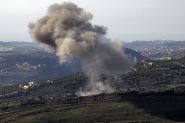
An Israeli drone strike near Naqoura in southern Lebanon last week raised fresh questions about whether foreign combatants, apart from Iran’s Islamic Revolutionary Guard Corps (IRGC), are fighting alongside Hezbollah.
While Hezbollah announced that the fighters killed in the airstrike were from southern Lebanon, the Israeli military identified the militants as members of the "Imam Hussein Division,” an Iran-linked formation known to include foreign fighters.
A Lebanese military source, speaking to This is Beirut on condition of anonymity, said there is strong indication that non-Lebanese fighters have been involved in Hezbollah military operations.
“I am almost certain that non-Lebanese fighters, including Shia Syrians and Iraqis, in addition to the Iranians, are fighting in the south,” the source said. “All of them—whether Lebanese or not—are operating under the command and control of the IRGC.”
Military analyst Riad Kahwaji urged caution in drawing conclusions. “While reports of foreign fighters are widespread and plausible, there is no concrete evidence confirming their presence on the ground,” he told This is Beirut.
“At this stage, the only confirmed non-Lebanese combatants engaged alongside Hezbollah are Iranian operatives affiliated with the IRGC,” he added.
Political analyst Ali al-Amin also called for caution regarding reports of foreign fighters other than IRGC operatives. “There is a high probability that non-Lebanese fighters from groups such as the Palestine Brigade, the Imam Hussein Division or Iraqi Hezbollah could be present, but that is yet to be confirmed,” he told This is Beirut.
For Amin, the question of foreign fighters cannot be separated from the broader military role Tehran plays in Lebanon. He argued that Iran has assumed a more direct role in Hezbollah after the group suffered significant losses among its leadership in the 2024 war with Israel.
“They intervened to guide Hezbollah’s operations,” he said, adding that any foreign combatants fighting alongside Hezbollah would not act independently.
“All fighters are operating under the umbrella of the IRGC and Hezbollah,” he said.
The Imam Hussein Division itself reflects this transnational dimension. Founded in 2016 by the late IRGC Quds Force chief Qassem Soleimani—killed in a U.S. strike in January 2020—the unit includes fighters from Syria, Iraq, Afghanistan, Pakistan, Yemen, and Lebanon.
Initially formed to combat ISIS, the division has since expanded its operational scope, primarily in Syria. According to Israeli officials, it is increasingly active in Lebanon, where it is alleged to have participated in cross-border attacks in coordination with Hezbollah and the IRGC.
On April 1, Lebanese daily Nidaa al-Watan reported that former Syrian military personnel from Bashar al-Assad’s regime were fighting alongside Hezbollah, noting that one such figure had been killed in Khiam, where heavy clashes have been ongoing.
The newspaper reported that thousands of former Syrian regime supporters are present in Lebanon, concentrated in the Bekaa, including in a refugee camp controlled by Hezbollah that allegedly hosted IRGC officers.
The implications extend beyond the battlefield. As foreign involvement—confirmed or suspected—deepens, Lebanon risks becoming an increasingly open arena for regional power struggles. With the IRGC playing a central role and Hezbollah continuing to frame the conflict as existential, the lines between local and regional dynamics are rapidly blurring.


Comments