- Home
- Middle East
- Decapitation of Iranian Military and Intelligence Leadership: Timeline and Structure
- 06
- Apr.
- 2026
AnalysisDecapitation of Iranian Military and Intelligence Leadership: Timeline and Structure
Read : 8 minute(s) A A A
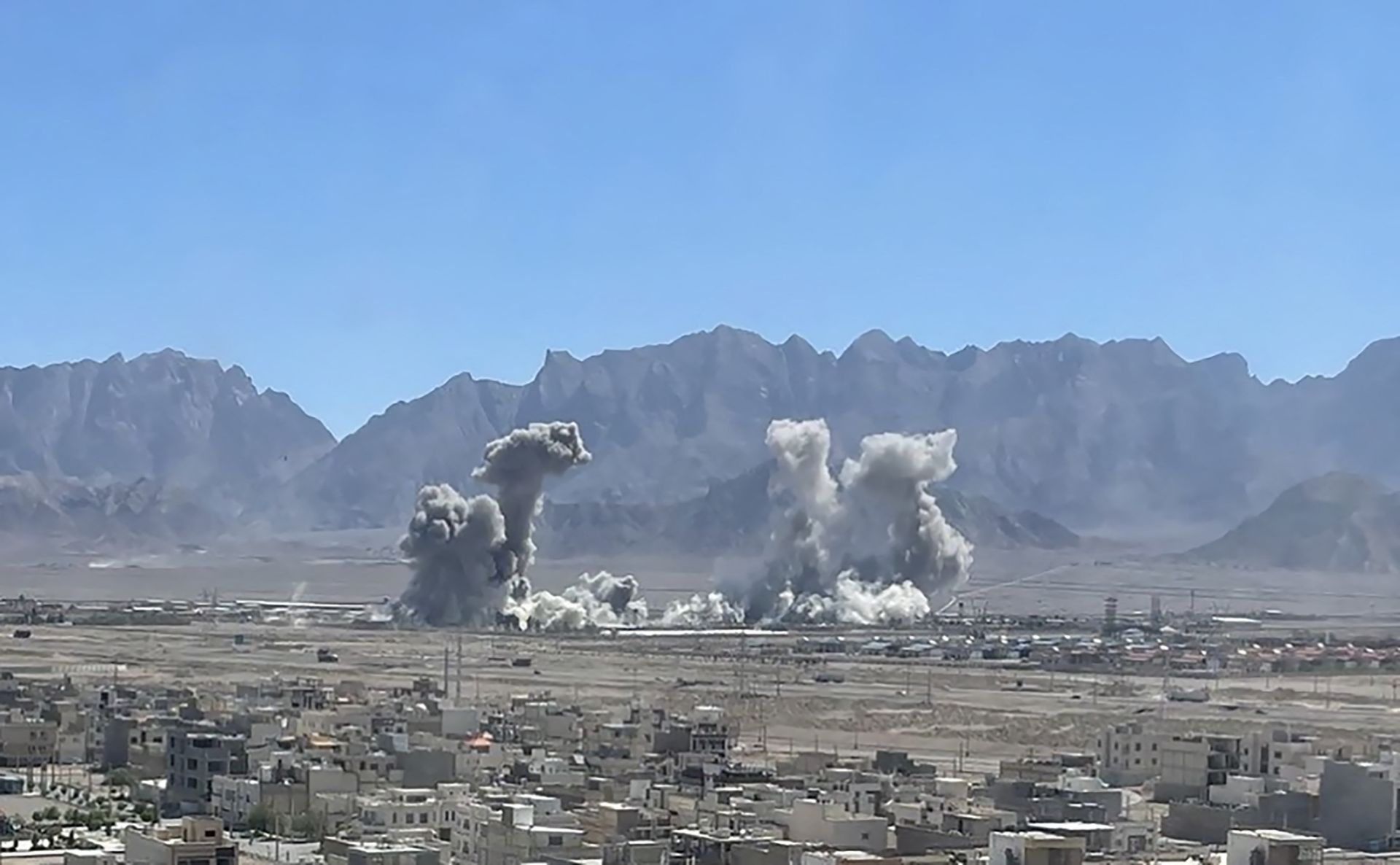
An undated UGC image posted online on March 29, 2026, and verified by AFPTV teams in Paris, shows smoke billowing near Yazd, in central Iran. ©- / VARIOUS SOURCES / AFP
Since the outbreak of the U.S.-Israel war on Iran on February 28, a series of coordinated strikes by both countries has dramatically reshaped Iran’s military and political command structure. The U.S.-led Operation Epic Fury and Israel’s Operation Roaring Lion have systematically targeted senior Iranian officials, top advisors, ministers, field commanders, and intelligence operatives.These operations have resulted in the elimination of dozens of high-ranking figures across Iran’s political, military, and intelligence hierarchies.
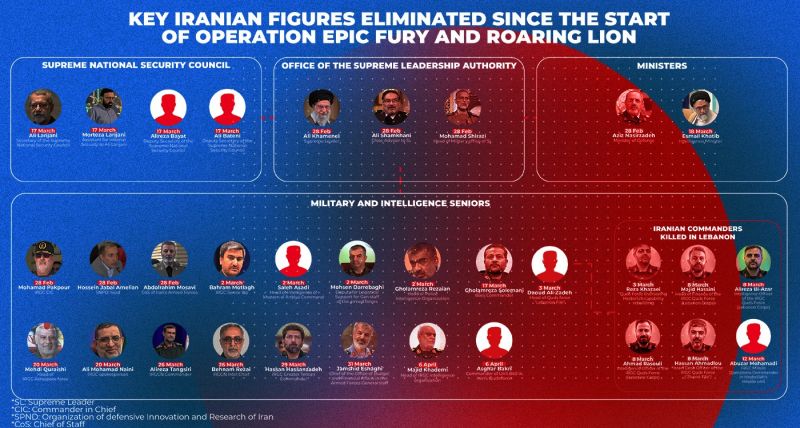
A chart compiled from verified reports and assembled by This is Beirut illustrates the scope of the campaign, showing which leaders have been killed, their roles, and the dates of their deaths. The breadth and accuracy of these operations suggest a calculated strategy aimed at dismantling Iran’s command‑and‑control capabilities, curbing its operational reach throughout the region, and undermining its ability to coordinate with allied proxy forces across the Middle East.
Office of the Supreme Leader:
- Ali Khamenei – Supreme Leader of Iran, ultimate authority over political and military decisions.
- Ali Shamkhani – Close advisor to the Supreme Leader; veteran figure in Iran’s security establishment with prior top defense and intelligence roles. Sanctioned figure linked to Iran’s security and sanctions-evasion networks
- Mohamad Shirazi – Head of the military office of the Supreme Leader, Mohammad Shirazi was described by analysts as a central figure in Iran’s security decision‑making, acting as a shadowy “gatekeeper” whose position as head of the Military Office of the Supreme Leader made him key to maintaining the supreme leader’s control over military and security policy.
Supreme National Security Council:
- Ali Larijani – Secretary of the Supreme National Security Council, who played a central role in shaping Iran’s strategic defense and foreign policy decisions.
- Morteza Larijani – Son of Ali Larijani responsible for internal security affairs, instrumental in coordinating domestic intelligence and counterintelligence operations.
- Alireza Bayat – Deputy for Internal Security of the Supreme National Security Council.
- Ali Bateni – Deputy for Internal Security of the Supreme National Security Council.
Government Ministers:
- Esmail Khatib – Minister of Intelligence, oversaw Iran’s intelligence services, including both domestic surveillance and foreign operations.
- Aziz Nasirzadeh – Minister of Defense, responsible for military planning, procurement, and coordination of Iran’s armed forces.
Military and Intelligence Leadership:
- Mohamad Pakpour – Commander-in-Chief of the IRGC, Pakpour oversaw Iran’s principal military force and was responsible for activating strategic fire systems against Israel, as well as directing and supporting Iran-aligned proxy groups.
- Hossein Jabal Amelian – Head of a key defense innovation organization, contributed to military technological development.
- Abdolrahim Mousavi – Commander-in-Chief of Iran’s Armed Forces, oversaw overall military operations. In March 2023, Mousavi was designated by the U.S. Department of the Treasury’s Office of Foreign Assets Control (OFAC) in connection with serious human rights violations.
- Saleh Asadi – Saleh Asadi - Head of the Intelligence Directorate of the Khatam al-Anbiya emergency command, and a senior Intelligence Officer of the Supreme Command of the Iranian Forces. (Times of Israel)
- Bahram Motlagh – Senior IRGC operations officer, involved in strategic military planning.
- Gholamreza Soleimani – Commander of the Basij militia, As commander of the Basij Organization from July 2019 to March 2026, Gholamreza Soleimani oversaw the paramilitary force’s role in several deadly crackdowns on Iranian civilians. During his tenure, the Basij evolved from a social organization into a frontline force used to suppress domestic unrest, including through lethal means.
- Alireza Tangsiri – IRGC Navy commander responsible for Iran’s maritime operations and asserted control over the Strait of Hormuz. He was killed on March 26, 2026 in an airstrike in Bandar Abbas that targeted senior IRGC naval leadership.
- Behnam Rezai – IRGC intelligence chief, led intelligence operations within the Guard.
- Jamshid Eshaghi – Senior financial officer in the armed forces and managed military budgets. Through his activities in Sepehr’s oil network, Eshaghi cooperated closely with the IRGC, facilitating the sale of Iranian crude oil to China, as reported by the U.S. Department of the Treasury.
- Majid Khademi – Head of IRGC intelligence. According to the Israeli Defense Forces, Majid Khademi was one of the most senior commanders in the IRGC and played a key role in gathering and analysing intelligence used by Iran’s leadership to plan and execute operations against its adversaries.
- Daoud Ali Zadeh – Commander of the Quds Force’s “Lebanon file,” coordinating activities with Hezbollah.
Additional key figures:
- Ali Mohammad Naini – IRGC spokesperson, responsible for public messaging and information warfare.
- Mohsen Darabegahi – Logistics deputy, essential for sustaining military operations.
- Gholamreza Rezaiyan – Head of police intelligence, linking internal security with national intelligence.
- Hassan Hassanzadeh – IRGC commander in Tehran, responsible for security in the capital.
- Mehdi Quraishi – Head of the IRGC aerospace force, tied to missile and drone programs.
Iranian Commanders Killed in Lebanon:
- Reza Khazaei – Led the Quds Force’s efforts to support Hezbollah in rebuilding its capabilities. He also served as chief of staff for the Quds Force’s Lebanon Corps. “As part of his duties, Khazaei acted as the right-hand man to the corps commander and was regarded as a key figure in Hezbollah’s force development,” Israeli Defense Forces said.
- Majid Hassini – Responsible for financial operations of the Quds Force in Lebanon.
- Alireza Bi-Azar – Intelligence officer focused on Lebanon operations.
- Ahmad Rasouli – Intelligence officer linked to Palestinian operations.
- Hassan Ahmadlou – Intelligence officer involved in collecting information on Israel for terrorist activities.
- Abuzar Mohamadi – Operations commander of the IRGC missile unit embedded with Hezbollah in Beirut. He was a central coordinator between Hezbollah and Iran and played a key role in rebuilding Hezbollah’s missile capabilities after Operation Northern Arrows.
Read more



Comments