- Home
- Middle East
- In Israel, an Alert System Upgraded with Every New War
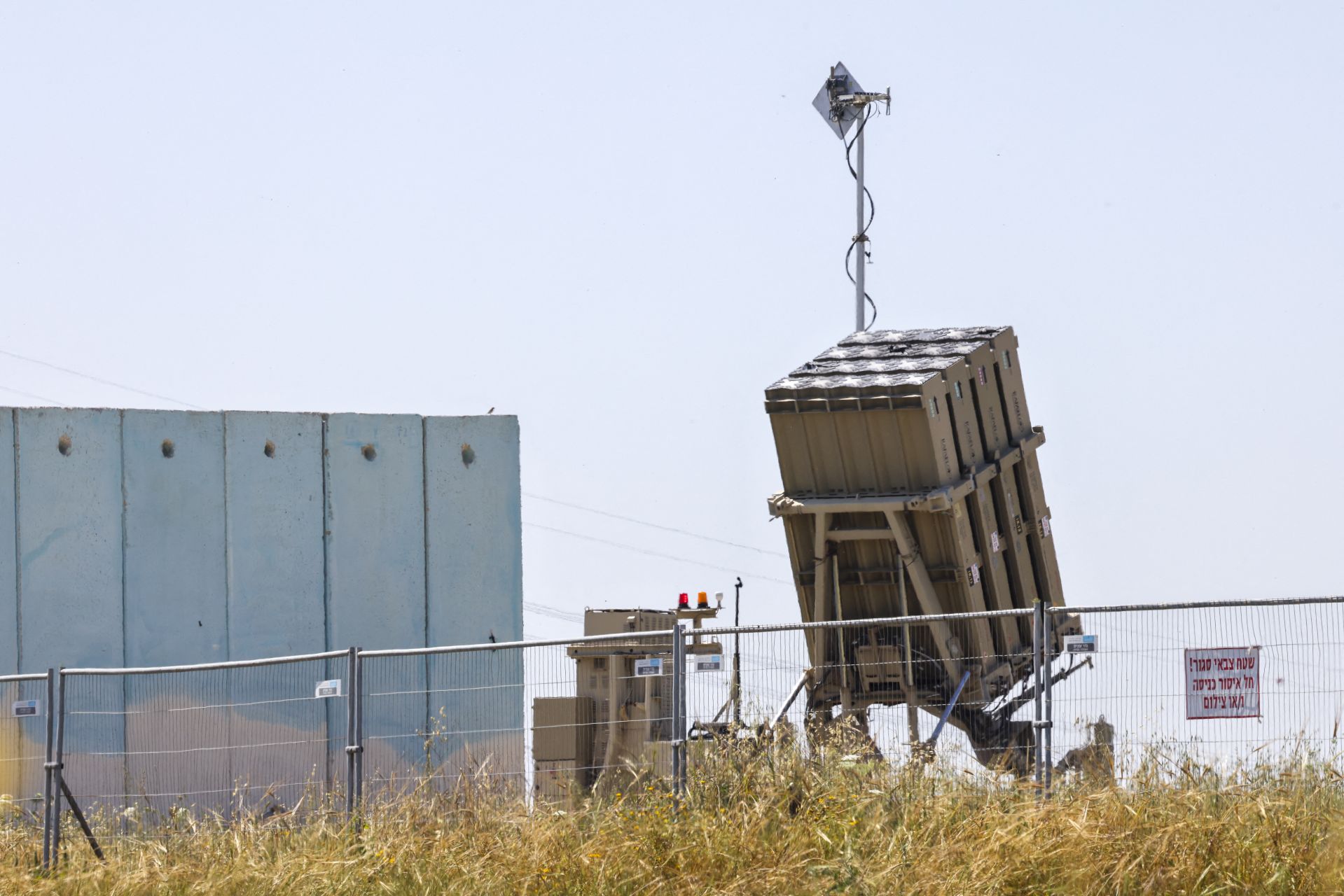
© Jack Guez / AFP
Between two wars with Iran, Israeli civil defense has significantly improved its population alert system, relying heavily on technological innovation and artificial intelligence to make life less burdensome for Israelis under the threat of Iranian missiles.
Sarah Chemla, 32, lives in central Tel Aviv. Her second child was born in June 2025 in a delivery room set up in an underground shelter of a large hospital, during the twelve-day Israeli-Iranian war launched by Israel.
Since the start of the new war, triggered on February 28 by the joint U.S.-Israeli attack on Iran, her life — like that of all Tel Aviv residents, a regular target of Iranian missiles — has been punctuated by sirens calling people to shelters. But she noticed a major change.
“Before, the sirens went off across all of Tel Aviv whenever a missile was aimed at the region,” she told AFP. “Today, the alert is ultra-localized. If the projectile targets the south of the city, I only get a pre-alert, and I no longer wake my children unnecessarily.” Behind this evolution lies an increased use of artificial intelligence (AI).
Since the attack by the Palestinian Islamist movement Hamas that triggered the Gaza war on October 7, 2023, “more than 60,000 missiles, rockets, drones, and flying devices have been fired toward Israel,” Ran Kochav, former commander of Israeli air defense, told AFP.
Continuous Monitoring
“Each launch was fully analyzed [...] including all its characteristics: trajectory, timing, weather, angle of fire, radar signature…” explains the reserve general, now a research associate at the British think tank Royal United Services Institute (RUSI).
The “SkyEye” system from the Israeli defense group Elbit Systems is also reportedly used to analyze launches. Installed on high-altitude drones, it allows “continuous monitoring of vast areas and detection of events,” according to the company’s website.
“AI collects millions of data points and performs what is called information fusion,” Yehoshua Kalisky, a laser specialist and researcher at the Institute for National Security Studies (INSS) in Tel Aviv, told AFP.
“It provides strategic planning and predictive tools at levels that the human brain cannot achieve [and] thus supports decision-makers.”
For each missile fired by Iran or from Lebanon where Israel is at war with the Hezbollah Islamist movement, an ally of Tehran — the prediction results are transmitted to the Home Front Command (civil defense).
Zoning
During the war against Hezbollah in summer 2006, “the country was divided into 25 alert zones. Today, there are 1,700,” a source within the branch responsible for protecting civilians in wartime told AFP.
Major cities are divided into sub-zones to avoid unnecessarily confining millions of people to shelters during the frequent alerts triggered by attacks on Israel.
Civil defense has multiple information channels: street sirens, the internet via a dedicated website, the media, a “silent” radio frequency that sounds only in emergencies for observant Jews who turn off their phones during Shabbat, and especially multifunctional mobile phones, which have revolutionized war-time routines.
An application downloaded on “more than 4 million phones” (for a population of 10 million) according to the army allows users to receive real-time geolocated alerts, time allotted to reach shelters, and “end-of-event” messages.
During the June 2025 war against Iran, civil defense added the sending of alert messages to all phones powered on within the areas covered by cell towers.
On June 13, before dawn, thousands of phones across the country emitted a shrill ringtone accompanied by a message announcing that Israel had attacked Iran and warning of a possible Iranian response which quickly followed.
Since February 28, this ringtone has become the soundtrack of war for many Israelis. It now functions as a pre-alert, several minutes before sirens may sound, signaling a return to shelters.
AFP
Read more

Comments