- Home
- Middle East
- UAE Signals Willingness to Join Military Effort in Hormuz: Report
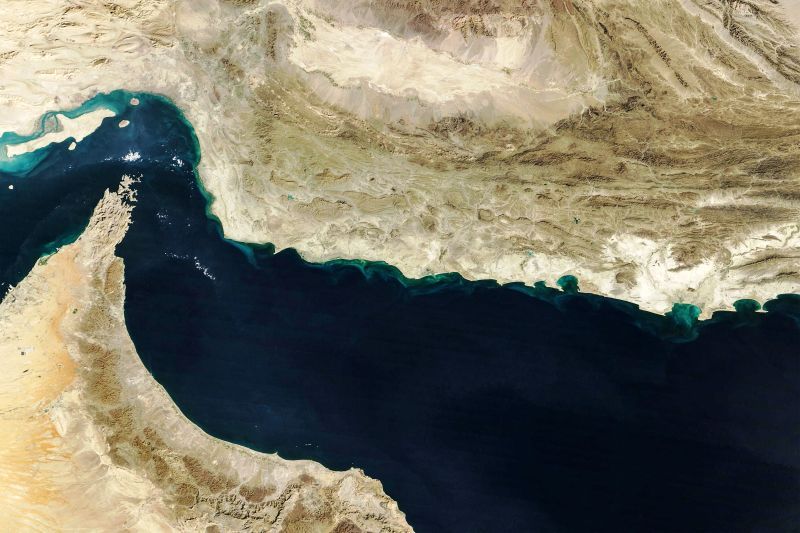
This natural-color image, provided by NASA and taken on February 5, 2025, by the Terra satellite via the MODIS instrument, shows the Gulf of Oman and the Makran region (center), located in southern Iran and southwestern Pakistan, as well as the Strait of Hormuz (left) and the northern coast of Oman (bottom). ©Nasa Earth Observatory / AFP
The United Arab Emirates is preparing to support a potential military operation led by the United States and its allies to reopen the Strait of Hormuz, Arab officials told the Wall Street Journal. If confirmed, the move would mark the first time a Gulf state has formally entered the conflict with Iran.
Emirati officials are pushing for a United Nations Security Council resolution authorizing the use of force, while also calling for the creation of a multinational coalition to secure the waterway, according to the officials.
The strait remains a critical global energy route, and its disruption has intensified fears of economic instability worldwide.
Strategic Assets and Military Capabilities
The UAE has reportedly reviewed its capacity to contribute to such an operation, including mine-clearing missions, logistical support, and the use of key infrastructure. Strategic sites such as the port of Jebel Ali and military bases near the strait could serve as staging grounds for naval escorts or broader operations.
The country also maintains a relatively advanced military, including U.S.-supplied F-16 fighter jets, surveillance drones, and precision-guided munitions. These assets could help support coalition efforts, particularly amid concerns over resource constraints faced by U.S. and allied forces.
According to the newspaper, Emirati officials have also suggested the possibility of U.S. forces seizing disputed islands in the strait, including Abu Musa, currently controlled by Iran but claimed by the UAE.
Escalation Risks and Regional Dynamics
The initiative comes amid a sharp escalation in hostilities. Iran has intensified missile and drone strikes against Emirati targets, with a significant increase in attacks in recent days following weeks of lower-level confrontation.
Regional dynamics are also shifting. Saudi Arabia and Bahrain are adopting a more assertive stance against Tehran. Bahrain is bakcing a new UN Security Council resolution aimed at authorizing "all necessary means”, including the potential use of force, to protect shipping in and around the Strait of Hormuz.
These developments point to a potential widening of the conflict, as Gulf countries move closer to alignment with U.S.-led efforts, raising the risk of broader regional escalation and further disruption to global energy markets.
Read more

Comments