- Home
- Middle East
- Gulf Allies Privately Urge Trump to Press War on Iran: Report
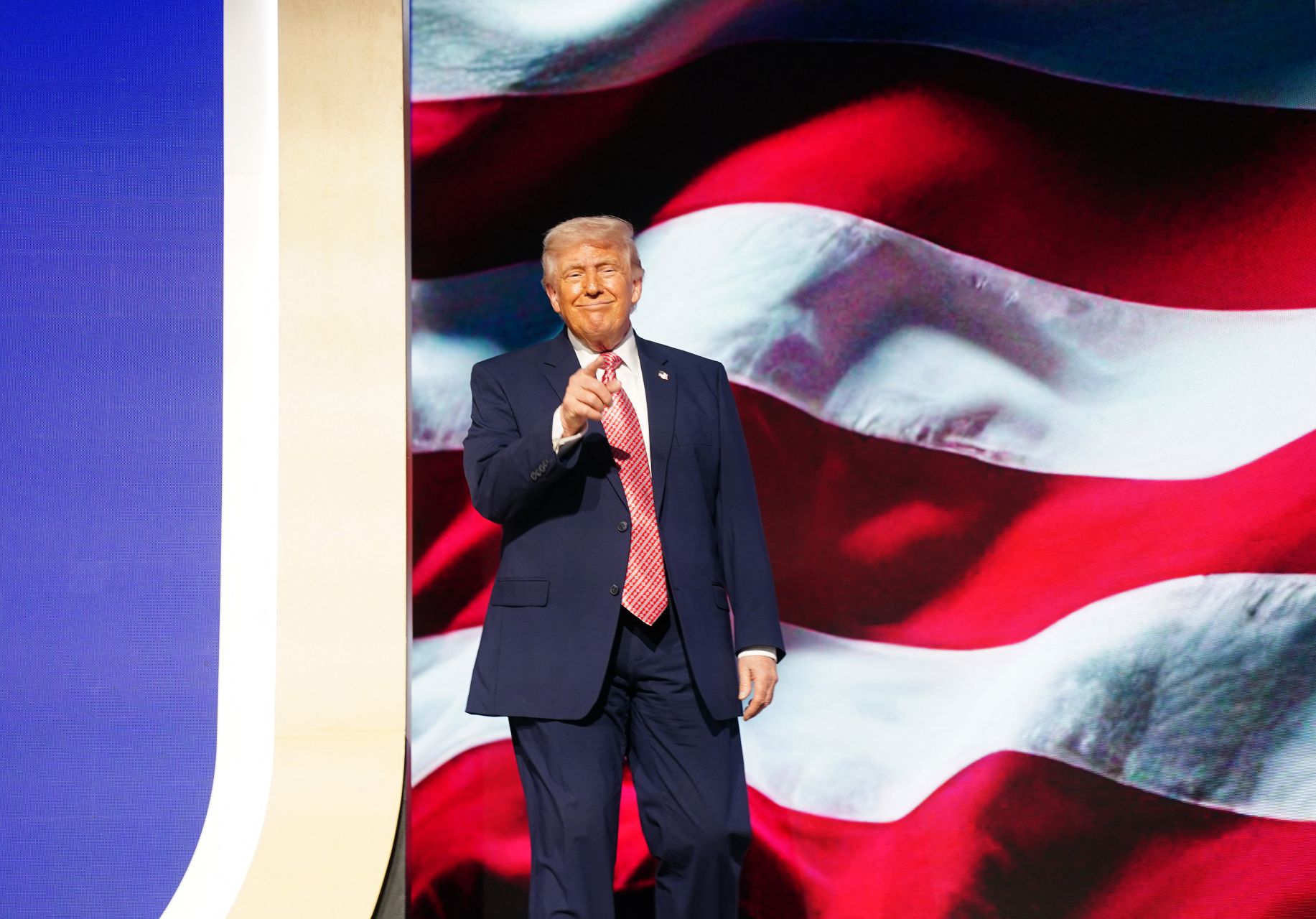
U.S. President Donald Trump greets the crowd before speaking at the FII PRIORITY Summit at the Faena Hotel on March 27, 2026 in Miami Beach, Florida. ©NATHAN HOWARD / GETTY IMAGES NORTH AMERICA / GETTY IMAGES VIA AFP
Gulf Arab allies are privately urging President Donald Trump to intensify the war against Iran and avoid a premature settlement, even as the White House considers scaling back its military campaign without securing full control over the Strait of Hormuz, according to a report by the Times of Israel.
According to U.S., Gulf, and Israeli officials, Saudi Arabia and the United Arab Emirates are leading a push behind closed doors to continue the offensive until Iran’s military capabilities, and potentially its leadership, are decisively weakened.
The lobbying effort reflects a growing divergence between Washington’s evolving strategy and the expectations of its regional allies, who increasingly view the war as a rare opportunity to fundamentally reshape Iran’s role in the Middle East.
Gulf Push: ‘Finish the Job’
Officials familiar with the discussions say Gulf leaders have conveyed a clear message: ending the war now risks producing an incomplete outcome that would leave Iran’s core capabilities intact.
Saudi and Emirati officials have argued that any settlement must go beyond a ceasefire to include dismantling Iran’s nuclear program, neutralizing its ballistic missile arsenal, ending support for regional proxies, and ensuring that Tehran cannot again threaten global shipping through the Strait of Hormuz.
A source briefed on the talks said Saudi Crown Prince Mohammed bin Salman has stressed to U.S. officials that further weakening Iran serves long-term regional security interests.
At the same time, Gulf leaders remain acutely aware of the risks of prolonging the conflict, particularly the vulnerability of critical energy infrastructure to continued Iranian retaliation.
Divisions Inside the Gulf
Despite broad alignment against Iran, Gulf states are not unified on how far the war should go.
Saudi Arabia and the UAE have taken the most assertive position, with the UAE reportedly pushing for even more aggressive measures, including the possibility of a ground invasion.
Kuwait and Bahrain have also signaled support for increased military pressure.
By contrast, Oman and Qatar are advocating for a diplomatic resolution, maintaining their traditional roles as intermediaries between Tehran and Washington.
This split reflects deeper strategic calculations: while some states see a chance to permanently curb Iran’s influence, others fear that escalation could destabilize the region beyond repair.
Trump Signals Flexibility and Contradiction
The Gulf push comes as Trump himself appears to be recalibrating U.S. objectives.
According to officials cited in recent reporting, the president has indicated a willingness to end the war even if the Strait of Hormuz remains largely closed, a significant departure from earlier demands that the waterway be fully reopened.
The decision, aides say, reflects concerns that a military operation to secure the strait could extend the conflict well beyond the administration’s preferred timeline.
Instead, Washington is focusing on degrading Iran’s missile capabilities and naval assets while attempting to pressure Tehran diplomatically to reopen the route.
At the same time, Trump has continued to issue stark warnings. “If a deal isn’t reached… we will move ahead with blowing up and completely obliterating” Iran’s energy infrastructure, he said, referencing oil facilities and strategic sites including Kharg Island.
War Pressure Builds at Home and Abroad
The war, now entering its second month, has already left more than 3,000 dead across the region and triggered significant global economic disruption.
Energy markets have been particularly affected, with the partial closure of the Strait of Hormuz pushing oil prices sharply higher and fueling inflation concerns worldwide.
Domestically, Trump faces growing pressure to justify the continuation of the conflict, even as he insists that negotiations are progressing and a deal could be reached. “We’re doing extremely well… but it’s possible that we won’t,” he said in recent remarks.
Between Escalation and Exit
For now, the United States finds itself balancing two competing tracks: intensifying military pressure while pursuing a diplomatic settlement.
Gulf allies, however, are making clear that from their perspective, the window for decisive action is now.
Whether Washington aligns with that view or opts for a more limited end to the conflict could shape not only the outcome of the war but also the future balance of power in the Middle East.
Read more

Comments