- Home
- Middle East
- Iran Confirms Death of IRGC Navy Commander Following Israeli Airstrike
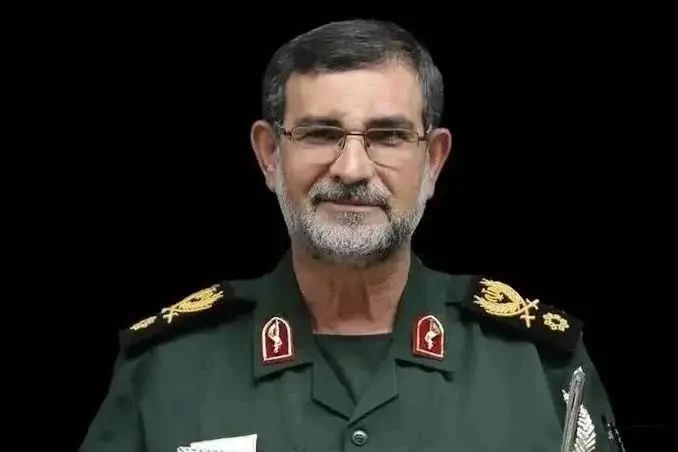
Iran confirmed on Monday that Alireza Tangsiri, commander of the Iranian Revolutionary Guards’ navy (IRGCN), had been killed, days after Israel announced it had targeted him in an airstrike. A statement published by the Guards’ Sepah News website said Tangsiri “succumbed to severe injuries” from the attack, according to AFP.
Israeli Announcement
Israel’s Defence Minister Israel Katz announced last Thursday that an Israeli airstrike killed Tangsiri.
“Last night, in a precise and lethal operation, the IDF eliminated the commander of the Revolutionary Guards’ navy, Tangsiri, along with senior officers of the naval command,” Katz said in a video statement.
Who Was Brigadier General Tangsiri?
Alireza Tangsiri, born in 1962 in Bushehr Province, had been commander of the IRGC Navy since August 2018. According to the Alma Israel Research Center, he “was the commander of the maritime regions of the northern Arabian Gulf and the Strait of Hormuz until 2009, when he was appointed deputy commander of the IRGCN. As with other Iranian regime elites, the United States and other nations have imposed sanctions on Tangsiri.”
Tangsiri, designated by the U.S. Treasury’s Office of Foreign Assets Control, had previously threatened to close the strategic Strait of Hormuz if U.S. sanctions halted Iran’s oil exports. As commander of the IRGCN, he oversaw operations responsible for sabotaging vessels in international waters and played a central role in Iran’s regional naval strategy.
He was also involved in exporting military systems, including drones and air defense equipment, to Russia and Syria. Tangsiri was a key figure in previous operations such as the closure of the Strait of Hormuz during Operation Lion’s Roar, orchestrating attacks on commercial shipping, and threatening global energy routes.
Alongside Tangsiri, the head of intelligence for the IRGC Navy, Behnam Rezaei, was reportedly killed. Rezaei served as head of intelligence for several years and was considered a central figure in maritime intelligence, gathering information on regional countries, coordinating with various intelligence agencies, and supporting Tangsiri in overseas arms transfers.
IRGC Naval Capabilities
The IRGC Navy operates a diverse and increasingly sophisticated fleet, according to Alma Israel Research. Its arsenal includes Chinese-made and domestically modified anti-ship missiles, fast attack craft, patrol boats, submarines, and underwater vessels for transporting combatants.
Many systems were acquired from China, North Korea, and Russia, while others were developed locally through duplication and enhancement of existing platforms, reflecting Iran’s growing maritime capabilities.
Read more



Comments